
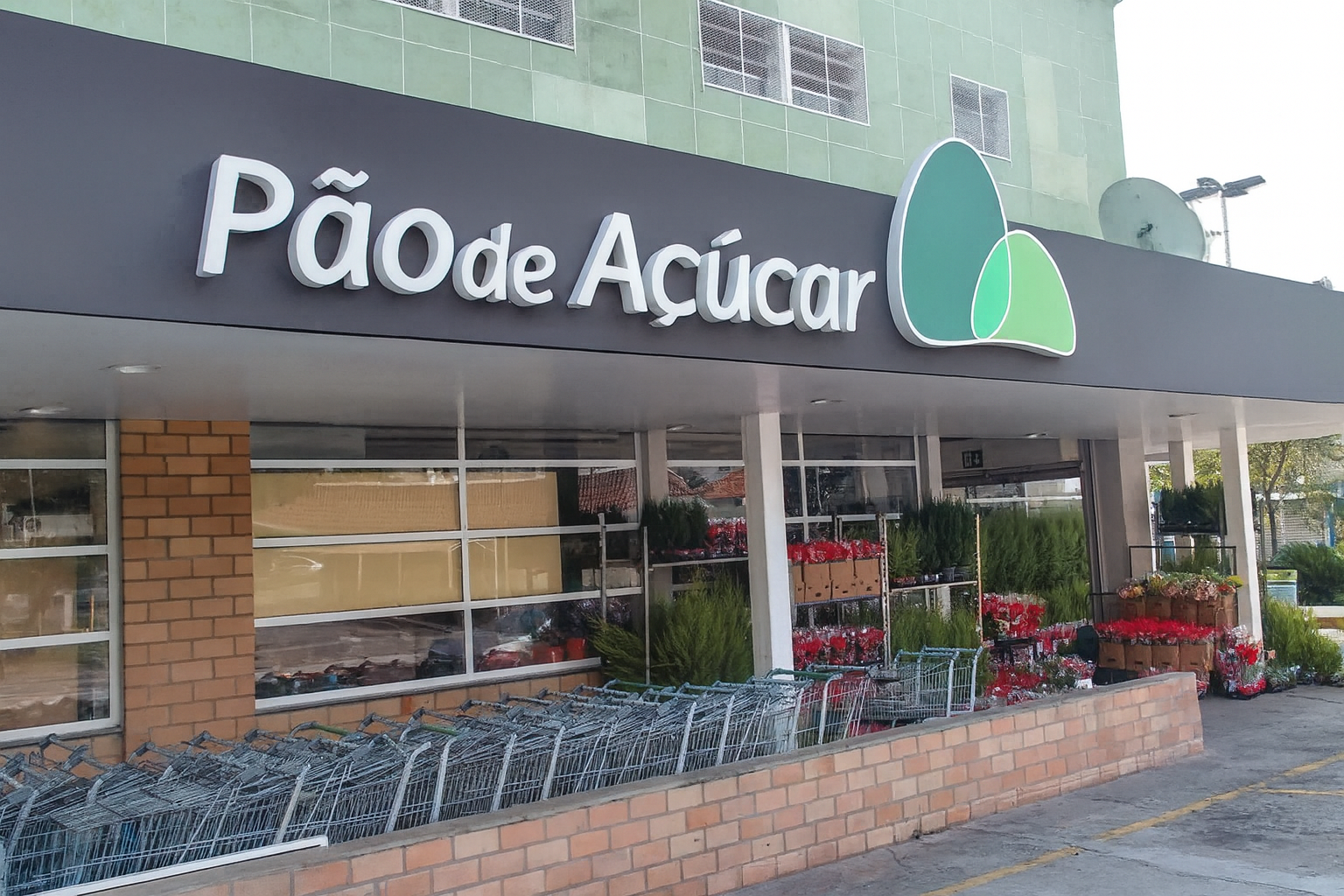
By Brazil Stock Guide – Grupo Pão de Açúcar (B3: PCAR3), one of Brazil’s largest supermarket chains, has hired restructuring advisers to evaluate alternatives to improve its debt profile, highlighting the financial pressure facing the retailer as borrowing costs remain elevated and large maturities approach.
The company engaged the São Paulo-based law firm Munhoz Advogados, which specializes in corporate restructuring and insolvency, to analyze possible strategies for renegotiating liabilities and extending maturities. The mandate may include discussions with creditors aimed at stabilizing the company’s capital structure and ensuring liquidity ahead of upcoming repayments.
The move comes as GPA faces rising leverage and a cluster of debt maturities beginning in 2026. At the end of 2025, the retailer reported net debt of roughly R$ 2.1 billion, with leverage reaching about 2.4 times net debt to EBITDA. Brazil’s still-high interest rates have increased the cost of servicing that debt, narrowing the company’s financial flexibility.
Pressure from maturities
A key concern for investors is the schedule of upcoming obligations. Market estimates indicate that about R$ 1.7 billion in debt could come due in 2026, raising questions about refinancing capacity in a still-tight credit environment.
Brazilian retailers have struggled with higher financing costs and uneven consumer demand following years of economic volatility. For GPA, those pressures have been compounded by a prolonged strategic repositioning after asset sales and corporate disputes involving its former controlling shareholder, the French retail group Casino.
Credit analysts have already warned that the company’s liquidity profile will depend heavily on its ability to renegotiate obligations or access new financing.
Preventive restructuring
Hiring restructuring advisers does not necessarily signal an imminent insolvency process. In Brazil, companies often seek legal and financial guidance well before any formal restructuring, particularly when large maturities approach.
Advisers may explore options such as extending maturities, renegotiating covenants or arranging a consensual restructuring with creditors. One possibility under Brazilian law is an extrajudicial restructuring, which allows companies to renegotiate debts with creditors without entering a court-supervised recovery process.
GPA said it is not discussing a judicial recovery filing.
Strategic turnaround
The debt review underscores the broader turnaround challenge facing the supermarket chain. GPA has been rebuilding its operations after years of restructuring, portfolio adjustments and a gradual separation from the Casino retail empire.
Management has focused on operational efficiency, liquidity preservation and balance-sheet stabilization. Still, investors remain attentive to the company’s ability to generate sufficient cash flow to navigate Brazil’s high interest-rate environment while addressing upcoming debt maturities.





Leave a Reply