
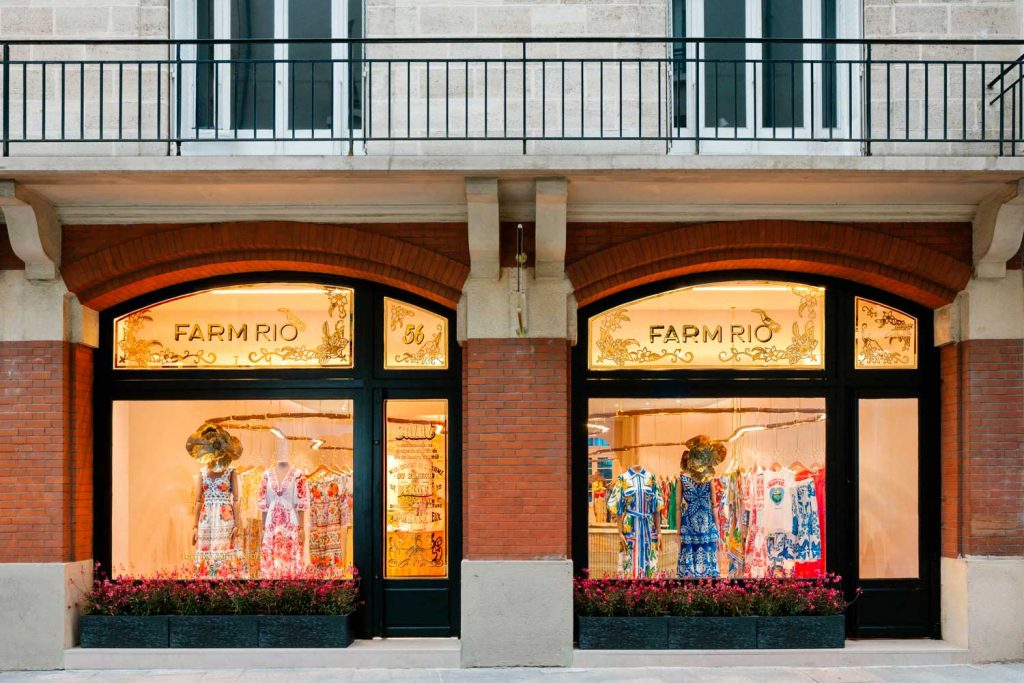
By Brazil Stock Guide – A potential sale of Farm Rio by Azzas 2154 could become the largest transaction in the history of Latin American fashion, while offering one of the clearest paths to crystallize value at the group — and potentially help resolve a dispute among its controlling shareholders.
Initial talks with potential buyers indicate the brand could be valued at around $1 billion, with room to exceed that level. Such a price would put Farm Rio close to major global fashion transactions, including Prada’s acquisition of Versace, announced at about $1.4 billion.
Azzas recently hired Morgan Stanley to evaluate strategic alternatives for Farm Rio, including a potential sale or an initial public offering in the US. The company says no decision has been made, and that there is no formal proposal, defined structure or approved transaction.
Azzas also said on Thursday, June 25, that Hering is not for sale and that there are no talks or negotiations involving the brand or related assets. The Hering family, which previously sold the business, has hired BR Partners in an attempt to regain control of the asset.
Azzas was created from the merger of Arezzo&Co and Grupo Soma, completed in August 2024, bringing together brands including Arezzo, Schutz, Anacapri, Reserva, Hering and Farm Rio. The combination created Latin America’s largest fashion group, but it also brought together different corporate cultures — one more centralized, rooted in Arezzo, and another more decentralized, inherited from Soma.
Farm Rio is widely seen as one of Azzas’ most valuable assets. Founded in Rio de Janeiro in 1997 by Katia Barros and Marcello Bastos, the brand was the platform on which Grupo Soma built much of its expansion and today carries the group’s biggest international ambitions.

Since opening its first flagship store in New York in 2019, Farm Rio has expanded across the US, Europe and the Middle East through owned stores, wholesale partnerships and strategic collaborations. The brand now operates in markets including the US, France, the UK and Dubai, while preserving a distinct Brazilian identity in a segment close to accessible luxury.
The numbers help explain the interest. Azzas’ women’s apparel division, led by Farm Rio, posted R$1.3 billion in revenue in the first quarter of 2026. According to BTG Pactual estimates, the brand generated about R$3.3 billion in revenue in 2025, of which more than R$1 billion came from international operations.
That asymmetry is at the center of the investment case. While Farm Rio represents roughly one-quarter of Azzas’ consolidated revenue, it accounts for a disproportionate share of the group’s growth, profitability and international expansion potential.
A valuation above $1 billion would imply a multiple of roughly 1.5 times 2025 revenue. Assuming an estimated Ebitda margin of 15% to 20%, the implied multiple would be between 7.7 times and 10.3 times Ebitda. For BTG Pactual, that level is still closer to mature apparel companies than to faster-growing global premium brands. Companies such as Ralph Lauren and Tapestry trade at around 2.0 to 2.5 times revenue, while names such as Moncler have reached multiples close to four times revenue.

The talks around Farm Rio come amid a dispute between Alexandre Birman, Azzas’ CEO and largest individual shareholder, and Roberto Jatahy, a relevant shareholder and founder of the former Grupo Soma. The standoff intensified after Jatahy went to court over an internal governance matter. Under the shareholders’ agreement, arbitration would be the expected route, and was requested, but it has moved into the background as both sides try to reach a negotiated solution.
According to people familiar with the discussions, both sides have brought in financial advisers — BTG Pactual for Birman and G5 Partners for Jatahy — to seek a market-based solution. Talks have advanced in recent days, and a near-term resolution is considered possible.
In any scenario, Farm Rio is no longer just Azzas’ flagship brand. It is becoming a new benchmark for Latin American consumer brands with global relevance.


Leave a Reply