
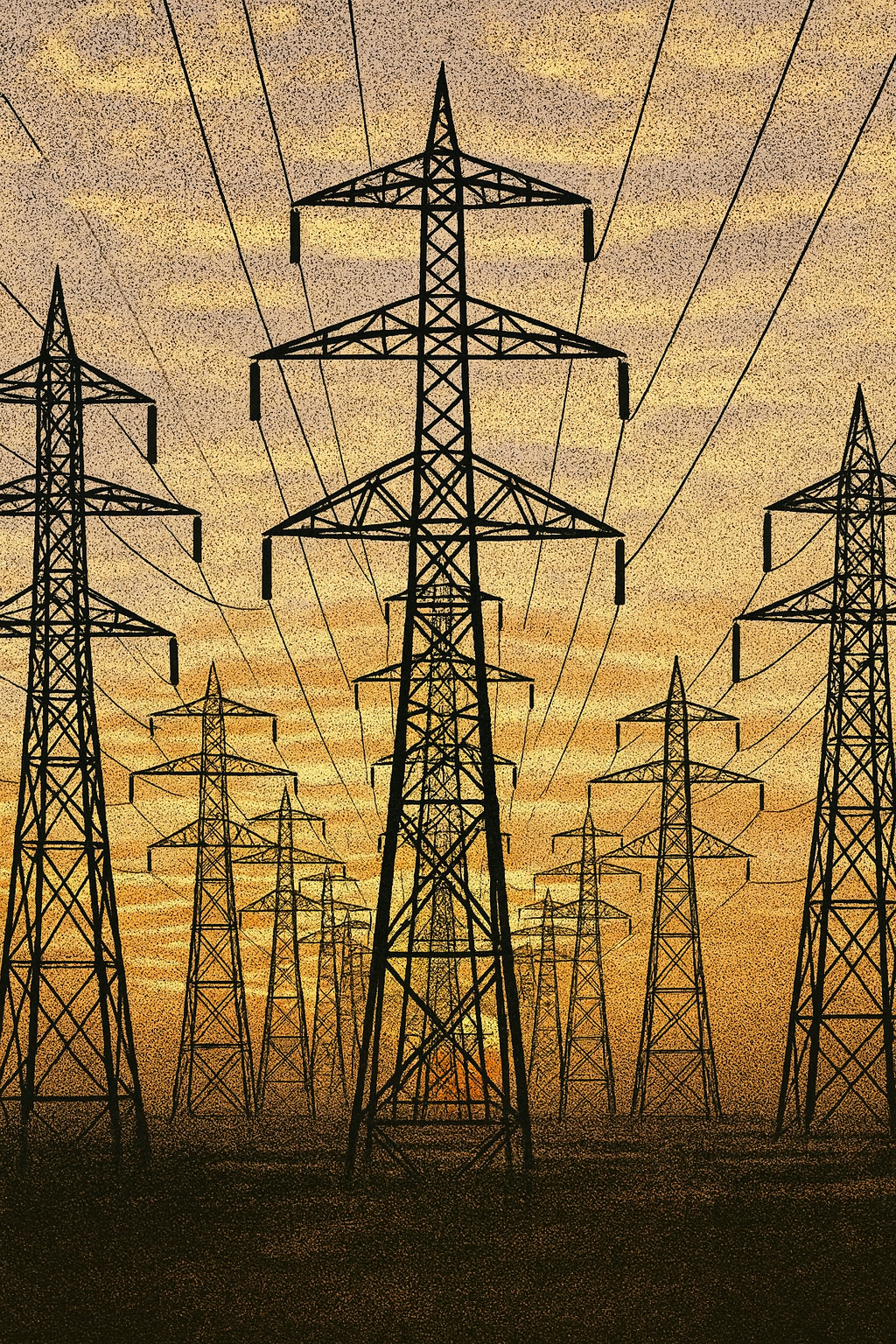
By Brazil Stock Guide – Brazil enacted a sweeping update to its electricity framework as Vice President Geraldo Alckmin, acting as president, signed Law 15,269 into force. The reform reorganizes cost allocation across the grid, strengthens protections for large consumers in the free market, accelerates the adoption of grid-scale batteries and closes loopholes that had been distorting power tariffs. The core of the reform remains intact, while selective vetoes removed provisions seen as inflationary or misaligned with long-term planning.
A central shift affects how charges are divided between the two contracting environments. The ACR (Regulated Market) serves households and small businesses that buy energy from distribution utilities, while the ACL (Free Market) allows large consumers to purchase electricity directly from generators and traders. Until now, when companies migrated to the ACL, distributors were left with surplus contracted energy — costs that were ultimately borne by captive consumers. The new law spreads that burden more evenly: involuntary surpluses will now be shared by both markets. This eases pressure on regulated consumers and requires free-market users to assume a larger share of structural system costs, a pattern common in more mature liberalized markets.
The reform also creates a new last-resort supplier, the Supridor de Última Instância (SUI), designed as a safety valve for the free market. If a retailer collapses or abandons clients, the SUI temporarily assumes supply, shielding companies from sudden exposure to emergency tariffs. All ACL consumers will help finance the mechanism. Regulators view the SUI as an essential institutional anchor as Brazil advances toward full market opening.
Another major adjustment concerns the capacity reserve, the payment for firm capacity and flexibility that ensures the grid can meet demand beyond energy volumes alone. The law broadens the cost allocation and allows future rules to incorporate each consumer’s load profile, encouraging demand-side management. For new generators — especially intermittent wind and solar — this means a temporary contribution until regulatory milestones are met. The goal is to align renewable expansion with the system’s technical needs and reduce congestion in regions where rapid growth has overwhelmed the grid.
The most transformative chapter brings battery storage into the core of Brazil’s planning. The law elevates BESS (Battery Energy Storage Systems) — large-scale batteries that store energy during periods of oversupply and release it during peak hours — as a strategic asset. It grants up to R$1 billion in annual tax incentives from 2026 to 2030, eliminates import duties for batteries and components, and encourages the development of hybrid projects such as solar plants paired with multi-hour storage. The intention is clear: soften the country’s late-afternoon peak and reduce reliance on thermal plants, while easing the volatility caused by daytime solar surpluses.
The law also revises the autoproduction model used by energy-intensive industries to reduce system charges. Congress had approved a strict requirement that new arrangements rely exclusively on new generating assets, but the government vetoed the clause, arguing it would raise industrial costs by preventing the use of existing capacity. The broader drive for transparency and fewer loopholes remains, but without harming industrial competitiveness.
Another veto targeted a proposal to financially compensate wind and solar producers for nearly all curtailment events — including retroactively — through the ESS (System Services Charge), a mechanism that funds grid support actions. The government argued that the measure would sharply raise power bills and encourage further overbuilding in already congested regions. Keeping these provisions out of the final law is expected to protect consumers from additional tariff pressure.
The enacted reform preserves gradual solutions for hydrological risks, transition rules for coal plants and calibrated adjustments in gas-sector governance. Other vetoes avoided disruptions to Brazil’s royalties framework, blocked mandatory priority auctions for transmission lines and removed obligations that would have forced electricity traders to fund research and efficiency programs — elements viewed as incompatible with the sector’s business model.
For the market, the law marks the beginning of a new phase. Free-market consumers will face higher systemic charges; distribution utilities gain predictability; renewable developers must adapt to stricter operating rules; and battery storage emerges as a central component of future grid reliability. Investors see the reform as a step toward reducing regulatory ambiguity and clarifying the system-wide costs associated with Brazil’s growing fleet of intermittent generation.
Much of the practical impact will depend on upcoming regulations from Aneel, the Mines and Energy Ministry and the National Energy Policy Council. These will define the SUI’s tariff design, the criteria for allocating charges based on load profile, the rules for battery incentives and the contracting model for capacity. But the direction is unmistakable: Brazil is moving toward a power system with clearer cost visibility, stronger safeguards and a deliberate push toward large-scale storage as the backbone of the country’s next energy cycle.



Leave a Reply