
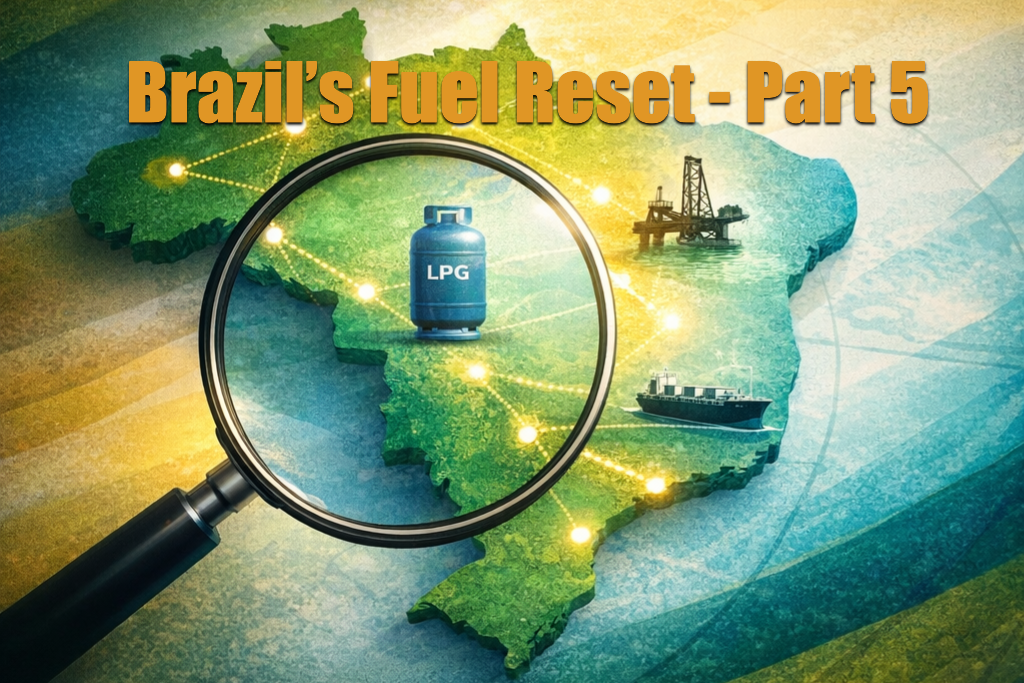
By Brazil Stock Guide – If aviation highlights cost pressures and LPG exposes social sensitivity, Brazil’s maritime fuel market reveals a different frontier: the challenge of decarbonizing a sector deeply integrated into global trade. The CNPE studies identify marine fuels as both a logistical backbone of the economy and a critical piece in the country’s energy transition agenda — but one still constrained by infrastructure gaps and regulatory uncertainty.
Marine fuels are essential for Brazil’s export-driven economy, supporting flows of commodities such as oil, iron ore and agricultural products. Yet the market remains highly concentrated and heavily dependent on traditional fossil fuels, with limited penetration of low-carbon alternatives.
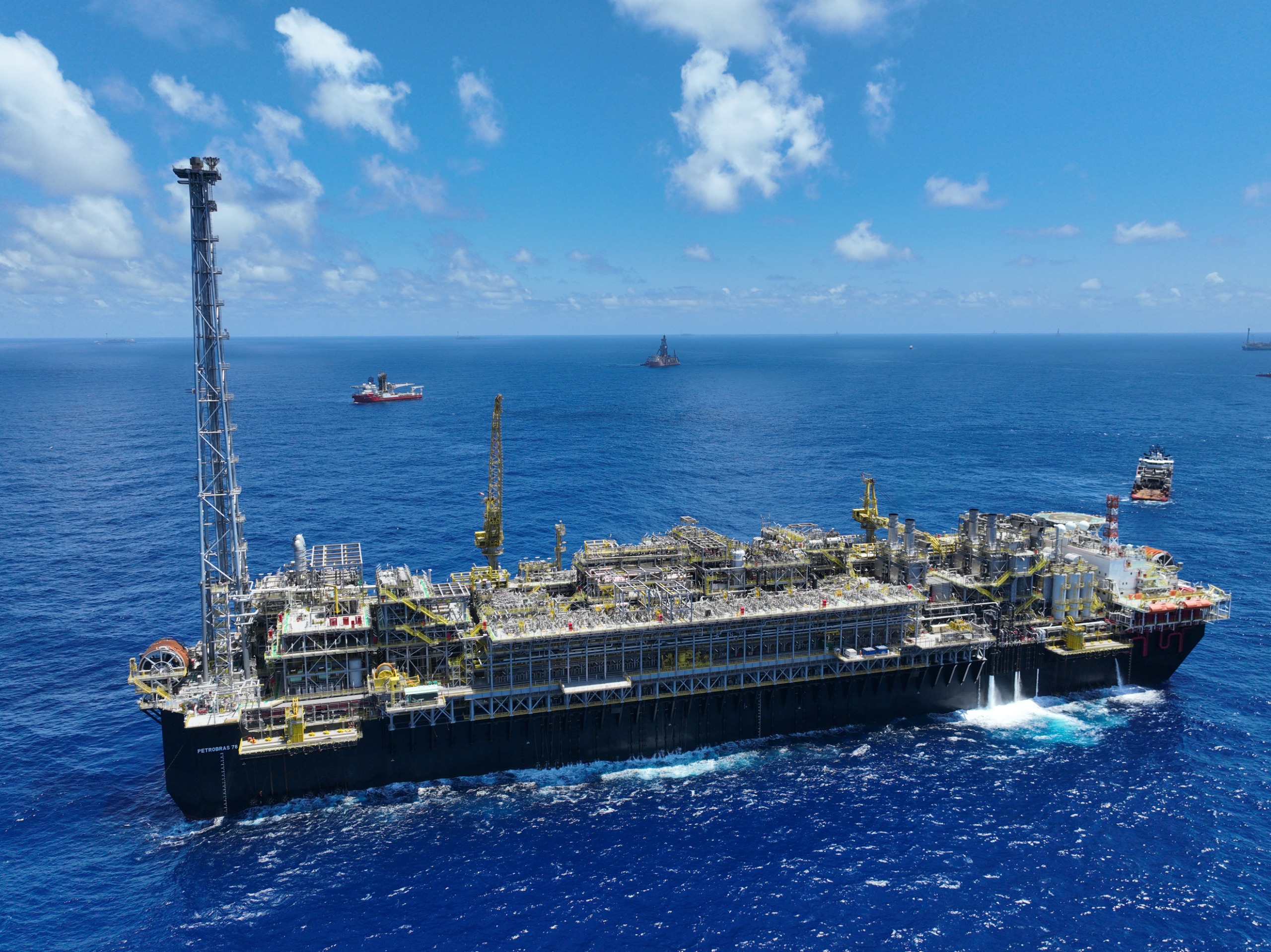
At the supply level, Petrobras (PETR3; PETR4) plays a central role in bunker fuel production, while global players such as Shell and domestic groups like Raízen (RAIZ4) and Vibra Energia (VBBR3) operate in distribution and port logistics. The structure is closely tied to Brazil’s port system, where access to storage, blending facilities and refueling infrastructure defines competitive dynamics.
Infrastructure bottlenecks
The CNPE reports highlight that infrastructure is the primary constraint shaping the maritime fuel market:
- limited storage and blending capacity at key ports
- concentration of supply in a small number of operators
- logistical challenges in supplying secondary ports
- lack of dedicated infrastructure for low-carbon fuels
- fragmented regulatory environment across ports
These constraints reduce flexibility, increase costs and limit the entry of new players, reinforcing a concentrated market structure.
Global pressure to decarbonize
Unlike other segments, maritime fuels are strongly influenced by international regulation.
The International Maritime Organization (IMO) has set targets to reduce greenhouse gas emissions from shipping, pushing the industry toward cleaner alternatives such as biofuels, LNG, methanol and, in the longer term, ammonia.
For Brazil, this creates both pressure and opportunity.
On one hand, exporters and shipping operators may face increasing costs to comply with global standards. On the other, the country’s bioenergy potential positions it as a potential supplier of low-carbon marine fuels.
Emerging low-carbon pathways
The CNPE studies identify several potential routes for decarbonizing the maritime sector:
- biofuels (including biodiesel and advanced biofuels)
- LNG as a transition fuel
- methanol and other alternative fuels
- integration with SAF and broader biofuel production chains
Companies such as Raízen (RAIZ4) and Acelen could leverage existing biofuel platforms to expand into maritime fuels, while Petrobras (PETR3; PETR4) may play a role in scaling production and adapting refining assets.
However, as with SAF, the economic equation remains uncertain, with costs still significantly above conventional bunker fuel.
Regulatory gap
One of the central challenges identified in the reports is the absence of a clear regulatory framework for low-carbon maritime fuels.
Without defined standards, certification processes and long-term policy signals, investment decisions remain constrained. This creates a lag between global demand trends and domestic supply readiness.
The reports suggest that Brazil needs to align its regulatory framework with international standards while creating incentives for early investment.
Market implications
For incumbents, the transition presents both risk and opportunity.
Distributors such as Vibra (VBBR3) and global players like Shell may need to adapt infrastructure and supply chains to accommodate new fuels, requiring significant capital expenditure.
For energy producers, particularly Petrobras (PETR3; PETR4) and biofuel-focused companies, the shift could open new markets — but only if scale and competitiveness are achieved.
For ports and logistics operators, investment in storage, blending and handling infrastructure will be critical to maintaining competitiveness in global trade.
Strategic positioning
Brazil’s maritime fuel strategy ultimately ties into its broader role in global energy markets.
As one of the world’s largest commodity exporters, the country depends on efficient and competitive shipping. At the same time, its natural resource base gives it the potential to become a supplier of low-carbon fuels.
Balancing these two dimensions — cost competitiveness and environmental transition — will define the sector’s trajectory.
Execution challenge
As in other segments analyzed by the CNPE, the key issue is execution.
The path to a low-carbon maritime fuel market requires coordination across regulators, producers, distributors, ports and international stakeholders. It also requires long-term policy consistency — a recurring challenge in Brazil’s energy landscape.
What comes next
The maritime segment closes the CNPE’s diagnostic cycle with a forward-looking perspective.
If Brazil succeeds in building infrastructure and regulatory clarity, it could position itself as a relevant player in the global low-carbon shipping market. If not, it risks falling behind as international standards evolve.
This is Part 5 — and the final installment — of the series “Brazil’s Fuel Reset.”


Leave a Reply