
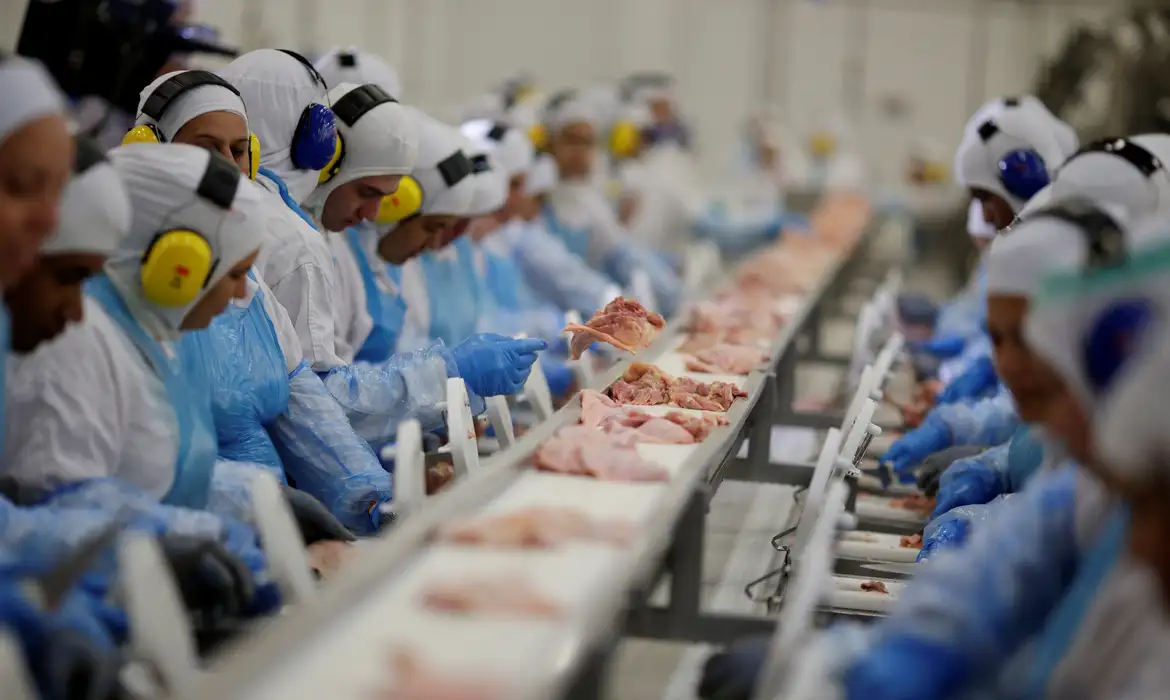
By Brazil Stock Guide – Brazil and Argentina signed on Friday (Nov. 7) a mutual recognition protocol for their official zoning and compartmentalization systems on Highly Pathogenic Avian Influenza (HPAI) and Newcastle Disease, Brazil’s Agriculture Minister Carlos Fávaro said.
Citing technical assessments, Fávaro noted that “Brazil’s sanitary guarantees are equivalent to Argentina’s.” The deal, announced in a video posted on his official social-media channels and reported by Broadcast (Estadão), introduces a regionalization mechanism to manage sanitary emergencies.
Under the new protocol, outbreaks will trigger a 10-kilometer restriction zone, while trade in unaffected regions will continue normally. “In case of an outbreak, a 10-km restriction zone will be applied around the sanitary event. Outside this zone, trade remains open,” Fávaro said during bilateral meetings in Buenos Aires on Monday (Nov. 10).
The accord fulfills a request made by Fávaro in September to Argentina’s Agriculture Secretary Sergio Iraeta, urging the adoption of a regionalized poultry-trade model. It ensures that embargoes following bird-flu or Newcastle cases apply only to the affected area — rather than halting all national shipments.
Background and Trade Impact
Earlier this year, Brazil’s chicken exports to Argentina were suspended from May 16 to July 4 after an HPAI case was confirmed at a commercial farm in Montenegro, Rio Grande do Sul. The previous agreement required a full trade halt during outbreaks.
With regionalization now in place, future sanitary events are expected to cause localized trade restrictions only, limiting financial losses for producers and exporters, including major players such as BRF SA (BRFS3.SA) and JBS SA (JBSS3.SA), both heavily dependent on cross-border poultry flows.
Industry analysts note the move could enhance supply-chain resilience and regulatory predictability between two of South America’s largest agricultural economies.






Leave a Reply