
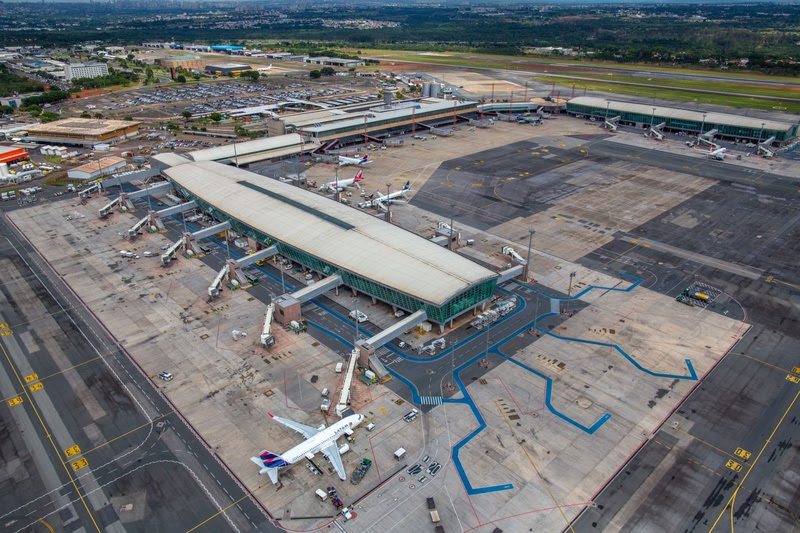
By Brazil Stock Guide – Brazil will reauction the concession of Brasília International Airport, one of the country’s main air hubs, after approval from the country’s federal audit court, the Tribunal de Contas da União. The decision allows the government to renegotiate the current contract and launch a new bidding process that bundles the airport with 10 smaller regional facilities.
The agreement was structured by Brazil’s Transport and Aviation Ministry — formally the Ministério de Portos e Aeroportos — together with the aviation regulator, Agência Nacional de Aviação Civil, and current operator Inframerica. A new auction is expected in 2026, with a minimum bid set at 5.9% of gross revenues. The current operator must participate, while state-controlled airport operator Infraero will exit the concession and be compensated for its 49% stake.
The new contract will run until 2037 and requires around R$1.2 billion in investments at Brasília airport. Planned upgrades include a new international terminal, expanded parking facilities and improved access roads — all aimed at supporting long-term passenger growth in Brazil’s capital.
The key policy shift comes under the government’s Programa AmpliAR, an initiative designed to transfer smaller regional airports to private operators. Instead of auctioning these assets individually — which often attracts limited investor interest — the government is bundling them with a large, profitable hub.
The package includes 10 regional airports across central and northeastern Brazil, requiring an additional R$857.8 million in investments. Many of these airports currently operate below capacity, meaning the model depends on private operators improving traffic and efficiency over time.
For international investors, the structure is straightforward: Brasília provides stable cash flow, while the smaller airports introduce execution risk. For policymakers, the goal is to expand air connectivity without relying on public spending.
The Brasília reauction marks a shift in Brazil’s infrastructure strategy — from selling standalone assets to structuring portfolios that combine profitability with regional development.


Leave a Reply