
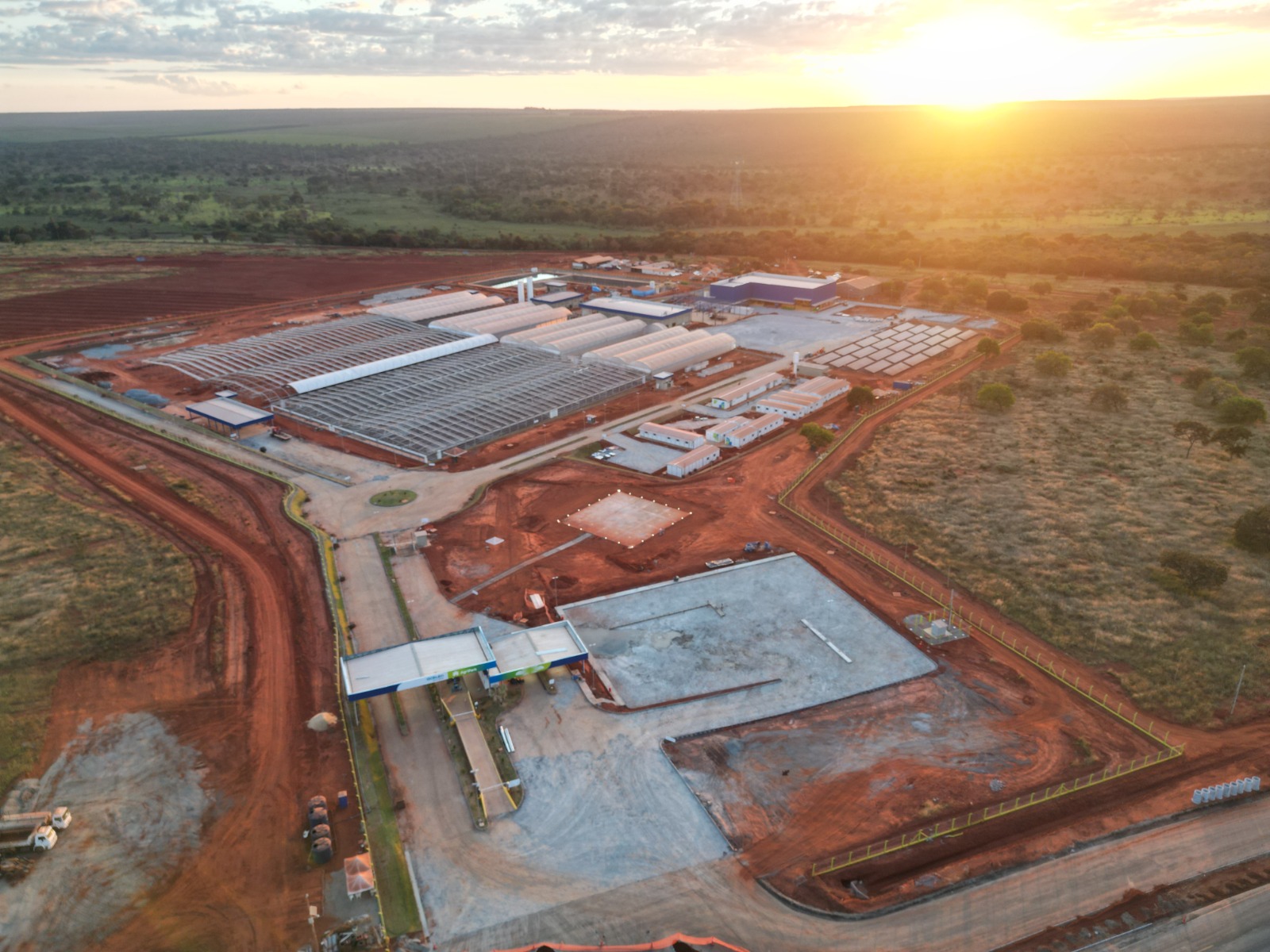
By Brazil Stock Guide – Acelen Renováveis, the renewable arm of Mubadala Capital, inaugurated on Friday its new research and innovation hub in Montes Claros, Brazil’s Minas Gerais state. The Acelen Agripark, financed with BRL 257.9 million (about $52 million) from the state-owned Banco Nacional de Desenvolvimento Econômico e Social (BNDES), will drive research and development for renewable diesel and sustainable aviation fuel (SAF) based on macaúba, a native Brazilian oilseed plant with high energy potential, according to the BNDES news agency.
President Luiz Inácio Lula da Silva attended the ceremony and underscored Brazil’s pioneering role in biofuels. “Today is a special day for me, the realization of a dream that became reality. Brazil will be the world champion in this energy transition,” Lula said, highlighting the country’s track record with ethanol and biodiesel.
World’s largest macaúba agroindustrial hub
The Agripark is described as the largest agroindustrial complex in the world dedicated to macaúba. It will focus on plant mapping, genetic improvement, and scaling up oil extraction technologies for Acelen’s planned biorefinery in São Francisco do Conde, Bahia. The facility is expected to create 200 direct jobs in its early stage.
The wider project represents a $2.7 billion investment and aims to produce 1 billion liters of green fuels annually, supporting over 90,000 jobs across the value chain.
BNDES bets on the “fuel of the future”
“This is the first BNDES operation for SAF development,” said Aloizio Mercadante, president of the development bank. “On the eve of COP30, Brazil advances in decarbonizing aviation and heavy transport with BNDES support. We are the world’s largest renewable energy financier and the leading backer of electric buses in Latin America, with BRL 3.8 billion invested in 1,701 vehicles.”
The SAF market is seen as critical for airlines and industries under mounting pressure to cut emissions, and the project is designed to give Brazil an early competitive edge.
Scaling innovation with macaúba
The Montes Claros facility can germinate 1.7 million macaúba seeds per month and produce 10.5 million seedlings annually. Earlier this year, Acelen achieved the first industrial-scale extraction of macaúba oil, a milestone enabled by proprietary technology.
“Globally, macaúba has been studied for over 70 years, and for about 30 years in Brazil. For the first time, we are integrating and scaling this knowledge with technology to reach global production levels,” said Luiz de Mendonça, CEO of Acelen Renováveis. He noted that the project brings together universities, research centers, and international partners to build industrial and certification solutions.
Family farming at the core
As part of the launch, Acelen unveiled the Valoriza Program, which will integrate smallholders into its supply chain. Twenty percent of fuel output will come from family farming, benefiting over 10,000 households in the project’s footprint.
Local farmer Maria Eunice Soares de Machado Costa, known as Dona Nice, who has cultivated macaúba for more than two decades, signed the cooperation agreement with Acelen at the event. She was honored alongside her husband by Lula and company executives.
Earlier this year, Acelen established its first model macaúba farm in Cachoeira, Bahia, planting 198 hectares with 90,000 seedlings. SAF and renewable diesel production from macaúba oil is expected to start by 2030.
(Source: Agência BNDES)


Leave a Reply