
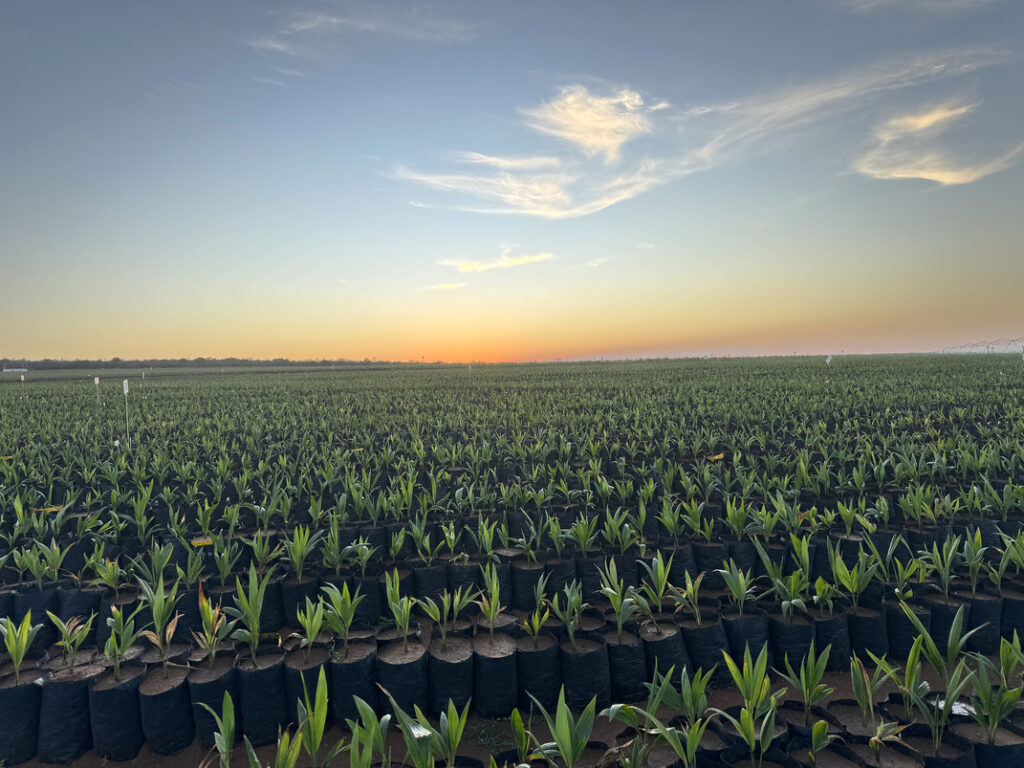
By Brazil Stock Guide – Acelen Renováveis, part of Mubadala Capital, will inaugurate its Agripark in Montes Claros, Minas Gerais, on August 29, a project involving investments of US$3 billion (R$16.8 billion). The hub is designed to expand renewable fuel production from macaúba, a native Brazilian palm, and underscores Brazil’s climate commitments ahead of COP-30 in Belém this November.
The complex will produce more than 10 million macaúba seedlings annually, host a seed bank, and apply advanced cultivation techniques. President Luiz Inácio Lula da Silva is scheduled to attend the launch, highlighting the political and economic significance of the initiative.
“We are taking a decisive step to make Brazil a global leader in bioenergy,” Acelen said in a statement.
Macaúba as a New Fuel Frontier
Macaúba palms can reach 15 meters (49 feet) and yield edible fruits. Their kernels produce fine oil similar to olive oil, while the crude oil serves as feedstock for biodiesel, sustainable aviation fuel (SAF), and renewable diesel (HVO).
Acelen Renováveis plans to cultivate 180,000 hectares (445,000 acres) across Bahia and Minas Gerais, converting degraded pastures into productive forests and enabling annual output of up to 1 billion liters (264 million gallons) of renewable fuels.
From Petrobras Refinery to Biofuel Leadership
Acelen was created in 2021 after Petrobras (BVMF: PETR3; PETR4 | NYSE: PBR; PBR.A) sold the Landulpho Alves refinery (Rlam) in Bahia to Mubadala Capital for US$1.65 billion. Now operating as the Mataripe refinery, the facility has since been managed by Acelen. Mubadala Capital, based in Abu Dhabi, is a global asset manager with a diversified energy portfolio.
The Agripark will also host the Valoriza Program, integrating small farmers into the production chain and expanding the project’s social reach. For investors, Brazil’s bet on macaúba adds another layer to its leadership in biofuels—traditionally dominated by sugarcane ethanol—though scaling and cost competitiveness remain challenges.
The launch comes as global energy companies compete for a share of the renewable fuels market, positioning Brazil as a frontrunner in the transition to clean energy.



Leave a Reply