

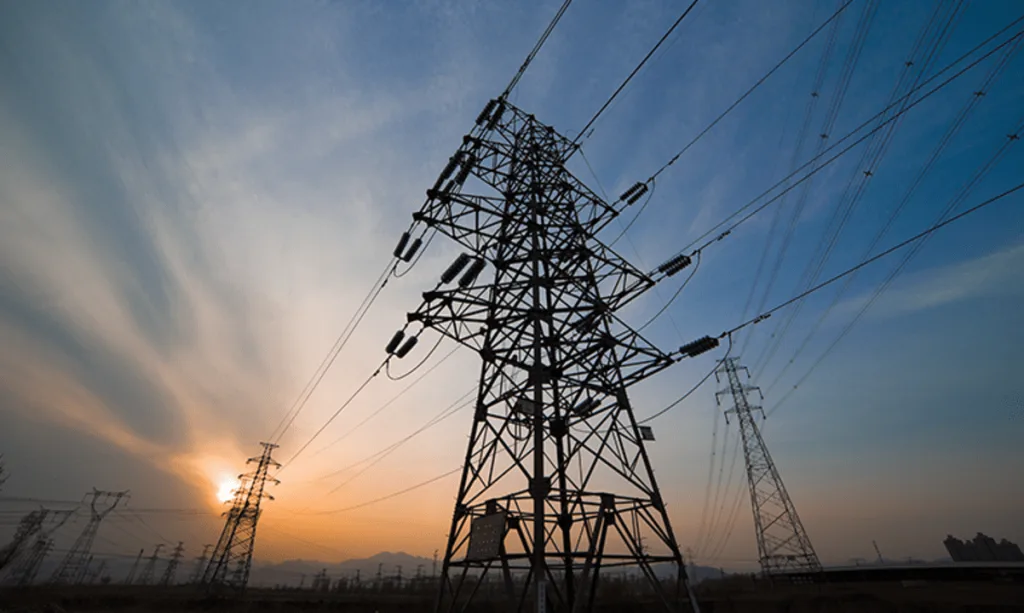
The Brazilian government has completed a study assessing the risks posed by solar storms to the country’s strategic infrastructure, including power grids, telecommunications systems, civil aviation and defense facilities. The final report prepared by the technical working group responsible for the assessment was approved by the Brazilian Space Program Development Committee (CDPEB), according to a resolution published in the Official Gazette on Friday (27).
Established in July this year, the working group was tasked with identifying vulnerabilities across these sectors, mapping the impact of ionospheric irregularities on the accuracy of global navigation satellite systems and proposing protocols to mitigate damage to strategic assets. The full report was not published in the Official Gazette.
Solar storms can disrupt Earth’s magnetic field and ionosphere, affecting technological systems on which a growing share of economic activity depends. Although these are naturally occurring phenomena, their economic consequences are likely to become increasingly significant as businesses and governments rely more heavily on digital, electrical and space-based systems.
In the power sector, geomagnetic storms can induce electrical currents in transmission lines, causing equipment overloads, transformer damage and power outages. In aviation, they can disrupt navigation and communication systems. In telecommunications, they can interfere with signal transmission and satellite operations.
Risks to agribusiness
Brazil’s exposure extends beyond the sectors explicitly mentioned in the resolution. The growing use of satellite navigation systems in precision agriculture makes agribusiness particularly vulnerable to ionospheric disturbances.
A study made available by NASA in 2025 focusing specifically on Brazilian agriculture identified equatorial plasma bubbles as one of the main space weather phenomena capable of compromising the accuracy of navigation systems used in agricultural machinery. Reduced accuracy can disrupt planting, pesticide application and harvesting operations.
These risks gained international attention in May 2024, when a geomagnetic storm of the highest intensity caused disturbances in power grids, interference with navigation systems and changes to transatlantic flight routes. In the United States, certain models of GPS-guided tractors experienced failures that disrupted or delayed agricultural operations.
Brazil has its own infrastructure for monitoring these phenomena. Since 2008, the National Institute for Space Research (INPE) has operated the Brazilian Space Weather Study and Monitoring Program (EMBRACE), which tracks solar activity, Earth’s magnetic field and ionospheric conditions.
A new operational risk factor
The report’s approval brings space weather onto Brazil’s strategic infrastructure protection agenda. For power utilities, telecommunications operators, airlines and companies reliant on satellite navigation systems, the issue could become increasingly important in risk management and business continuity policies.
For now, the resolution establishes no new regulatory obligations for companies, mandatory investments or compliance deadlines. The next step will be to examine the technical working group’s recommendations and determine whether they will be incorporated into the operational protocols and regulatory requirements of the sectors involved.
Esta conversa está sendo útil até agora?


Leave a Reply