

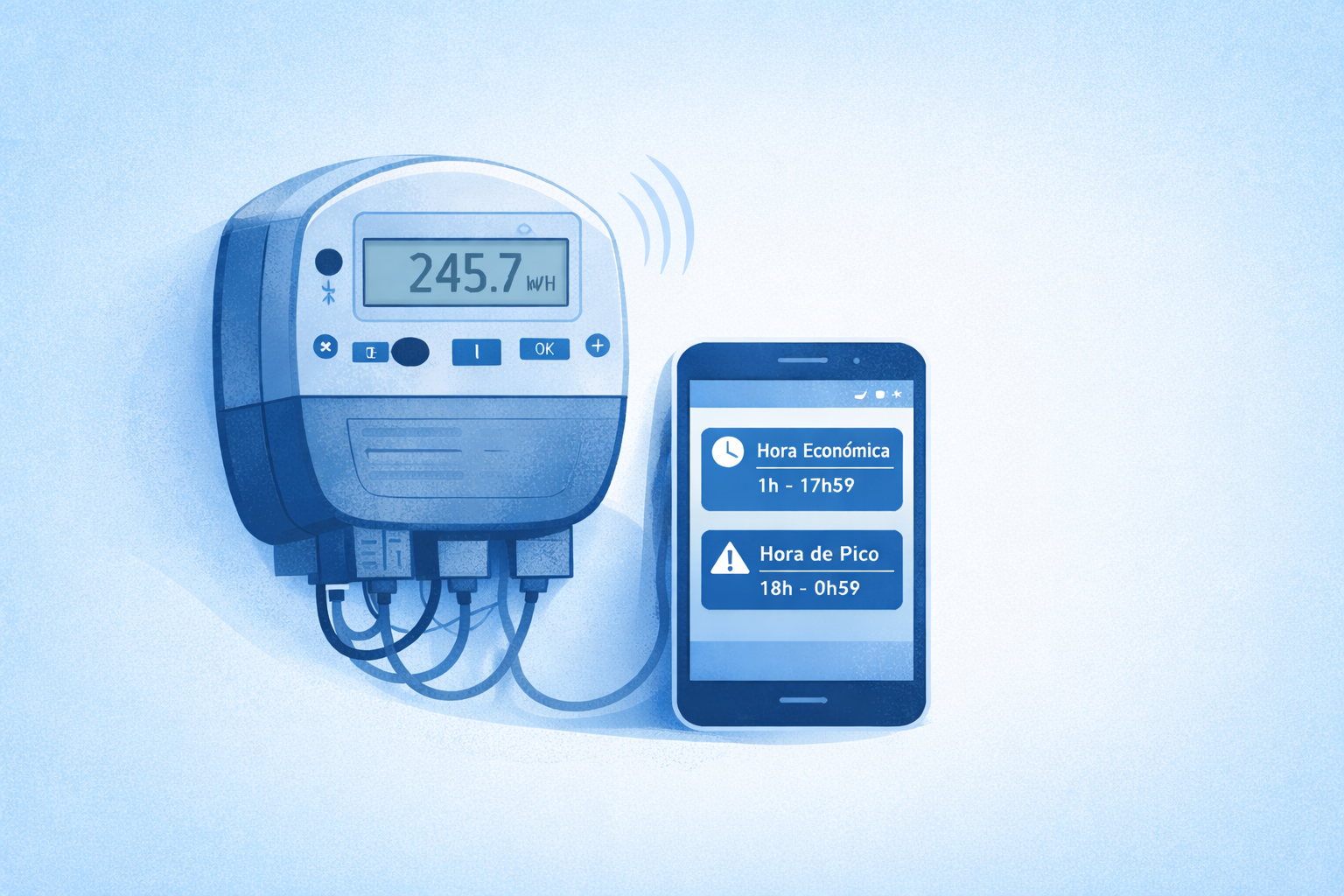
In January, Grupo Equatorial launched a pilot designed to make a technical regulatory concept tangible for households. Called Minha Energia, the project is a tariff sandbox authorized by Brazil’s power regulator, the Agência Nacional de Energia Elétrica (Aneel). It is being tested in two small, tourism-driven municipalities in northeastern Brazil: Barreirinhas, in Maranhão, the gateway to the Lençóis Maranhenses national park and home to roughly 65,000 residents, and Maragogi, in Alagoas, famous for its natural pools and with a population of about 35,000. The core idea is straightforward: allow consumers to face different electricity prices depending on the time of day, instead of paying the same rate regardless of when energy is used.
Under the pilot, the standard flat tariff is replaced by a so-called Planned Tariff. From 1 a.m. to 5:59 p.m., consumers are in the “Economic Hour”, when electricity is cheaper and the use of energy-intensive appliances is encouraged. From 6 p.m. to 12:59 a.m., the system shifts to the “Peak Hour”, when demand is higher and electricity costs more. To support this structure, Equatorial has completed the installation of smart meters and rolled out a mobile app that allows customers to track daily consumption directly from the meter, without relying on continuous internet access.
The experiment speaks less to gadgets than to public policy. Brazil has expanded renewable and intermittent generation at a fast pace, but residential tariffs remain largely insensitive to timing, spreading the cost of peak demand across all consumers. Time-based pricing flips that logic. By making scarcity visible in the bill, the Planned Tariff tests whether households are willing — and able — to adjust behavior when prices change during the day.
The pilot will run for 12 months, long enough to observe changes in consumption patterns, bill volatility and customer satisfaction. If consumers respond as theory predicts, the model could reduce stress on the grid at peak times and curb the need for costly capacity investments. If not, the sandbox will still have done its job: revealing where economic signals collide with everyday constraints — and how far Brazil’s electricity pricing can realistically evolve.




Leave a Reply