
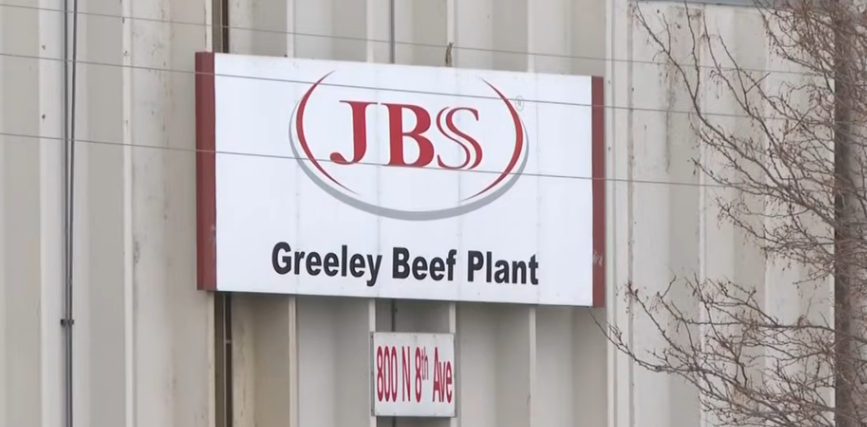
By Brazil Stock Guide – Workers at a major U.S. beef plant operated by JBS could go on strike as early as March 16, after the union representing employees at the company’s Greeley, Colorado facility formally notified management that negotiations over a new labor contract have reached an impasse. The dispute involves roughly 3,800 workers at the Swift Beef plant, one of the largest cattle-processing facilities in the United States and a key part of the American operations of JBS USA.
The notice was sent Monday (Mar. 9) by the local branch of the United Food and Commercial Workers, which represents employees at the facility. In a letter to JBS USA’s head of labor relations, Matthew Lovell, union president Kim Cordova warned that workers would begin what the union described as an “unfair labor practice strike” at 5:30 a.m. on March 16 unless negotiations change course. The letter follows months of bargaining over a contract that expired last July but has been temporarily extended while talks continued.
A narrowing but unresolved gap
The union says the remaining economic gap between the two sides is relatively small. According to the letter, the difference between the company’s latest offer and the union’s proposal amounts to roughly $30,000 per week across the bargaining unit, or about $3 million over the life of the agreement. The union argues that the amount is negligible relative to the profits generated by what it described as JBS’s “flagship plant” in the U.S. beef industry.
Union officials say the company’s wage proposal — which includes a $0.60 hourly increase in the first year and $0.30 annual raises thereafter — fails to keep pace with the rising cost of living in Colorado. The union also argues that increases in health-care premiums are absorbing much of the pay gains, noting that employees could see about $0.22 of a $0.30 annual raise consumed by higher health insurance costs.
Cordova said in the letter that the union had attempted to narrow the dispute by withdrawing proposals in other economic areas in order to reach a timely agreement. Instead, she wrote, the company remained unwilling to improve the core economic terms of its offer beyond what had been negotiated in contracts at other JBS facilities across the country.
Company cites national agreement
JBS has defended its position, saying its offer aligns with a national labor agreement reached with unions at other U.S. plants in 2025. The company argues that the proposal includes wage increases and benefits consistent with industry standards and reflects months of negotiations with the union.
A spokesperson for JBS said the company has spent about eight months in bargaining discussions and believes its latest proposal is “strong and fair.” The company has also indicated it could shift production to other facilities with excess processing capacity if a strike occurs, an effort to avoid disruptions to beef supply.
The Greeley plant is one of the largest beef-processing facilities in the U.S., employing thousands of workers who process cattle into beef products distributed nationwide. Any disruption there could reverberate through the cattle market, particularly if slaughter schedules are reduced or cattle purchases are delayed ahead of a potential walkout.
Market and industry implications
The strike threat has already begun influencing the cattle market. Analysts say packers have slowed purchases in recent days as uncertainty around the plant’s operations grows. Cash cattle prices weakened late last week, reflecting concerns that a temporary halt in slaughter capacity could reduce near-term demand for livestock.


Leave a Reply