
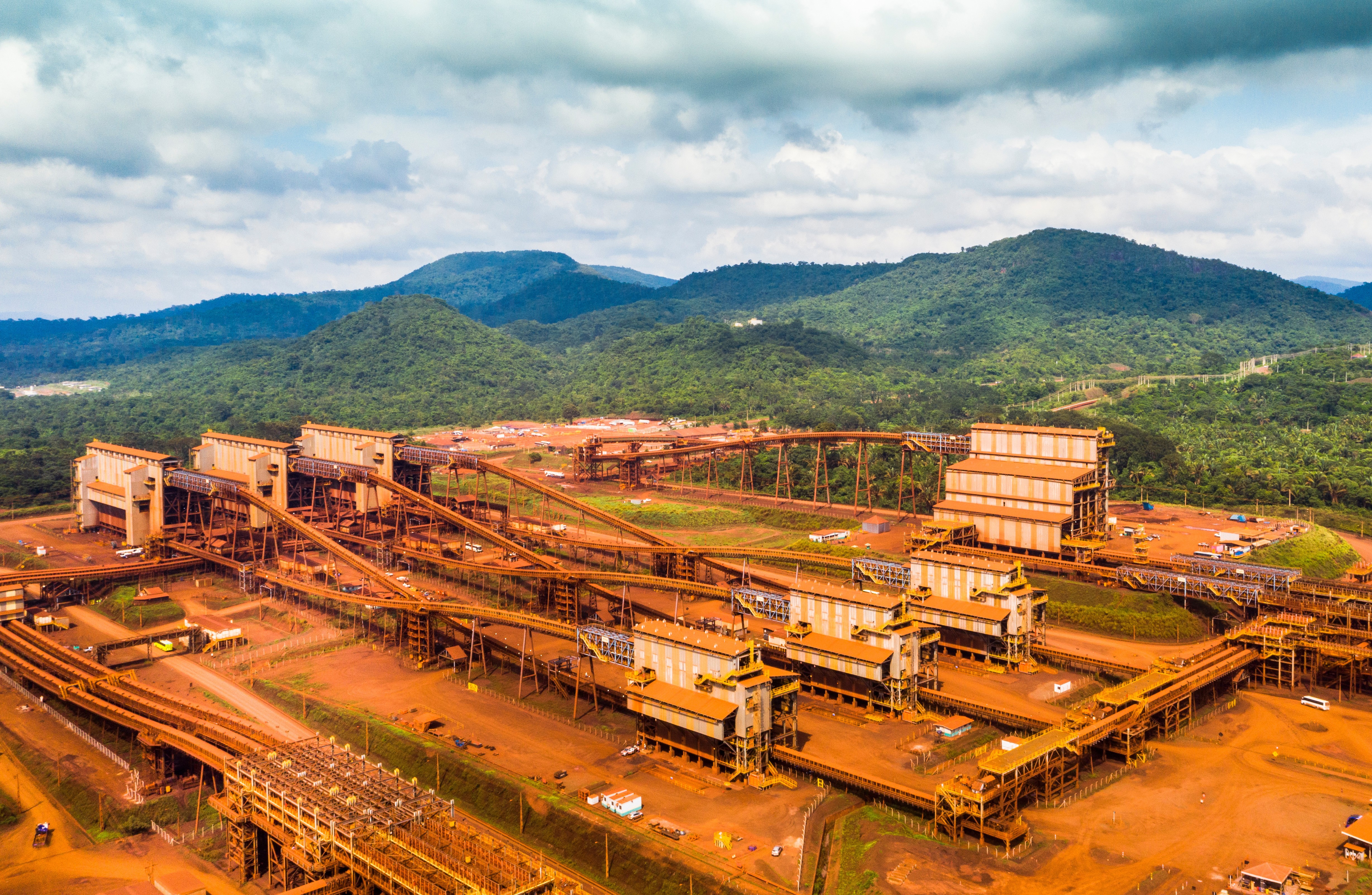
By Brazil Stock Guide – Vale (NYSE: VALE; B3: VALE3) reported net income attributable to shareholders of US$ 1.38 billion for the second quarter of 2026, down 35% from US$ 2.12 billion a year earlier. The decline came despite stronger revenue, operating earnings and cash generation, highlighting a sharp disconnect between the performance of Vale’s mining operations and its reported bottom line.
Most of the pressure emerged below the operating-profit line. Vale recorded a US$ 798 million negative year-on-year swing in the mark-to-market value of derivatives, partly reflecting an unusually favorable comparison base in the second quarter of 2025. Higher income taxes and a provision included in US$ 289 million of non-recurring expenses also reduced reported earnings.
The financial result deteriorated from a US$ 167 million gain a year earlier to a US$ 473 million loss. Vale also booked US$ 368 million in income-tax expenses, compared with a US$ 32 million tax benefit in the previous-year period. Foreign-exchange effects on tax losses accumulated by subsidiaries accounted for a significant portion of that reversal.
Even after excluding non-recurring items, earnings declined. Proforma net income attributable to shareholders was US$ 1.57 billion, down 26% year on year. The adjusted figure removes exceptional provisions and impairments, but still captures the deterioration in financial results and the higher effective tax burden.
Operating performance moved in the opposite direction. Net revenue rose 19% to US$ 10.50 billion, while proforma EBITDA increased by the same percentage to US$ 4.07 billion. Adjusted EBITDA advanced 9% to US$ 3.68 billion, and the proforma EBITDA margin remained stable at 39%. Chief Executive Officer Gustavo Pimenta said iron-ore output reached its highest level for a second quarter since 2018, while copper delivered its strongest second-quarter production in nine years.
Iron Ore Volumes Rise, but Costs Absorb Much of the Gain
Total iron-ore sales reached 79.7 million metric tons, up 3% from the second quarter of 2025 and 16% from the first three months of this year. Iron-ore fines sales rose 3% to 69.9 million tons, while pellet sales increased 4% to 7.7 million tons.
Vale’s realized price for iron-ore fines reached US$ 95 per ton, 12% higher than a year earlier but 1% below the first quarter. Revenue from the Iron Ore Solutions division increased 13% to US$ 7.89 billion, while adjusted EBITDA grew by a more modest 3% to US$ 3.06 billion.
The gap between revenue and EBITDA growth reflected a material increase in costs. Vale’s C1 cash cost, a measure of direct mine, processing, rail and port expenses, rose 9% to US$ 24.10 per ton, excluding third-party purchases. Freight costs increased 20% to US$ 22 per ton, while the all-in cost of fines and pellets climbed 18% to US$ 61.60 per ton.
A stronger Brazilian real increased the dollar value of costs incurred in Brazil. Vale also cited more expensive diesel, inventory effects, the deconsolidation of energy producer Aliança Energia and expenses associated with operational interruptions. Higher S11D production, better fixed-cost dilution and efficiency initiatives offset only part of those pressures.
The suspension of operations at the Fábrica and Viga mining units also affected the quarter. In iron-ore fines, higher realized prices added US$ 679 million to EBITDA and greater sales volumes contributed US$ 68 million. Those gains were partly offset by US$ 258 million in additional costs and expenses, US$ 231 million in higher freight expenses and a US$ 114 million negative currency impact.
Vale partially protected itself against higher marine-fuel prices through hedging contracts. Around 70% of its expected bunker-fuel consumption for 2026 is covered by instruments linked to Brent crude. The economic benefit was equivalent to about US$ 1.60 per ton, which would reduce the reported all-in cost from US$ 61.60 to approximately US$ 60 per ton after the hedge effect.
Pellets delivered a weaker result. Sales increased 4% and the realized price rose to US$ 137 per ton, but EBITDA declined 13% to US$ 416 million. Vale attributed the contraction to operational restrictions, higher costs and the earlier-than-planned start of scheduled maintenance at its Oman operations.
Copper and Nickel Become More Important Earnings Drivers
Vale Base Metals was the quarter’s main growth engine. Revenue from the division rose 42% to US$ 2.61 billion, while adjusted EBITDA increased 79% to US$ 1.29 billion. Copper contributed US$ 1.03 billion of that result, with nickel adding US$ 294 million.
In copper, the average realized price jumped 57% to US$ 14,062 per ton. Sales volumes increased 18% to 78,000 tons, pushing revenue up 62% to US$ 1.56 billion. Copper EBITDA rose 91%, supported by higher copper and gold prices as well as increased volumes.
Revenue from gold and other by-products was sufficiently strong to push copper’s all-in cost to negative US$ 257 per ton, compared with a positive cost of US$ 1,450 per ton a year earlier. In practical terms, Vale’s by-product revenue more than covered the costs included in the calculation before accounting for the principal copper revenue.
Nickel also improved. The realized price increased 14% to US$ 18,061 per ton, while sales volumes rose 7% to 44,000 tons. Revenue advanced 23% to US$ 1.24 billion and EBITDA grew 46% to US$ 294 million, despite costs associated with biennial maintenance at the downstream facilities in Sudbury, Canada.
Cash Generation Supports Dividends and Buybacks
Free cash flow rose 49% to US$ 1.51 billion, supported by higher EBITDA, lower tax payments and US$ 337 million in cash received from the settlement of derivatives. Those benefits were partly offset by increased working-capital requirements, including higher receivables and inventories.
Net debt ended June at US$ 13.17 billion, down 3% from March but 8% higher than a year earlier. Expanded net debt, which includes obligations related to Brumadinho, Samarco and the decommissioning of upstream dams, fell by US$ 1.1 billion during the quarter to US$ 16.68 billion. Capital expenditure totaled US$ 1.13 billion.
Based on its first-half results, Vale’s board approved R$ 8.64 billion in shareholder distributions, payable on September 2. The amount comprises R$ 6.68 billion in interest on equity — a tax-efficient Brazilian form of shareholder remuneration — and R$ 1.97 billion in ordinary dividends. The preliminary payment corresponds to gross interest on equity of R$ 1.568705805 per share and dividends of R$ 0.462016093 per share.
Investors holding Vale shares at the close of trading on August 11 will be entitled to the distribution, with the stock trading ex-rights from August 12. The final per-share amount may change depending on the number of shares outstanding after ongoing buybacks.
The board also authorized a new program to repurchase as many as 100 million shares or American depositary receipts, equivalent to approximately 2.3% of Vale’s capital. The program will begin after the current authorization expires in August and may run for up to 18 months. Some of the repurchased shares may be used in long-term executive incentive plans, while others may eventually be canceled.
Vale Raises Iron-Ore Cost Guidance
Vale increased its 2026 C1 cash-cost guidance for iron ore to between US$ 22.50 and US$ 23.50 per ton, from a previous range of US$ 20 to US$ 21.50. Its all-in cost forecast was raised to US$ 58 to US$ 62 per ton, from US$ 52 to US$ 56, mainly because of a stronger real, higher oil prices and expenses associated with operational stoppages.
The outlook for base metals moved in the opposite direction. Vale lowered its projected all-in copper cost to between US$ 0 and US$ 500 per ton and reduced its nickel-cost forecast to US$ 10,000 to US$ 11,500 per ton. It also raised the lower end of its 2026 copper and nickel production ranges following stronger first-half operating performance.
The Bacaba copper project was 39% complete at the end of June and is now expected to begin operating in the third quarter of 2027, ahead of the original first-half 2028 schedule. Vale also began commissioning the Serra Sul +20 project in Carajás. Together with a new crushing system scheduled to start in the fourth quarter, the project is expected to add 20 million tons of annual iron-ore capacity.
On remediation, Vale said approximately 83% of the commitments under the Brumadinho reparation agreement had been completed. Payments connected with the Samarco disaster reached R$ 82.4 billion by the end of June, while more than 642,000 people had received compensation by mid-July.
Leave a Reply