
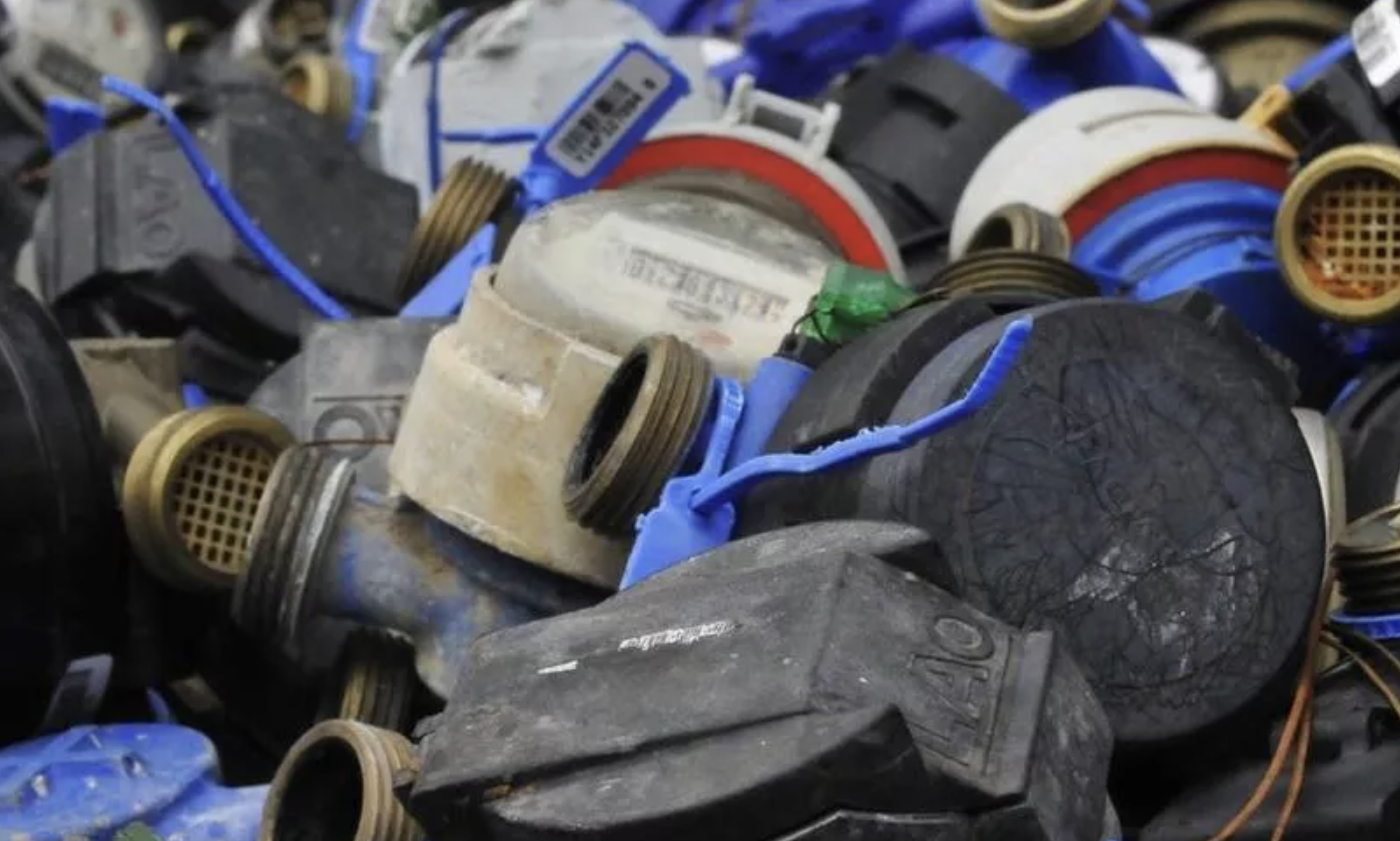
By Brazil Stock Guide – São Paulo-based utility Companhia de Saneamento Básico do Estado de São Paulo (Sabesp, BVMF: SBSP3) signed a strategic partnership with Ambipar (BVMF: AMBP3), a global leader in environmental solutions, to recycle more than 1,000 tons of replaced water meters across the state. The announcement was disclosed by the company itself, according to a report by Brasil 247.
The discarded equipment will be sent to Ambipar’s Urban Mining Unit in São José dos Campos, the largest facility in Latin America dedicated to recycling electronic waste. There, meters will undergo material separation — including brass, plastic, copper and iron — which will then be processed and returned to industrial supply chains as raw material.
“This circular economy cycle ensures that all materials are reused. Instead of extracting new natural resources, we preserve them by reusing what already exists. With that, we avoid environmental degradation and directly contribute to a more sustainable future, where today’s waste becomes tomorrow’s raw material,” said Gustavo Fehlberg, Sabesp’s executive director of Procurement and Corporate Services.
Sabesp estimates that every ton of recycled brass saves 8,538.44 kWh of energy and prevents about 4.42 tons of CO₂e emissions. Considering the full backlog of discarded meters, the initiative could generate savings of 5.12 TWh of energy and mitigate 2.65 million tons of CO₂e. Ambipar will oversee reverse manufacturing and issue processing certificates.
Marcelo Oliveira, Ambipar’s global head of e-waste, said the project illustrates how innovation and sustainability can advance together. “The partnership with Sabesp is a concrete example of urban mining applied to the circular economy. The water meters that were replaced return to industry as input and become new equipment. This sustainable cycle preserves natural resources, reduces the need for new extractions, generates energy efficiency and shows how innovation and environmental responsibility can walk side by side for society’s benefit,” he said.
By recovering different components such as brass, plastic, copper and iron, the program strengthens the role of recycling in building a cleaner and more sustainable economic model.


Leave a Reply