
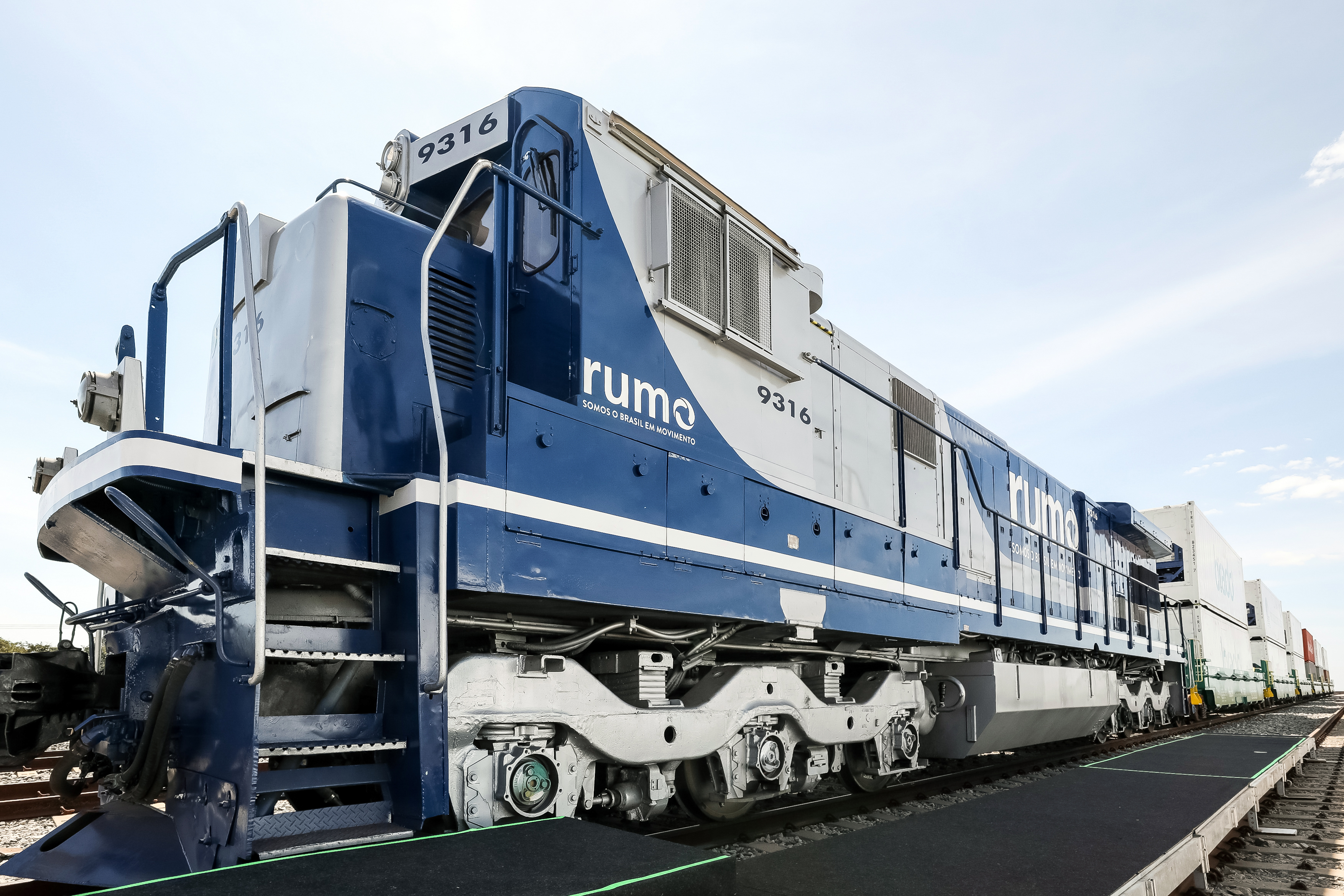
By Brazil Stock Guide – Rumo SA, Latin America’s largest independent rail logistics operator, is navigating a challenging transition marked by softer pricing and higher short-term uncertainty, but its shares already reflect much of the downside risk, according to a new analysis. The company’s stock (RAIL3 BZ) has underperformed in 2025 as investors focused on tariffs, competition with trucking and sector volatility tied to the grain cycle.
In a report published on Monday (22), BTG Pactual said it is maintaining a buy recommendation on Rumo, arguing that operational resilience, cost discipline and long-term capacity expansion support the investment case despite near-term headwinds. The bank kept its 12-month target price at 23 reais per share, pointing to significant upside from current levels.
BTG noted that Rumo’s weaker share performance this year has been driven largely by short-term factors. While the company operates rail assets with monopoly characteristics, it competes directly with road transport in grain logistics, leaving tariffs effectively unregulated and more sensitive to market conditions. This exposure has led to greater earnings volatility, a key factor behind the stock’s recent de-rating.
Operationally, the third quarter was described as busy but broadly in line with expectations. Strong volumes helped offset lower pricing, while margins proved resilient due to effective cost control. BTG revised its revenue forecast for 2025 to 13.7 billion reais and expects EBITDA to come in near the lower end of management guidance, around 8.1 billion reais, supported by efficiency gains and stable throughput.
The report also examined the broader agribusiness backdrop, particularly in Mato Grosso, Rumo’s core corridor. Official crop estimates point to continued expansion in planted area for the 2025/26 season, even as irregular rainfall and structural changes in corn consumption — driven by the growth of ethanol production — introduce new variables for export volumes over time.
On the corporate front, BTG addressed the recent transaction by Cosan SA (CSAN3 BZ), Rumo’s controlling shareholder, which sold a minority stake while retaining economic exposure through a financial swap. According to the bank, the move was aimed at balance-sheet efficiency at the holding level and does not alter Cosan’s control or strategic commitment to Rumo.
Regulatory developments remain in focus as two rail concessions approach expiration. The Malha Oeste network is expected to be returned to the granting authority when its contract ends in mid-2026, while the larger and more strategic Malha Sul concession, due to expire in early 2027, is seen as a candidate for renewal under revised economic terms. Rumo has already provisioned significant amounts related to these processes, limiting additional balance-sheet risk.
Despite a more demanding operating environment in the short term, BTG said Rumo remains a strategic infrastructure asset for Brazil’s grain exports. Investments to ease bottlenecks — particularly at the Port of Santos — combined with structural efficiency gains underpin the view that current valuations do not fully capture the company’s longer-term earnings potential.


Leave a Reply