
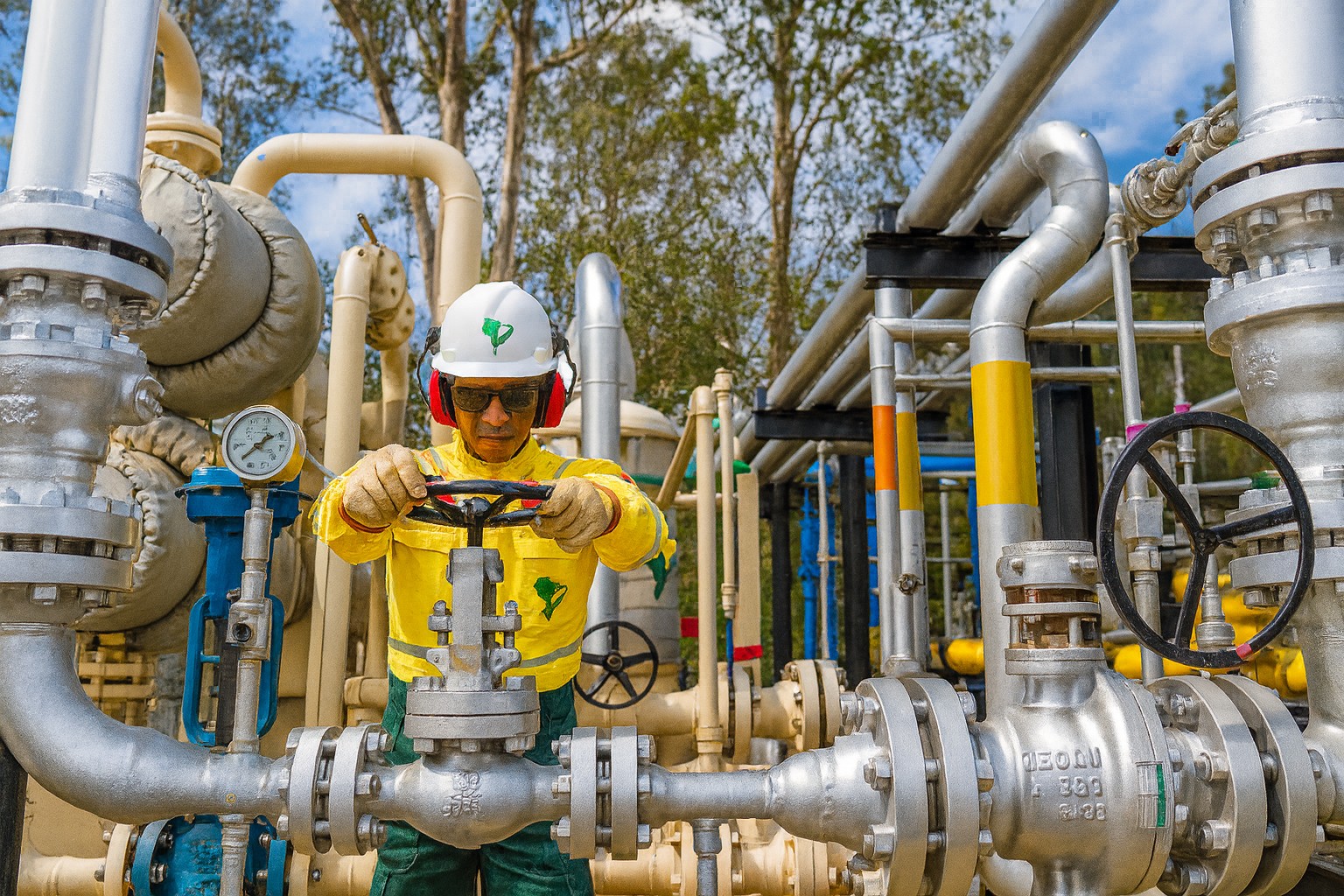
By Brazil Stock Guide – PetroReconcavo (B3: RECV3) posted a 49% drop in third-quarter net income, to R$122 million, as lower production and foreign-exchange effects weighed heavily on results. Average output fell 3%, to 26,400 barrels of oil equivalent per day, while the appreciation of the Brazilian real reduced dollar-linked revenue and squeezed realized oil prices in local currency.
EBITDA slipped 6%, to R$350 million, and net revenue eased 2%, to R$786 million, reflecting the combination of lower volumes, FX headwinds, and higher operating costs — especially with well workovers and asset-integrity programs. The EBITDA margin, at around 44%, showed resilience but still narrowed compared with the previous quarter.
Production declines but key technical milestones achieved
The drop in production came mainly from the Tiê field in Bahia, which faced accelerated depletion after strong early-year output. To counter this, PetroReconcavo intensified its water-injection campaign — and in September, for the first time, the company injected more water than it produced fluids, starting a reservoir repressurization process aimed at stabilizing output and improving recovery rates.
In Potiguar, output fell 6% amid the absence of new well completions. Still, the company marked a technical milestone by drilling its first horizontal well, reinforcing its ability to execute complex projects and preparing the ground for future productivity gains.
Long-term strategy: gas and infrastructure
Despite the tougher operating environment, PetroReconcavo pressed ahead with its gas and midstream expansion strategy. It completed the acquisition of 50% of Brava Energia’s gas assets in Rio Grande do Norte, investing R$296 million to strengthen its infrastructure, reduce transport costs, and increase flexibility in processing and delivery.
The Tiê gas pipeline also entered operation, boosting profitability by adding roughly US$5 per MMBTU in margin from gas routed to the UTG Catu processing hub. Capex surged 55%, to R$569 million, reflecting investment in drilling, water injection, and midstream resilience.
Financial management and hedging
The company dollarized its debt through a R$500 million third debenture issue, with a 5.66% annual cost and 5.2-year duration, and kept 25% of its oil production hedged under Zero-Cost Collar contracts between US$60–69.75 per barrel. Operating cash flow rose 20%, to R$388 million, but free cash flow turned negative at R$221 million, driven by high capital spending. Net debt climbed to R$1.55 billion, with leverage steady at 1.0x LTM EBITDA.




Leave a Reply