
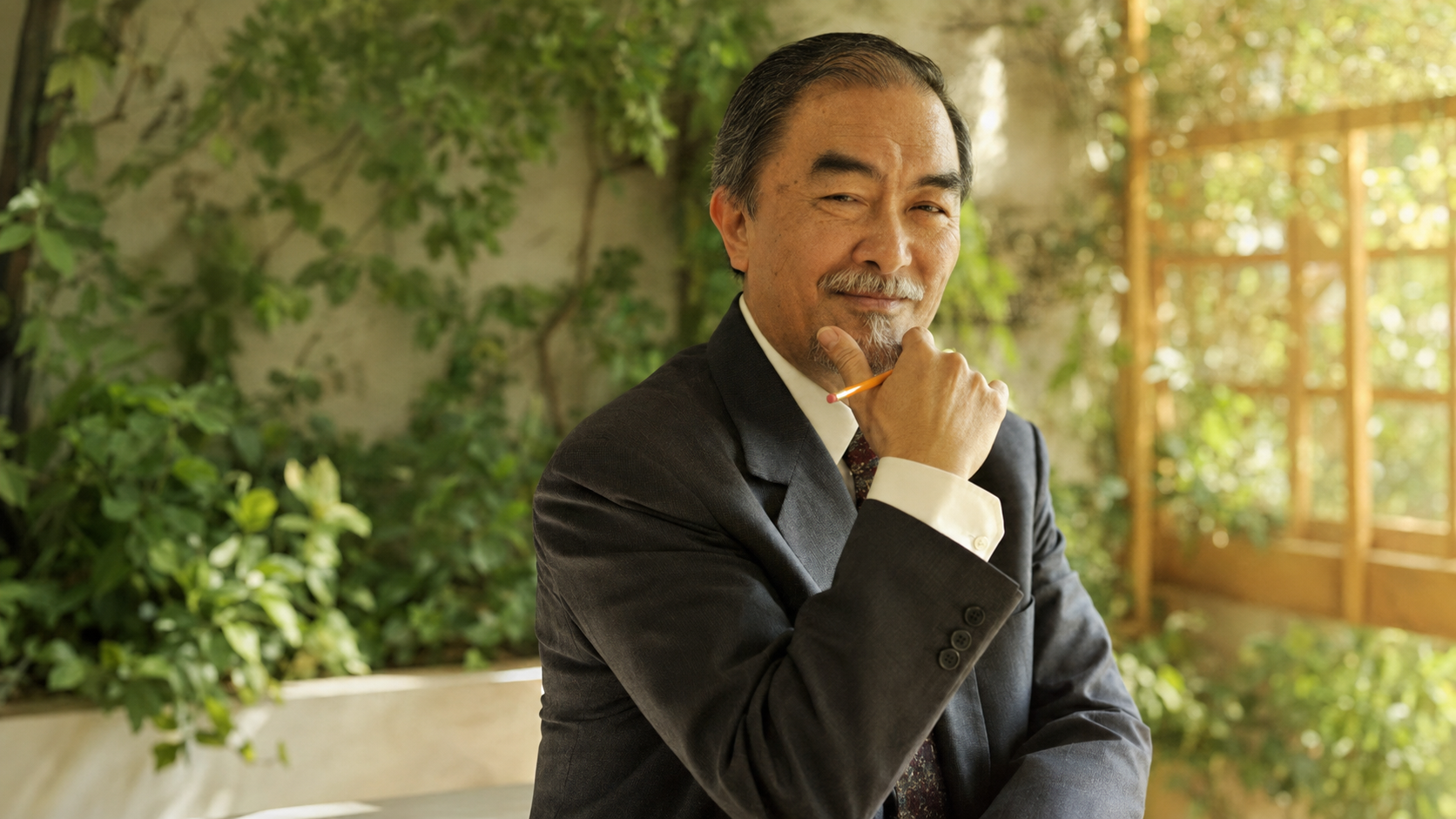
By Brazil Stock Guide – When Oscar Motomura joined Citibank in São Paulo, he started at the bottom of the corporate ladder as an office messenger. Within a few years, he had worked across several areas of the bank and was sent to its New York headquarters to join the global strategic planning team. Upon returning to Brazil, he helped reorganize Citi’s local operations. He had reached senior management before turning 30.
He appeared destined for a prominent career in finance. In the early 1970s, however, Motomura left Citi, began teaching strategic planning at Fundação Getulio Vargas and founded the business that would eventually become Amana-Key. That decision turned him into one of the most influential figures — and one of the least known outside corporate circles — in the recent history of Brazilian management.
Motomura died at the age of 82, after devoting more than five decades to developing executives. His legacy cannot be measured in major acquisitions, equity stakes or publicly traded companies. It lives in the decisions made by the thousands of leaders who attended his programs.
The executive who chose to develop leaders
Amana-Key emerged as Brazilian companies were beginning to professionalize their management, embrace strategic planning and groom successors at family-controlled businesses.
Motomura saw a gap, however. Companies were learning management techniques, but few invested in their leaders’ ability to understand complex problems, anticipate change and ask better questions. His goal was not to offer ready-made formulas, but to change the way leaders perceived reality.
He described his work in broader terms: “I seek to help people, organizations and society itself evolve.” In an autobiographical account, Motomura also said his purpose was to raise the level of awareness in management, strategy and leadership. The statement captures a career that extended far beyond conventional executive training.
More than 80,000 participants
The main vehicle for that influence was Amana-Key’s Advanced Management Program, known by its Portuguese acronym APG. According to the institution, more than 80,000 people participated in the program over slightly more than three decades.
That figure is particularly significant because APG was not a mass-market course. It was aimed primarily at CEOs, senior executives, successors at family-controlled companies, public-sector leaders and officials from all three branches of government.
Amana-Key says its participants included executives from private and public-sector organizations, governors, senators, members of Congress, officials from oversight bodies and association leaders.
“I have lost the master of masters,” wrote Jorge Viana, a former governor of Acre state and president of the Brazilian Trade and Investment Promotion Agency, known as ApexBrasil. “The person who helped me most in my development and in my work as a manager and leader.”
Motomura’s influence on Brazil’s senior business leadership can also be seen in the history of Magazine Luiza. Luiza Helena Trajano said she met him when the company was still a small retail chain in the interior of São Paulo state and she had only recently taken over the business’s executive leadership.
“I often say that I found a translator in Oscar,” wrote Trajano, who chairs the retailer’s board. “For many years, I led initiatives guided by intuition, values and respect for people. He was able to give shape to and explain what I did naturally but still did not know how to put into words.”
According to Trajano, executives and employees who attended Motomura’s courses and lectures returned changed, reflecting more deeply on leadership, purpose and the responsibilities of those who lead people.
“Brazil has lost one of its greatest management thinkers. I have lost a dear friend who profoundly shaped both my personal and professional journey,” she said.
Attended by CEOs, board members and senior public officials, the program generated a multiplier effect that is difficult to quantify. Ideas discussed in the classroom later reached companies with thousands of employees, extensive supplier networks, governments and public institutions.
Over time, Amana-Key also built a network of more than 100 international experts in management, science, strategy, innovation and sustainability.
A school for CEOs
APG was markedly different from a traditional MBA. Strategy shared the curriculum with philosophy, history, science, psychology, art, geopolitics, sustainability and futures studies. Competitors could sit in the same room to discuss not only markets, but also ethics, human behavior and the social consequences of business decisions.
Motomura’s premise was that an organization could rarely evolve beyond the level of awareness of those who led it. Long before ESG, corporate purpose and stakeholder capitalism became boardroom buzzwords, he argued that companies did not exist solely to generate profits. Every business decision, he maintained, had human, environmental and social consequences.
For decades, his reputation grew primarily through word of mouth. CEOs recommended the program to other CEOs. Business owners sent their successors. Board members encouraged newly appointed executives to attend.
Amana-Key became a kind of informal school for Brazil’s business elite.
A management thinker
Motomura was reluctant to describe himself simply as a consultant. His background combined management, social psychology, strategy, organizational behavior and technology. His interests also extended to physics, biology, artificial intelligence, philosophy, spirituality and systems theory.
This multidisciplinary approach was not an intellectual accessory. It was central to the way he worked. While much of the consulting industry focused on efficiency, Motomura spoke about awareness. While consultants presented answers, he sought to reframe the questions.
One of his best-known concepts was that of “impossible equations”: challenges that could not be solved merely by adding resources, controls or effort, but required a radical shift in perspective.
For Motomura, strategy was not simply about choosing among the available alternatives. It was a means of making possible what appeared unfeasible under the existing logic.
An approach that outlasted management fads
Over five decades, the corporate world embraced and discarded a succession of management methodologies. Many became buzzwords before eventually fading away. Motomura’s thinking has aged better.
In a business environment shaped by artificial intelligence, digital transformation, climate change and geopolitical instability, his emphasis on systems thinking, discernment and responsible leadership appears more relevant than ever.
His concern was never just the technology itself, but the human qualities of those using it.
The same outlook guided his 12 years on the Earth Charter International Council. During his final five years, he served as co-chair of the body, which promotes principles of sustainability, global responsibility and a culture of peace.
An invisible legacy
Mourning Motomura’s death, Brazilian businessman Ricardo Young wrote on LinkedIn: “A towering leader is gone. He rethought, deepened, wrote, published and overcame opponents and adversity in pursuit of a complete transformation in the mindset of business leaders and companies.”
Young also highlighted Motomura’s courage, humor and “fearless, disruptive intelligence.”
His impact cannot be found in his net worth, equity holdings or market capitalization. It is scattered across decades of decisions made by executives and public officials who learned from him that managing an organization requires understanding people, weighing the consequences of every choice and recognizing the broader systems of which companies and society are a part.
In a country accustomed to celebrating entrepreneurs who built factories, banks and conglomerates, Motomura built something less visible, but perhaps more enduring: a different way of thinking about leadership.
Leave a Reply