
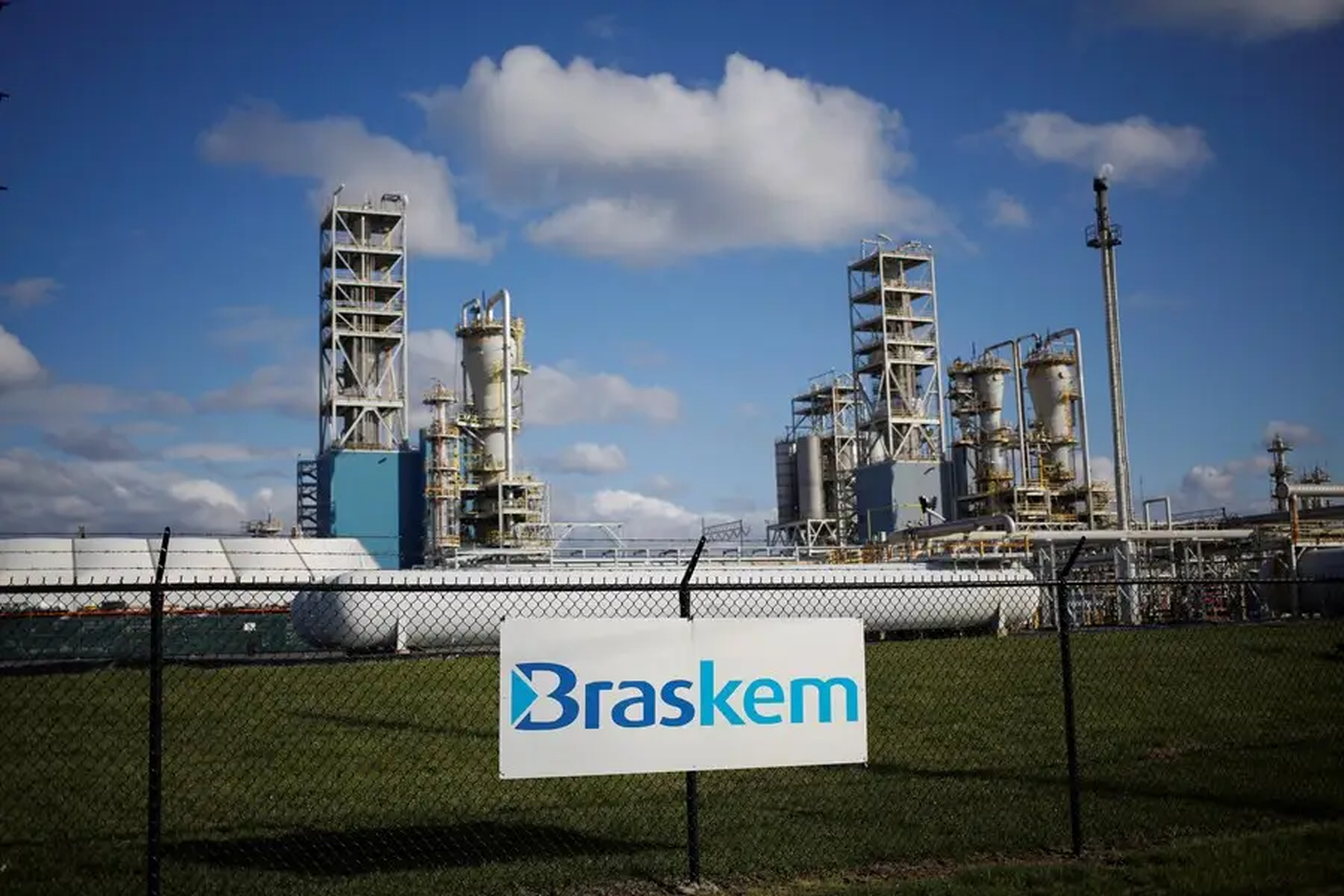
By Brazil Stock Guide – Braskem is once again under pressure from international rating agencies. Moody’s downgraded the company’s credit rating from B2 to Caa3 and kept the outlook negative, marking the third downgrade in just one week for the largest petrochemical producer in Brazil and the Americas.
Moody’s move followed cuts by Fitch on Sept. 26 and S&P Global on Sept. 29. Together, the three actions highlight the sharp deterioration of Braskem’s financial metrics and its increasingly fragile liquidity position, according to Investing.com.
Moody’s lowered both the Corporate Family Rating (CFR) and the senior unsecured global notes issued by Braskem America Finance Company, fully guaranteed by the parent company. The agency said the decision reflects the company’s hiring of financial and legal advisers to review its capital structure — a step that heightens the risk of “distressed exchanges” given Braskem’s ongoing cash burn and weak operating profile.
In the 12 months ended June 2025, Moody’s-adjusted leverage — including Mexican operations — reached 15.3x, while free cash flow came in at negative R$8.8 billion. The agency expects leverage to remain between 11x and 13.5x over the next 12 to 18 months, pressured by narrow petrochemical spreads and continued cash outflows tied to liabilities in Alagoas.
By June, Braskem held R$10.3 billion in cash and had access to a committed US$1 billion credit line (around R$5.7 billion) maturing in December 2026. Debt maturities until the end of 2026 amounted to just R$1.9 billion, including Mexican obligations. Even so, Moody’s warned that weak operations in Mexico, unfavorable global conditions and persistent cash consumption will keep free cash flow negative through 2025, eroding the company’s capacity to absorb further shocks.
Moody’s also noted factors that partially support the rating: Braskem’s large scale, historically above-average margins, geographic diversification and strong customer relationships. Still, the steep deterioration of credit indicators since 2022, high exposure to volatile petrochemical spreads, potential liabilities in Alagoas and shareholder plans to divest continue to weigh heavily on the company’s profile.



Leave a Reply