By Brazil Stock Guide – Minerva Foods (B3: BEEF3) said a study conducted in partnership with Australian climate technology company Rumin8 and researchers from University of São Paulo showed that a methane-reducing feed additive cut enteric methane emissions in Nelore cattle by 50.4% while also improving feed conversion efficiency by 5%.
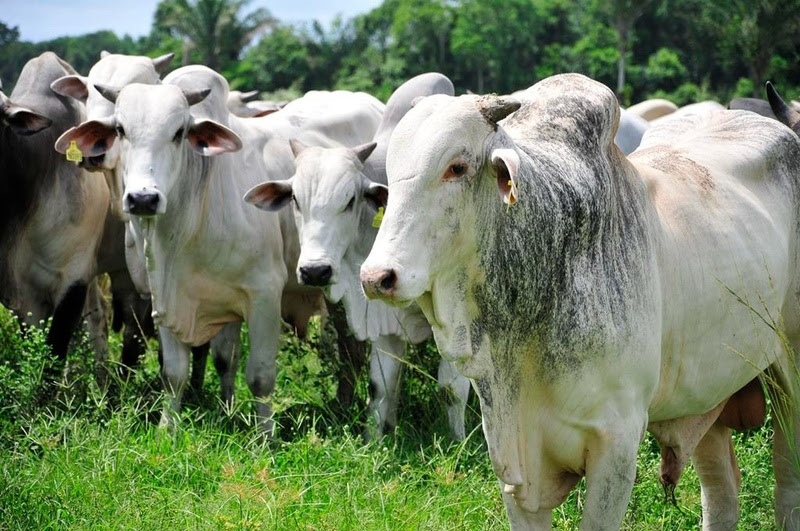
The 120-day study was carried out under conditions designed to simulate Brazilian commercial feedlot operations and focused on Nelore cattle, the dominant breed in Brazil’s beef industry. According to the companies, cattle receiving the additive alongside a total mixed ration diet produced significantly lower methane emissions compared with animals fed the same diet without supplementation.
“The results of the study were significant and will form part of our data package as we advance toward commercialization in Brazil, which has the world’s largest commercial cattle herd,” Rumin8 Chief Executive Officer David Messina said in the statement.
The results place Minerva among a growing group of global beef producers and agricultural technology companies attempting to address one of the livestock sector’s largest climate challenges: methane emissions from cattle digestion. Methane is considered a particularly potent greenhouse gas and has become a major focus of decarbonization discussions involving global food supply chains.
The study also found that methane intensity per kilogram of live weight gain fell from 77.2 grams to 39.6 grams among supplemented animals. In total, researchers estimated the trial avoided roughly 29.8 metric tons of CO₂ equivalent emissions during the experimental period.
Beyond the environmental angle, the productivity gains may prove equally important for commercial adoption. Feed costs remain one of the largest expenses in feedlot cattle operations, particularly in Brazil’s grain-intensive finishing systems. A statistically significant improvement in feed efficiency could help offset part of the cost of methane-reducing additives if the technology reaches scale.
The experiment involved 80 Nelore cattle housed in individual pens for precise monitoring of feed intake and methane emissions, alongside an additional group of 200 cattle managed in collective pens designed to replicate commercial-scale confinement conditions.
Researchers fed the animals a typical Brazilian feedlot finishing diet composed of 88% concentrate and 12% roughage, with ground corn serving as the primary ingredient. Daily feed intake and weight gain were monitored throughout the trial.
According to the companies, independent verification of the results remains ongoing through agricultural carbon certification firms including Athian and FoodChain ID, an important step before broader commercialization or potential use in carbon-credit frameworks.
For Minerva, the initiative reinforces a broader strategic narrative increasingly present among South American beef exporters: combining productivity gains with sustainability credentials as global importers, investors and regulators intensify scrutiny over livestock emissions and agricultural supply chains.
“Methane reduction is a strategic priority for advancing a more sustainable livestock supply chain,” Marta Giannichi, Global Sustainability Director at Minerva Foods, said in the statement.
Brazil holds the world’s largest commercial cattle herd, making the country a potentially critical testing ground for scalable methane-reduction technologies. The challenge, however, remains economic as much as environmental. The long-term adoption of additives such as Rumin8’s solution will likely depend on cost competitiveness, operational simplicity, regulatory approvals and whether lower-emission beef production can eventually generate pricing premiums or carbon-related revenues.
The results have not yet been published in a peer-reviewed scientific journal.


Leave a Reply