
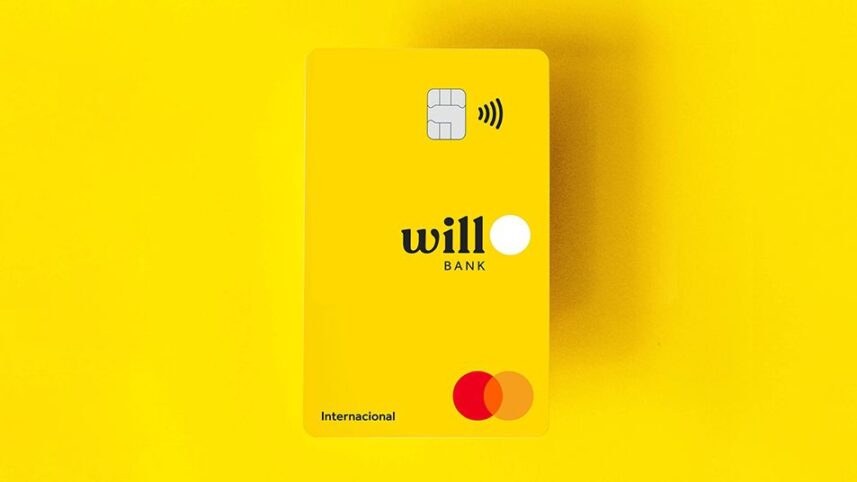
By Brazil Stock Guide – Mastercard Inc. (MA US) has proposed covering only half of the card-payment flows tied to Will Bank, a Brazilian lender that was liquidated by the central bank in January, drawing opposition from payment acquirers that say they should be fully reimbursed.
The proposal was reported by Valor Economico, which said it confirmed information first published by Bloomberg. Mastercard declined to comment to Valor, while Brazil’s central bank had not responded by the time the original article was published.
Will Bank was part of the Banco Master conglomerate. Mastercard was the card network for cards issued by the lender, whose collapse left processors and payment companies disputing who should absorb the losses from transactions still moving through the system.
According to people familiar with the matter cited by Valor, Mastercard honored payments for spot card transactions that are settled to merchants within 28 days, a cycle known in Brazil as D28. Those payments represented roughly half of Will Bank’s total volume.
The network has now proposed sharing the total loss equally with acquirers, Valor reported. Given that delinquency on Will Bank cards is estimated at about 50%, the offer would mean Mastercard would pay little more beyond the D28 flows already covered, according to the report.
Cielo SA (CIEL3 BZ) told Valor it remains convinced that, under Brazilian law and central bank regulation, risk management has been centralized at payment-arrangement institutions since 2015.
“Additionally, acquirers could not, cannot and will not be able to choose the issuers that are part of the arrangement, nor are they responsible for the guarantees tied to the operation,” Cielo said.
Rede, Getnet, StoneCo Ltd. (STNE US) and PagSeguro Digital Ltd., PagBank’s parent company (PAGS US), did not comment to Valor. Getnet is also listed in market data under GETT11 BZ, while Rede is controlled by Itaú Unibanco Holding SA (ITUB4 BZ; ITUB US). Mastercard, StoneCo and PagBank maintain investor-relations pages, and market data sources identify their tickers as MA, STNE and PAGS, respectively.
Valor previously reported that Mastercard’s exposure to current Will Bank card transactions had reached almost 8 billion reais. As the fintech’s financial condition worsened late last year, the network reduced that exposure to between 5 billion reais and 6 billion reais.
The final size of Mastercard’s loss remains unclear because the company executed several guarantees, according to Valor.
Brazil’s central bank approved rules in November making clearer that card networks are responsible for ensuring payment of all transactions to the receiving user. Networks have until the end of May to submit new regulations, which still need regulatory approval.
Acquirers and lawyers in the payments industry argue that earlier rules already required funds in transit for payment transactions to be held in segregated accounts. Valor cited Law 14,031 of 2020 and central bank Resolution 150 as the relevant framework.
“The D28 settlement makes risk management more complicated. This only happens in Brazil; nowhere else in the world is it like this. But it had already been clear since Resolution 150 that the risk in the arrangement belongs to the card networks. This proposal from Mastercard is unseemly,” an executive at an acquirer told Valor.
Another industry source said the market is waiting for the central bank to take a position that would pressure Mastercard to honor the obligations. If that does not happen, the dispute could end up in court.
“As things stand, it is likely to go down that path. Even though the new card-network regulations have not been approved, the rule published late last year by the central bank is already in force. An internal regulation of an arrangement cannot override that rule,” the person told Valor.
The dispute has also revived debate over Brazil’s long settlement cycle. Industry sources told Valor that an initial version of Mastercard’s proposed new rulebook, presented to market participants months ago, included a plan to reduce settlement from D28 to D2.
Without consensus in the industry for such a major change, Mastercard later dropped that item from its final proposal and kept D28 in place, Valor reported.
“Even for competition reasons, it would have to be something balanced among all card networks, and that did not end up happening,” one person involved in the discussions told Valor.



Leave a Reply