
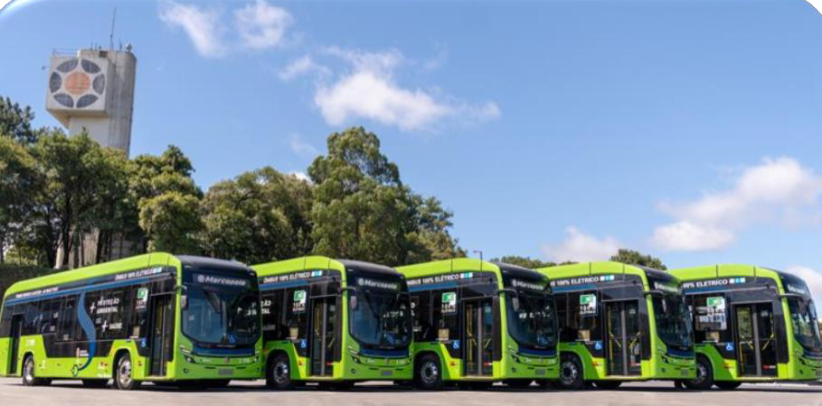
By Brazil Stock Guide – Marcopolo S.A. (B3: POMO4) outlined at its Investor Day in Caxias do Sul a growth strategy underpinned by federal government programs and vertical integration. The bus maker expanded its São Mateus (ES) unit to 95,000 square meters (1 million sq. ft.), reinforcing in-house production of diesel and electric chassis. The move reduces reliance on suppliers and may lift margins in the coming years.
The company sees three federal programs as key growth drivers. The PAC (Programa de Aceleração do Crescimento) funds infrastructure projects, including public transport. Refrota supports the renewal of urban bus fleets. Caminho da Escola supplies school buses across Brazil. In its latest phase (2024–25), Caminho da Escola purchased 14,820 buses, with Marcopolo supplying more than half.
Public subsidies currently cover just 33% of bus operating costs in Brazil, compared with 55% in Europe, according to industry data. In addition, the average age of Brazil’s urban bus fleet has risen to 11 years, compared with 8 years in 2012, underscoring the scale of the renewal challenge.
New markets and electrification
Argentina and Australia provide short-term support, but Mexico is expected to become a priority in 2026 after U.S. tariffs weigh on demand this year. The company is also rolling out its G8 platform in Australia and will showcase a European version at the Busworld fair, a key industry event. Marcopolo is betting on electrification worldwide, supported by plants in Chile and Uruguay.
BTG Pactual analysts said the mobility market is undergoing rapid transformation and that fleet-renewal and decarbonization policies will be decisive for Marcopolo to capture value.
Greater vertical integration and federal subsidies create conditions for stronger margins and more predictable revenue. The 2030 plan calls for expanding the G8 platform, boosting electrification and investing in complete vehicle solutions. Marcopolo’s long-term plan includes a multi-technology decarbonization strategy, spanning electric, ethanol-hybrid, biogas and hydrogen fuel cell buses.
In the U.S., Marcopolo is weighing cooperation with New Flyer, a major American bus maker benefiting from U.S. incentives to counter Chinese rivals.
Earnings outlook
According to BTG Pactual, Marcopolo’s revenue is expected to reach R$ 9.47 billion (US$ 1.76 billion) in 2025, with net income of R$ 1.33 billion (US$ 247 million), supported by a more profitable mix of intercity, urban and charter buses, along with lower input costs and stable labor expenses




Leave a Reply