
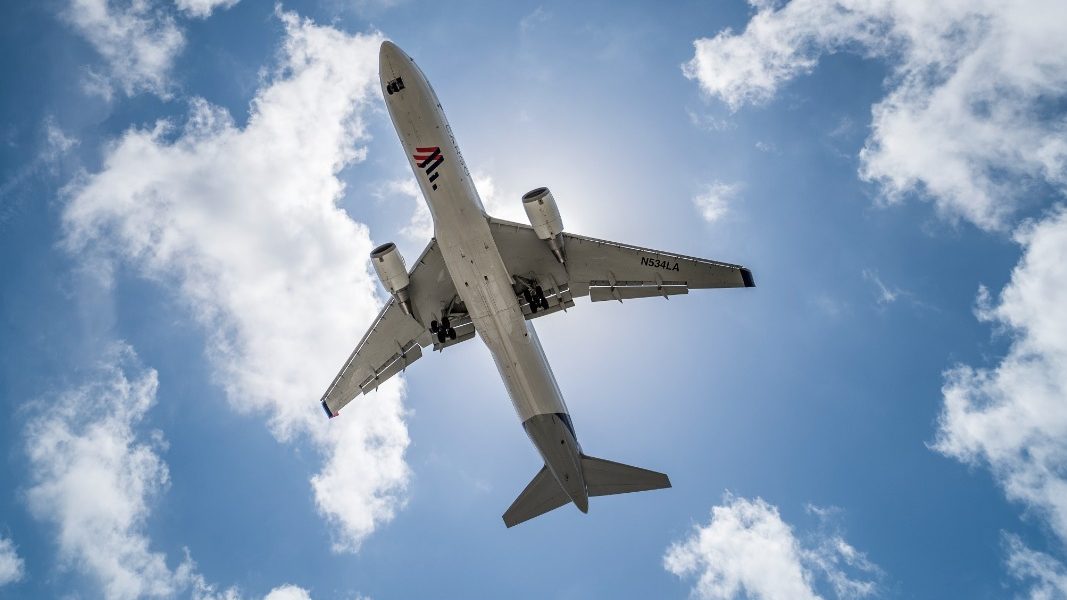
By Brazil Stock Guide – LATAM Airlines Group (NYSE: LTM) used its 2025 Latam Day to formally reset its investment narrative, positioning itself no longer as a cyclical airline but as a regional, data-driven mobility platform integrating flights, loyalty, cargo, digital services and premium consumption under a single operating model. “We are not layering technology on top of the company. We are transforming the company itself,” said chief executive Roberto Alvo.
The strategic reframe is backed by financial numbers rare in global aviation. LATAM expects to close 2025 with around $14.5 billion in revenue, more than $4 billion in EBITDA, EBITDA margins near 30% and operating margins above 16%. Free cash flow is set to exceed $1.5 billion, liquidity stands near 30% of annual revenue, and net leverage remains below 2x. Capacity growth has averaged close to 10% a year for three consecutive years, without margin compression.
Premium Engine
Premium has become the group’s core profit driver. Premium revenues have more than doubled since 2019 and are now expanding at roughly 14% a year, faster than total revenue. “We are seeing willingness to pay and loyalty that simply did not exist in our model before,” Alvo said. Net Promoter Score now sits in the mid-50s, reaching about 59 among premium travelers.
Investment is focused on premium economy expansion, long-haul cabin refits, lounge upgrades and fleetwide Wi-Fi on short-haul aircraft. “The premium traveler is not just buying comfort. They are buying consistency, predictability and recognition across the entire journey,” said customer and experience chief Paulo Miranda.
Loyalty Flywheel
LATAM Pass has become a recurring revenue engine. The program now counts 53 million members, with 4 million new sign-ups in 2025 alone. Transactions via miles rose 24%, while the elite member base expanded 22%. Roughly 30,000 seats are redeemed with miles every day across the network. “Today, about 60% of our revenue already comes from loyalty members,” Alvo said.
According to the company, premium customers tied to the program generate up to six times the profitability of base passengers, reinforcing loyalty as a structural earnings pillar rather than a marketing tool.
Cargo Platform
Cargo has emerged as a second billion-dollar business. The unit already generates about $1.4 billion in annual revenue and is undergoing a full digital overhaul using AI, automation and analytics. “We are redesigning the cargo journey from end to end using data,” said digital chief Juliana Rios. Early tests of 3D digital pallet optimization point to the potential for up to 10 additional tons per flight on strategic routes such as Miami.
Digital Core
Technology has moved from support role to structural advantage. About 31% of customer service is now fully automated using AI, while predictive maintenance, fuel optimization and crew analytics are delivering measurable cost savings. Each aircraft now operates with up to 14,000 sensors, feeding a data ecosystem of roughly 4.5 petabytes. “Our data-to-decision cycle is up to ten times faster than peers,” Rios said.
One maintenance optimization project led by a 12-person team unlocked 1,200 additional aircraft-availability days, delivering an estimated $100 million to $150 million economic return from an investment of roughly $4 million.
Regional Scale
LATAM controls about 30% of South America’s total air traffic and more than 40% of intra-regional international traffic, leading its key domestic markets across Brazil, Chile, Peru and Ecuador. The group operates with dominant positions at four of the five largest airports in the region, which together concentrate around 60% of total passenger flows. “We are the only airline with truly integrated scale across the continent,” Alvo said.
Structural growth remains supported by low regional penetration of air travel, still at roughly 0.6 trips per capita, versus levels four times higher in the US.

Physical Expansion
Growth is also contractually locked in. The group has 140 aircraft in its pipeline, with 41 deliveries scheduled for 2026, including Embraer E2 jets and, from 2027 onward, the long-range Airbus A321XLR. International capacity is expected to grow by about 12% in 2026, supporting route expansion to Europe, North America and Africa, said commercial chief Ramiro Alfonsín.
Financial Discipline
Capital allocation remains tightly controlled. LATAM targets cash between 21% and 25% of revenue, net leverage below 2x and a BB+ aspirational credit rating. Annual capex is projected at around $1.7 billion through 2027, covering fleet, cabin retrofits, lounges and digital investments, with up to 85%–100% of aircraft deliveries externally financed. “Unit cost discipline is non-negotiable for us,” said CFO Ricardo Bottas.





Leave a Reply