
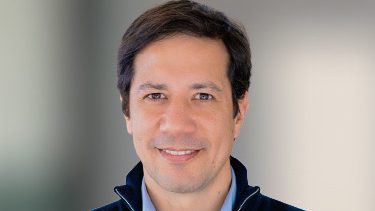
By Brazil Stock Guide — Heineken has turned to a Brazilian executive with a background in coffee, food and capital markets to lead the next phase of one of the world’s largest beer companies.
The Dutch brewer said Tuesday that its supervisory board will nominate Rafael “Rafa” Oliveira as chair of the executive board and chief executive officer, with a four-year term starting Oct. 1. The appointment still needs shareholder approval at an extraordinary general meeting scheduled for Aug. 5.
Oliveira joins from JDE Peet’s, the Amsterdam-based coffee and tea company behind brands such as Peet’s, Jacobs, Douwe Egberts and Pilão. He has served as CEO since 2024. Following Keurig Dr Pepper’s acquisition of JDE Peet’s, Oliveira had been appointed to lead the planned Global Coffee Co., a publicly traded coffee business with expected annual revenue of about $16 billion.
Oliveira was not short of alternatives. Heineken’s ability to pull him away from a role at the top of a new global coffee platform suggests the brewer was willing to make a deliberate outside hire at a sensitive point in its own cycle.
At Heineken, Oliveira will succeed Dolf van den Brink, who announced his resignation in January after six years as CEO and more than two decades at the company. His departure came as the maker of Heineken, Amstel, Tiger, Sol and Tecate faced weaker beer volumes, tougher consumer conditions and growing investor frustration with the pace of improvement.
Heineken repeatedly cited Oliveira’s operational rigour, financial acumen, capital-markets experience and ability to translate strategy into disciplined performance — a signal that the brewer wants EverGreen 2030 to become less of a corporate roadmap and more of a delivery machine.
Peter Wennink, chairman of Heineken’s supervisory board, described Oliveira as a dynamic leader able to turn complex challenges into clear priorities, align teams and drive disciplined execution. Charlene de Carvalho-Heineken, the family heir and board member, said his ability to translate strategy into performance was central to the decision.
Heineken already has a strategy — EverGreen 2030 — built around premium brands, innovation, productivity, cost discipline and long-term sustainability. What investors have questioned is whether the company can deliver those ambitions while beer consumption weakens in mature markets and cost pressures remain high.
Oliveira arrives with a resume built outside beer but inside global consumer goods. Before JDE Peet’s, he spent a decade at Kraft Heinz, where he became president of international markets and oversaw a portfolio of more than $7 billion across Europe, Africa, Asia-Pacific and Latin America. Earlier in his career, he spent about 10 years at Goldman Sachs and began as an equity research analyst in Brazil at Banco Icatu and Banco BBA Creditanstalt.
His Kraft Heinz chapter gives the nomination a broader Brazilian corporate resonance. Oliveira rose through the company during the 3G Capital-backed years, when Brazilian financiers Jorge Paulo Lemann, Marcel Telles and Carlos Sicupira helped shape one of the most aggressive operating cultures in global consumer goods. Brazilian executives were unusually visible inside Kraft Heinz at the time, and Oliveira belonged to that cohort — managers trained in a playbook of cost discipline, accountability and relentless execution.
That mix — consumer brands, emerging markets, finance and operational discipline — helps explain the board’s choice.
Heineken’s challenge is no longer simply to sell more lager. The company operates in more than 70 countries and has more than 340 beer and cider brands, but the industry is being reshaped by changing drinking habits, pressure on household budgets, health concerns, lower alcohol consumption among younger consumers and the rise of zero-alcohol and lighter products.
The company has already moved to accelerate productivity under EverGreen 2030. Its recent updates have shown areas of resilience, particularly in emerging markets, but also continuing pressure in more mature regions.The question is whether Heineken can protect brand equity while improving growth, margins and execution.
That makes Oliveira’s mandate unusually delicate. He needs to convince investors that Heineken can grow again without turning the business into a pure cost-cutting story. The brewer’s brand equity remains strong, particularly in premium beer, but the market wants evidence that pricing, innovation and portfolio management can offset weaker demand in key geographies.
Brazil adds an interesting layer to the appointment. Heineken is the second-largest brewer in the country after Ambev and has become one of the most visible challengers in Brazil’s premium beer market since buying Brasil Kirin in 2017. The company has also continued investing locally, including a new brewery in Minas Gerais aimed at expanding premium and pure-malt capacity.
For Brazilian executives, Oliveira’s move is significant. It places a Brazilian at the top of a family-influenced European consumer giant at a moment when global beverage companies are under pressure to rethink growth. It is also another example of Brazilian managers reaching senior global roles not through the traditional path of local subsidiaries, but through finance, international postings and operational turnarounds.


Leave a Reply