
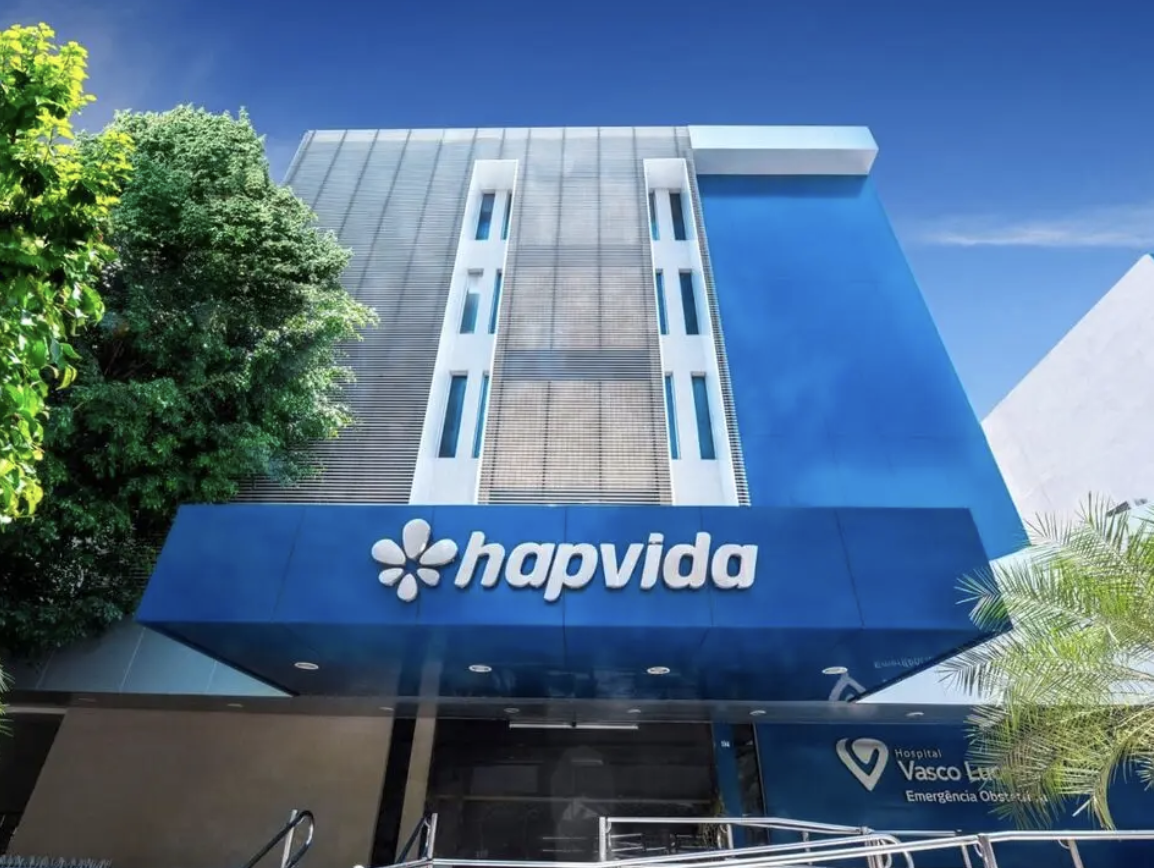
By Brazil Stock Guide – Hapvida (HAPV3) lowered its cash medical loss ratio in the first quarter of 2026 and recovered part of the margin it lost late last year. But Brazil’s largest vertically integrated health plan operator has not yet delivered a clean turnaround: it lost 44,500 health plan beneficiaries, posted a net loss of R$154.3 million and ended March with higher leverage than a year earlier.
Net revenue reached R$7.892 billion, up 5.2% from Q1 2025 and down 0.3% from Q4 2025. Adjusted Ebitda came in at R$803.3 million, with a 10.2% margin. That was 12.5% higher than in the previous quarter, but still 20% below the same period last year. Adjusted net income was R$244 million, up 35.1% sequentially, though still down 41.4% year over year.
The company linked the cost improvement to a partial normalization in medical utilization after a pressured end to 2025. According to its earnings report, lower utilization in December and the seasonal pattern in January and February helped reduce the spillover of medical bills from third-party providers into Q1.
Medical costs ease
The most important number in the quarter was the cash medical loss ratio, which fell to 72.2% of net revenue. In Q4 2025, it had reached 75.5%. Cash medical expenses declined 4.6% quarter over quarter, to R$5.697 billion. That gave Ebitda some breathing room and showed that Hapvida is again capturing part of the advantage of owning its own hospitals, clinics and diagnostic network.
But the improvement does not erase the recent pressure. The cash medical loss ratio was still 0.4 percentage point above Q1 2025. March also showed volumes above historical levels, with a rebound in elective procedures and more infectious disease cases. Investors still need to see whether the improvement was seasonal or structural.
That matters because Hapvida’s investment case depends on a simple but difficult equation: keep prices firm, control medical costs and return to membership growth. Without all three moving together, the recovery remains unfinished.
Pricing holds revenue
The average monthly ticket for health plans rose to R$305, up 7.3% in one year. Hapvida said net pricing advanced 8.3%, partly offset by a negative 1% mix effect. In practice, price increases helped compensate for lower volumes.
The health plan base ended March with 8.684 million beneficiaries, down from 8.729 million in December and 8.799 million in March 2025. The net loss of 44,500 beneficiaries was much smaller than the 139,900 lost in Q4 2025. Still, the core health business is not growing yet.
The regional picture was uneven. The corporate channel improved in the São Paulo metropolitan area and in southern Brazil. Hapvida also added beneficiaries in Rio de Janeiro, the Center-West, the North and the Belo Horizonte metropolitan area. But Recife and Salvador lost two contracts with more than 1,000 beneficiaries each. Meanwhile, individual and affinity plans suffered from Carnival seasonality and early-year household expenses such as property tax, vehicle tax and school enrollment costs, the company said.
Dental plans were the bright spot. Hapvida added 60,300 beneficiaries in dental coverage, reaching 7.190 million members. Dental revenue was R$222 million, down 3.7% from the previous quarter, as the company used more aggressive cross-selling to retain health plan clients.
Expenses, however, still weigh on the story. Cash administrative and selling expenses totaled R$1.252 billion, or 15.9% of net revenue. That was 1.8 percentage point higher than Q4 2025 and 2.4 percentage points above Q1 2025. Cash administrative expenses rose to R$632.4 million, pressured by personnel, contingencies, taxes and one-off effects.
Cash generation offered a more positive reading. Free cash flow reached R$442.8 million, with conversion of 81.1% of adjusted Ebitda. The cash position increased by R$478 million in the quarter, to R$8.663 billion. That gives Hapvida more room at a time when margins and growth are still not moving together.
Net debt stood at R$5.165 billion, almost stable from December. Still, it was 24% higher than in Q1 2025. Leverage under the company’s contractual covenant rose to 1.38 times last-12-month Ebitda, compared with 1.32 times in Q4 2025 and 0.98 times a year earlier. Excluding one-off effects, leverage would have been 1.34 times.
The result therefore sends a mixed message. Hapvida showed that it can still cut medical costs and generate cash. But it also showed that integration, legal claims, membership losses and margin rebuilding remain the key risks.


Leave a Reply