
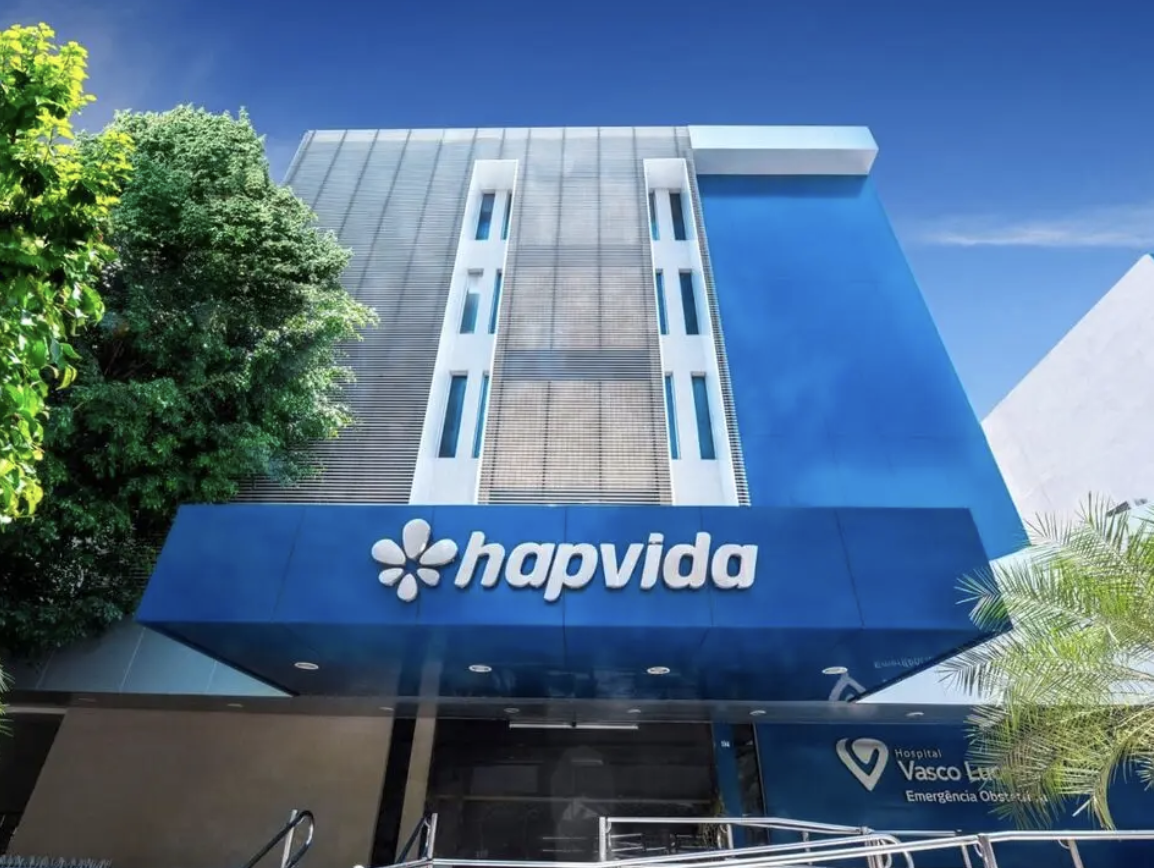
By Brazil Stock Guide – Hapvida Participações e Investimentos S.A. (B3: HAPV3) reported a net loss of R$57 million in the third quarter of 2025, narrowing from a R$71 million loss a year earlier. The result reflects rising medical costs, unfavorable seasonality, and higher payments tied to regulatory and judicial agreements. Despite the red ink, the company delivered an adjusted net profit of R$337.7 million, up 4.1% year-on-year, driven by non-recurring reversals and financial income, underscoring an underlying recovery in operational efficiency.
Why adjusted profit was positive
Hapvida’s adjusted profit diverged from its accounting loss mainly due to one-off financial effects. These included reversals of provisions related to fines imposed by the National Regulatory Agency for Private Health Insurance (ANS), settlements from the ReSUS agreement, and financial gains from interest and adjustments on retained acquisition balances. The company explained that these adjustments exclude extraordinary events to better represent its recurring performance. Without these effects, adjusted profit would have totaled around R$250 million, with a 3.4% margin.
Revenue and beneficiaries
Net revenue reached R$7.77 billion, up 6% from the same quarter last year, supported by price adjustments in health plans and a 6.1% increase in the average monthly ticket to R$292.7. The company ended September with 8.87 million health-plan members and 7.1 million dental-plan clients, adding 12,600 and 74,900 lives, respectively. The strongest growth came from corporate and PPO segments, while São Paulo and Rio de Janeiro remained highly competitive markets with mild attrition in memberships.
Medical costs and loss ratio
The cash medical loss ratio rose to 75.2%, an increase of 1.4 percentage points year-on-year, exceeding the usual seasonal range. This deterioration reflected heavier service utilization across all care lines, influenced by a longer, drier winter that drove up respiratory cases, combined with the operational ramp-up of newly opened hospitals and clinics. Judicial payments and reimbursements to the public health system (ReSUS) also added temporary pressure to costs. Management classified these effects as transitional, expecting normalization as new facilities reach optimal occupancy levels.
Investments and hospital expansion
The company continued to expand its proprietary network as part of a broader strategy of vertical integration and cost control. Since early 2025, Hapvida has opened seven hospitals and 25 outpatient units, adding 917 new beds, about 500 of which are already operational. Recent openings include the Santo André Hospital in São Paulo, inaugurated in August with 30 beds and 24-hour emergency service; the expanded Lauro de Freitas Hospital in Bahia, which added surgical and diagnostic capacity; and the new Brigadeiro advanced unit in São Paulo, focused on oncology and high-complexity diagnostics. Investments followed an asset-light model, using built-to-suit and leasing arrangements to limit cash impact. The company’s strategy concentrates on regions with high density potential and reliance on third-party networks, aiming to reduce outsourced service costs and strengthen control over clinical protocols.
EBITDA and operational efficiency
Adjusted EBITDA totaled R$746.4 million, down 2.1% from the same period of 2024, with a margin of 9.6%. Excluding non-recurring effects, EBITDA would have been R$613.3 million, or a 7.9% margin. Selling and administrative expenses remained under control at 13.4% of revenue, while the company advanced in digitalization, automation, and internal integration between Hapvida and NotreDame Intermédica systems. Preliminary Intermediation Notices (NIPs) fell 19% quarter-on-quarter and 41% year-to-date, indicating gains in service quality and regulatory compliance.
Actions to contain medical loss ratio
Management reiterated that the current rise in claims is part of a planned investment cycle. The company has adopted several initiatives to mitigate medical inflation, including unifying medical audit and management systems from both merged groups, internalizing high-complexity procedures within its own network, renegotiating contracts with healthcare providers and brokers to align incentives with efficiency, expanding the use of analytics and data intelligence to anticipate seasonal peaks, and improving patient care logistics to reduce average waiting time in emergency units to under 15 minutes.
Cash flow and leverage
Free cash flow was negative R$52 million, pressured by payments to suppliers, hospitals, and ReSUS settlements. Net debt rose to R$4.25 billion, equivalent to 1.0x last twelve months EBITDA, a level still considered comfortable. In October, Hapvida completed its 10th debenture issuance, raising R$3.6 billion with maturities in 2032 and 2033 at an average cost of CDI +1.13% per year. The move extended debt duration to 3.9 years and lowered overall funding costs.
Outlook
Looking ahead, Hapvida’s management expects operational normalization as the new facilities reach maturity and verticalization deepens. The company plans to capitalize on technology-driven efficiency, data analytics, and integration with NotreDame Intermédica to enhance cost control and gradually restore profitability. “We are facing a period of high utilization and cost pressure, but remain committed to our long-term plan of efficiency and quality care,” the company said in its earnings release.


Leave a Reply