
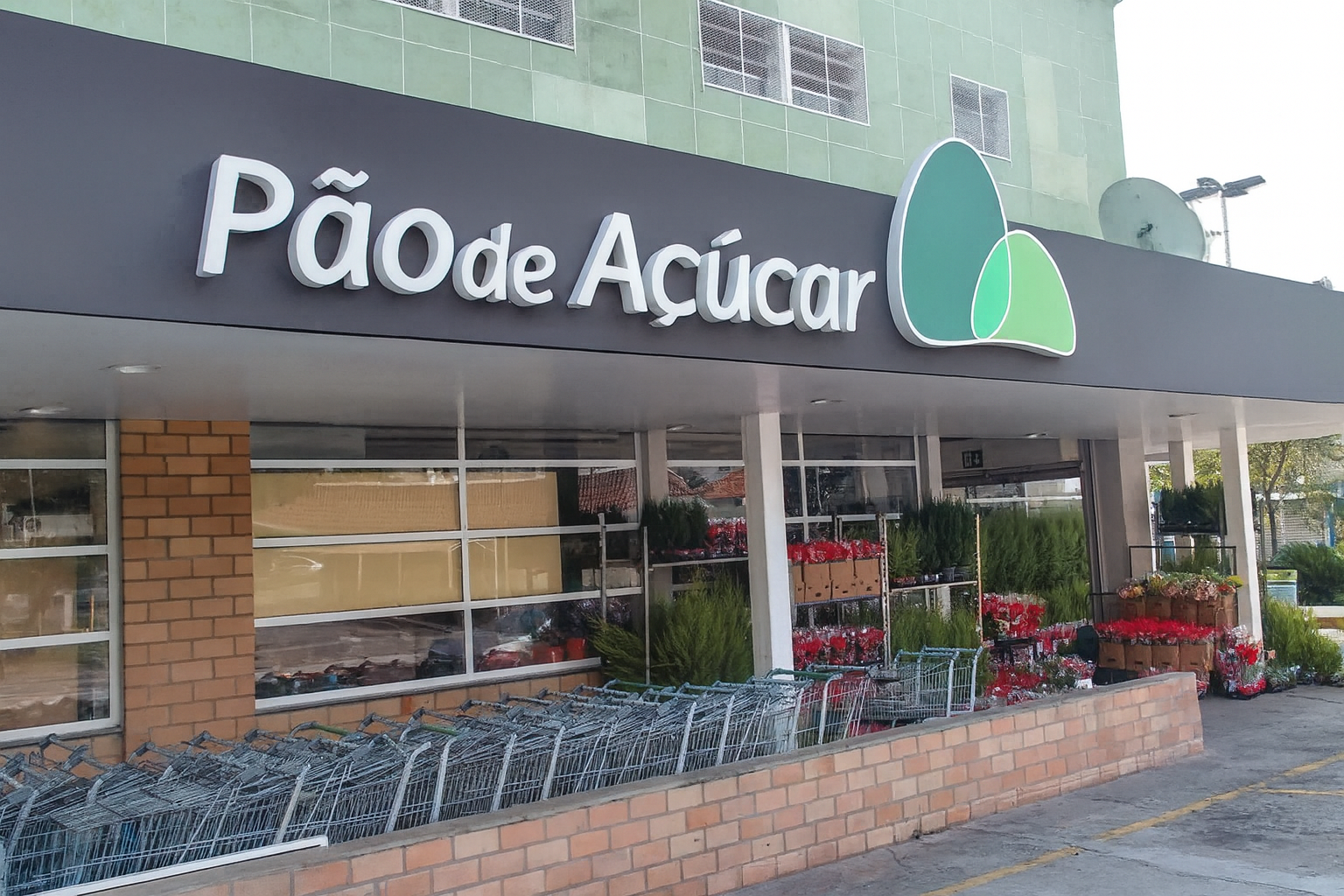

By Brazil Stock Guide – Chief executive Rafael Russowsky told analysts there are “no sacred cows” in GPA’s (B3: PCAR3) sweeping R$415 million efficiency plan, insisting the company will preserve operations while cutting deep into administrative and support costs. Speaking in the retailer’s 3Q25 earnings call, Russowsky detailed how the new phase of cost discipline and asset sales aligns with a “leaner, more pragmatic” direction set by the board under chairman André Coelho Diniz.
Capex Downshift and Cost Control
Russowsky opened the session addressing UBS’s Lucca Biasi, confirming GPA will slash its capital expenditure to R$300–350 million next year from R$675 million in 2024. The company is ending its expansion cycle, trimming IT and logistics spending, and keeping maintenance CapEx around R$200–250 million.
“We don’t need to repeat the refurbishments we’ve already done,” he said. CFO Rodrigo Manso added that working-capital optimization generated R$480 million and shortened the cycle by 12 days, while financial costs rose amid higher insurance guarantees.
Tax Credits as a Financial Buffer
Pressed by analysts on GPA’s R$2.4 billion in tax-loss credits, Russowsky emphasized that they can serve as “a real currency” for future settlements. The company has R$1.2 billion already booked and another R$1.2 billion unrecognized, awaiting use in federal negotiations. “We’ve already monetized R$374 million via settlements and will use these credits to pay off contingencies as laws evolve,” he said, citing a recent CARF ruling that accelerated approval of such credits. Manso added that R$660 million of GPA’s pending disputes are classified as probable losses, strengthening the company’s case for further use.
Cuts Without Operational Shock
When Itaú BBA’s Kelvin Decken questioned whether the R$415 million cut would affect store operations, Russowsky said the plan targets support functions — not stores. He broke down the savings into R$140 million in eliminations, R$100 million in consumption reductions, and R$180 million in scope changes such as internalizing outsourced work and centralizing logistics. “It’s about being austere, structured, and selective — not paralyzing operations,” he said.
Asked by XP’s Pedro Caravina about pricing dynamics, Russowsky noted that food deflation has softened but consumer behavior is improving. “Even in a flat environment, we achieved 4% like-for-like growth and kept gross margin near 26.6%,” he said. “That shows the strength of our brands and the resilience of our premium clientele.”
Hands-On Governance and Asset Sales Ahead
Responding to Santander’s Ruben Couto, Russowsky acknowledged a “new paradigm” at GPA since Diniz took the chairmanship. “It’s a very hands-on approach — he dives into operational details, from the price of a shopping bag to whether to rent or buy trucks,” said the CEO. “That reflection on the status quo has helped reshape our mindset.”
He added that GPA is negotiating a significant asset sale, alongside plans for a captive insurance brokerage that would turn commissions into recurring revenue and bring an upfront inflow. Addressing Bank of America, he said the company’s Aliados B2B business is under pressure from cash-and-carry rivals but should stabilize in 2026.
To Citi’s João Soares, Russowsky confirmed that GPA continues to face R$14 billion in tax contingencies, roughly 70% of which are fines and interest. He described ongoing talks with the federal attorney general’s office (PGFN) as “constructive but tough,” noting that resolving the issue remains a board priority.
Finally, answering Morgan Stanley’s Andrew Ruben, the CEO said GPA’s multiformat model is paying off: “Premium segments slowed slightly, but Extra Mercado and proximity stores captured price-sensitive consumers. When rates come down, that balance should normalize.”
Leave a Reply