
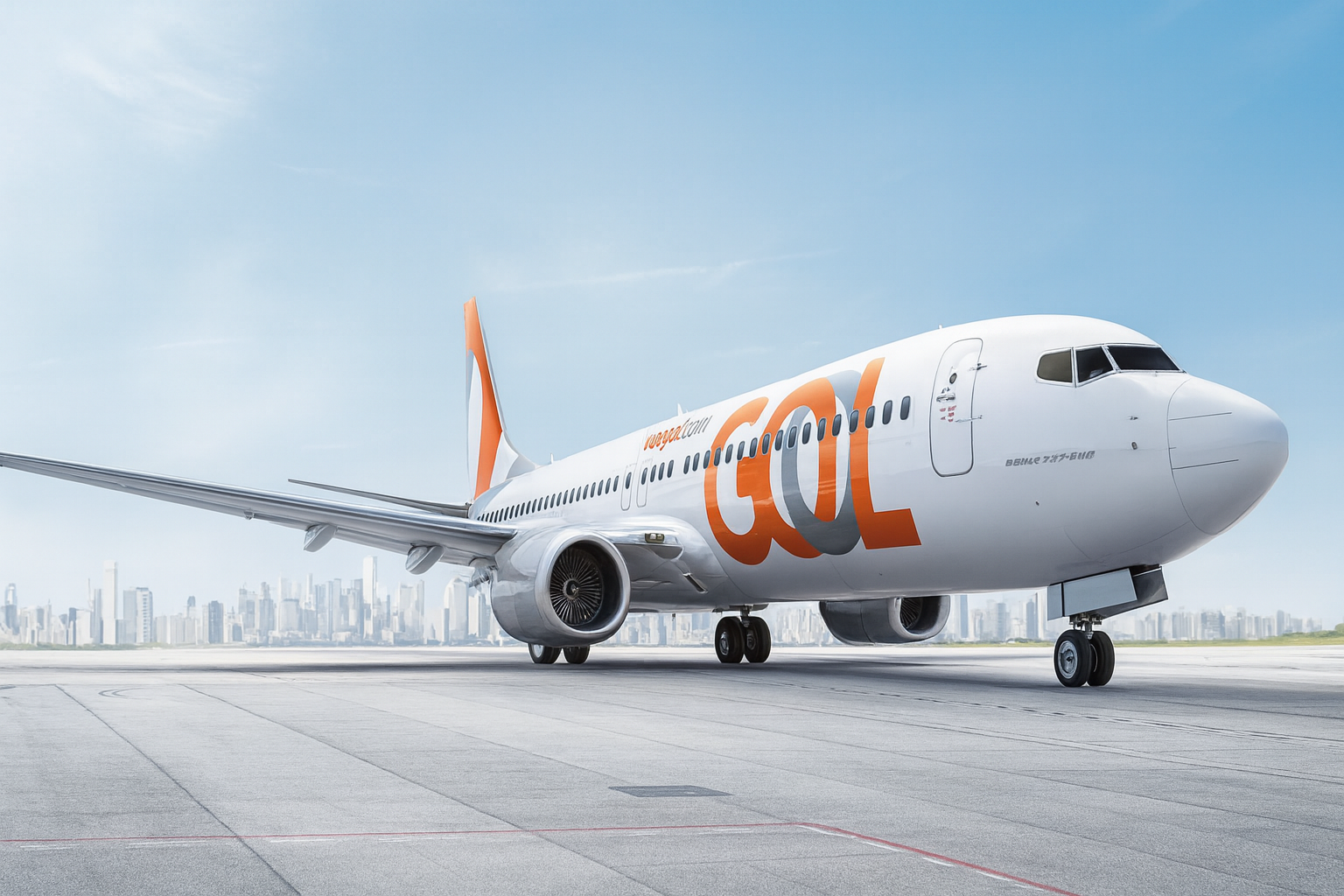
By Brazil Stock Guide – Gol Linhas Aéreas Inteligentes S.A. (GOLL54.SA) is closing a defining chapter in its corporate history with a R$247.8 million profit in the third quarter of 2025, marking its first positive result since early 2024. The turnaround comes as the company prepares to delist from the São Paulo stock exchange (B3), transitioning to a privately held structure after one of Latin America’s most far-reaching restructurings — one that erased billions in debt, reshaped ownership, and diluted nearly all minority investors.
The company’s U.S. Chapter 11 process, concluded on June 6, 2025, marked the turning point. Before entering bankruptcy protection in January 2024, Gol had posted cumulative losses exceeding R$8 billion over eight quarters, its debt had ballooned to more than R$33 billion, and lease defaults threatened its fleet stability. Cash reserves had dwindled, forcing reliance on short-term credit lines and vendor financing. Passenger yields fell amid intense competition from Azul and Latam, while foreign-currency debt costs surged due to the weaker real.
The court-supervised restructuring in New York fundamentally rewired Gol’s balance sheet. The company reduced its liabilities by converting part of its bonds into equity, issued US$2.1 billion in “Exit Notes” maturing in 2030 and US$909 million in “take-back notes”, and secured a R$12 billion capital injection from the newly created New GOL Parent S.A., controlled by the Abra Group Limited. These measures brought net debt down to R$29 billion by September 2025, compared with R$33.2 billion at the end of 2024, and restored access to aircraft financing and supplier credit.
In the quarters immediately following the restructuring, Gol’s income statement began to stabilize. Operating profit rose to R$850 million in Q3 2025, up from a negative R$285 million a year earlier, as lease renegotiations and capacity adjustments improved margins. Revenue climbed 12% year-on-year to R$5.54 billion, driven by higher passenger traffic, better load factors, and steady cargo volumes. Fuel expenses declined slightly in reais terms, and the real’s stabilization around R$5.30 per dollar helped contain financial costs.
The balance sheet turnaround was equally dramatic. Shareholders’ equity, which had been negative R$29.1 billion in December 2024, improved to negative R$15.6 billion by September 2025. Liquidity rose sharply following the capital injection, while interest-bearing debt maturities were extended, reducing refinancing pressure. The management described the period as “a structural reset that allows the company to pursue sustainable profitability for the first time in years.”
However, the gains came at a steep cost for investors. During the restructuring, minority shareholders were diluted multiple times, first through emergency bridge financings, then via the massive equity conversions that gave Abra and Gol Investment over 99% of both common and preferred shares. These measures, while essential to restore solvency, effectively wiped out retail participation and prepared the company for its eventual delisting from B3.
On October 13, 2025, the board approved the merger of Gol Linhas Aéreas Inteligentes and Gol Investment into Gol Linhas Aéreas S.A. (GLA), a private, non-listed company fully controlled by Abra. The measure was ratified on November 4, during an Extraordinary General Meeting, and is now followed by a mandatory tender offer (OPA) to repurchase outstanding shares. A second meeting of preferred shareholders was called for November 13, 2025, to approve the valuation report that will determine the exit price for remaining investors.
Operationally, Gol continues to reshape its fleet and cost base. During Chapter 11, the airline renegotiated 139 aircraft leases and 58 engine contracts, returned high-cost aircraft, and entered new sale-and-leaseback deals to modernize its operations. The Abra Group has also begun integrating procurement and maintenance with Avianca, targeting up to US$300 million in annual synergies across the network.
With the restructuring behind it, Gol emerges leaner but no longer public. Its delisting — the first among major Brazilian airlines in more than a decade — closes over 20 years of market history. Under Abra’s control, the company will focus on efficiency, network coordination, and debt discipline. Yet this privatization may only be temporary: Abra has signaled plans to seek a future listing in the United States, consolidating Gol and Avianca into a single regional platform aimed at global investors.



Leave a Reply