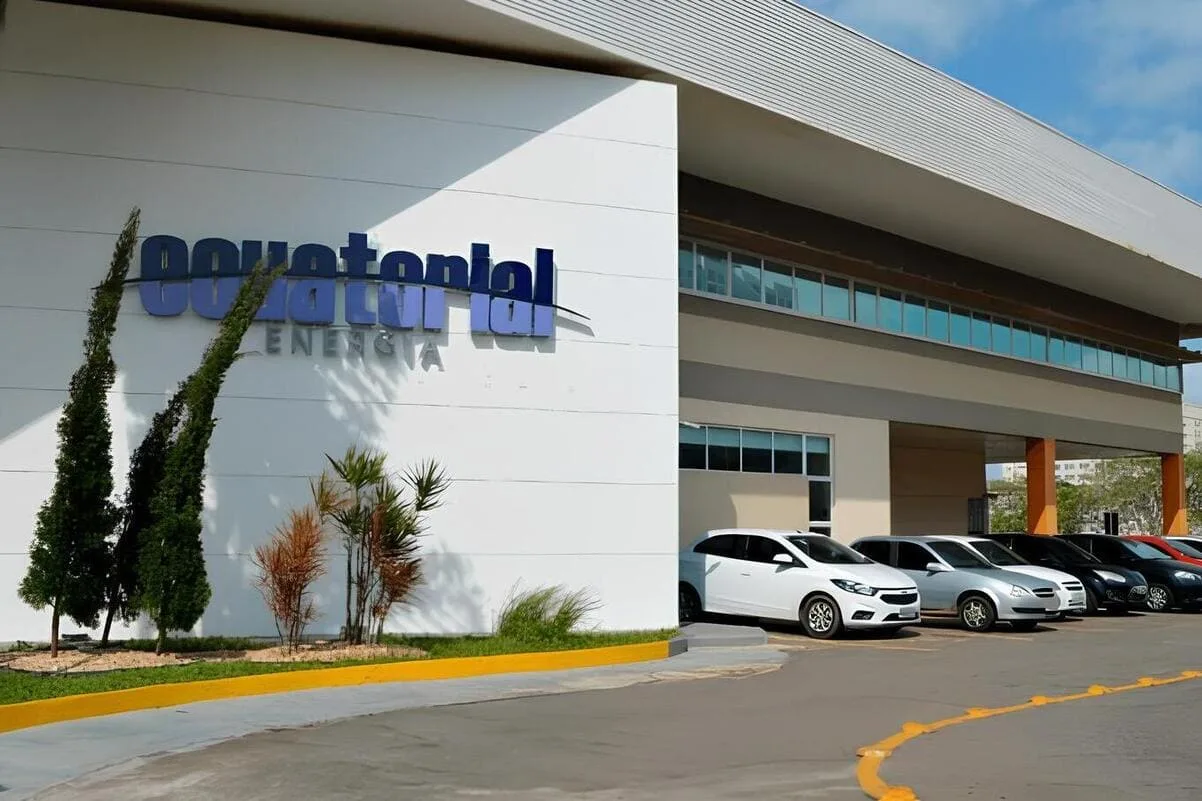
By Brazil Stock Guide – Equatorial is deepening its push into Brazil’s sanitation sector with a deal to acquire a major stake in Copasa, betting that the Minas Gerais utility’s regulated returns, asset base and efficiency potential can support a new growth platform.
The move follows Equatorial’s entry into Sabesp, where the group became the reference investor in 2024 after presenting a proposal for a 15% stake worth R$ 6.9 billion, according to the São Paulo state government. With Copasa, Equatorial is adding a second large sanitation asset to a portfolio historically anchored in power distribution.
Equatorial agreed to acquire 30% of Copasa for R$ 5.59 billion, equivalent to R$ 49.03 per share, according to a company presentation. The investment could rise to R$ 7.95 billion, or 42.62% of Copasa’s capital, if additional shares are allocated in the market tranche. Settlement is expected on June 16.
The size of the deal matters. Equatorial describes the investment as equivalent to about 11% of its market capitalization and as the second-largest transaction in Brazil’s sanitation sector. That makes Copasa a significant capital allocation decision for the group, rather than a small portfolio move.
The central element of the investment case is regulation. Copasa has a real pre-tax regulatory WACC of 13.70%, secured for about four years, through 2029. That compares with 11.91% real pre-tax WACC in Sabesp’s tariff framework. For regulated utilities, WACC defines the allowed return on the regulatory asset base and helps determine how much capital invested in the concession can be remunerated through tariffs.
That comparison is important because Copasa is entering a heavy investment cycle. The company ended the first quarter with a net regulatory asset base of R$ 15.7 billion, R$ 7.47 billion in adjusted net revenue over the last 12 months, R$ 2.93 billion in adjusted EBITDA, R$ 3.07 billion in capex and R$ 1.36 billion in net income. Its leverage stood at 2.4 times net debt to EBITDA.

Copasa’s footprint gives the deal strategic weight. The company serves about 75% of Minas Gerais, with 637 water concessions and 308 sewage concessions. Its average concession term is 28 years, with renewals extending up to February 2073. Belo Horizonte and 14 other municipalities have already signed contract amendments with Copasa, representing about 30% of revenue.
The municipal piece is relevant because the investment case depends on expansion and universalization. The presentation points to incentives for municipalities to adhere to the new framework, including upfront payments of up to 4% of net operating revenue in two installments, potential tariff relief by delaying the new sewage tariff until 2029, legal certainty through contracts running to 2073, and a cross-subsidy model based on a uniform tariff.
Equatorial also highlights regulatory mechanisms that could support returns. The company points to a protected asset base, annual recognition of investments, remuneration through work-in-progress mechanisms and incentives tied to water expansion, sewage expansion, service quality and loss reduction. In practical terms, mandatory sanitation investment can become a source of regulated growth if execution and regulation remain aligned.
The efficiency thesis is another important part of the deal. Equatorial compares Copasa with its own track record in privatized power distributors, where it says operating costs per consumer unit fell by 32% to 50% in assets such as Piauí, Alagoas, CEEE-D and Amapá. In Copasa’s case, the company sees potential gains from headcount reduction, lower overtime and a review of hazardous-duty pay and other salary premiums, after an 18-month post-privatization stability period.
Capital structure and dividends add another layer to the investment case. Copasa has historically distributed a large share of earnings, with a 62.7% payout over the last 12 months to the first quarter of 2026. Equatorial also says Copasa has room to optimize leverage while maintaining a strong credit profile, cited as AAA.br / AAA(bra), and without restrictions on dividends.
For Equatorial, the financial impact appears manageable. The acquisition will be funded with debt and is expected to add about 0.26 to 0.29 times to pro-forma leverage. Net debt would rise to R$ 49.9 billion from R$ 44.3 billion, while covenant EBITDA would increase to R$ 17.0 billion from R$ 16.6 billion, according to the presentation.
The company lists several potential take-out alternatives for the acquisition financing, including holding-company debt, dividends from power distributors, preferred shares, and dividends from Copasa and Sabesp. That suggests Equatorial wants to preserve balance-sheet flexibility while adding exposure to sanitation.
Still, Equatorial is not getting unrestricted control. Minas Gerais will retain 5% of Copasa and a golden share. The shareholders’ agreement gives the state veto rights over relevant matters, including the investment plan, dividend policy, capital increases and reductions, major asset sales and corporate reorganizations.
The same structure, however, includes a notable governance option. The reference investor may pay a R$ 50 million penalty, adjusted by CDI, to amend the shareholders’ agreement and remove some state veto rights, while preserving the bylaws, lock-up and non-compete agreement. For a deal of this size, that clause is likely to draw attention from investors and policymakers.
The lock-up helps reduce the perception of a short-term arbitrage trade. Half of Equatorial’s 30% stake will be locked until June 2030. The remaining half will be locked until December 2033 or until universalization targets are met, whichever comes first.


Leave a Reply