
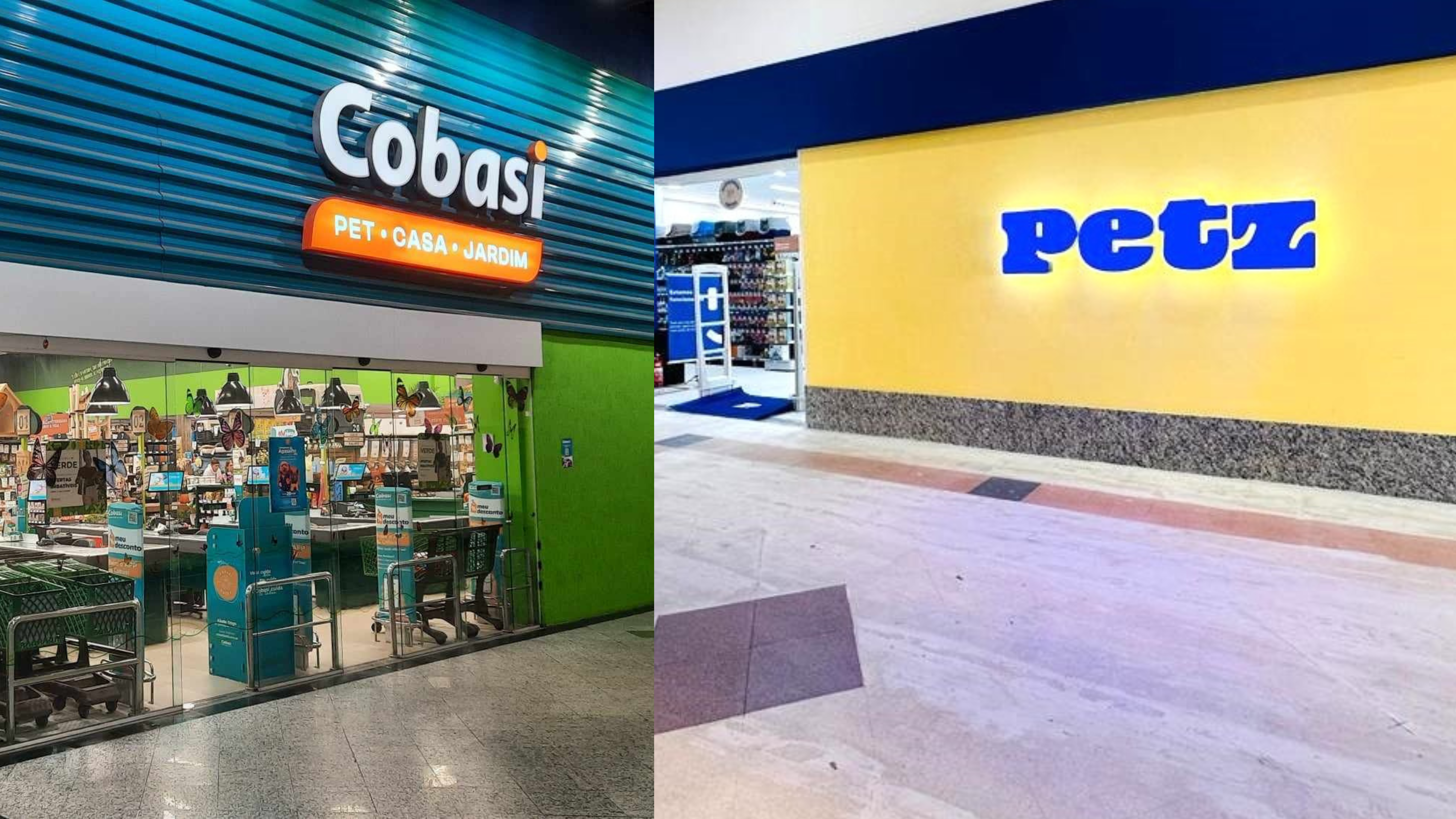
By Brazil Stock Guide – Brazil’s antitrust tribunal, Cade, has scheduled for Wednesday (Dec. 10) the final judgment on the merger between Petz and Cobasi, the country’s two largest brick-and-mortar pet retail chains. The case has become the most consequential competition review in the sector this year and reaches the Tribunal after Petlove — Brazil’s dominant digital pet-care platform — filed the appeal that overturned the Superintendence-General’s initial approval of the transaction.
The reporting commissioner, José Levi Mello do Amaral Jr., conducted months of additional fact-finding, held a public hearing, reviewed new economic studies and acknowledged that the authority has yet to reach a “common denominator,” underscoring the unpredictability surrounding the upcoming vote.
The dispute before the antitrust court reflects a clash between two fundamentally different views of the market. On one side, Petz and Cobasi argue the merger is pro-competitive in a sector that has become broad, fragmented and increasingly shaped by the explosive rise of generalist marketplaces such as Amazon, Mercado Livre, Shopee and Magalu — which together account for roughly 75% of Brazil’s online retail and have rapidly gained share in pet-care categories through steep discounts, free or ultra-fast shipping and nationwide logistics.
According to documents filed in the case, Petz, Cobasi and Petlove together account for only about 12% of the national pet market, while small and mid-sized neighborhood pet shops still capture nearly half of overall sector revenue. Independent studies cited in the proceedings show that megastores — the category to which Petz and Cobasi belong — represent only around 9% of the market, reinforcing the argument that competitive pressure does not revolve around the two merging firms.
The merging parties also maintain that the real rivalry comes from digital channels. Market tests conducted by both the Superintendence-General and the commissioner’s office show that price changes by Petz do not trigger systematic reactions from Cobasi, and that demand diverges primarily toward third parties — mainly marketplaces and regional chains.
Economic studies submitted by scholars affiliated with USP, Insper and UFRJ indicate that even in cities where one chain enters a market already served by the other, incumbents do not cut prices in response, a pattern inconsistent with duopoly behavior. Consumer surveys show a highly omnichannel profile: about 70% of pet owners compare prices online even when purchasing in store, and over 60% alternate seamlessly among neighborhood pet shops, megastores, supermarkets, online channels and smaller specialized retailers. For Petz and Cobasi, this undermines the central claim that megastores constitute a separate, isolated market.
Petlove, whose appeal brought the case to the Tribunal, advances the opposing thesis. The company argues that megastores operate in a distinct relevant market, separate from small shops and online channels. It claims consumers rely on large stores for a combination of assortment breadth, premium products and integrated services — including grooming and veterinary offerings — that would not be fully substitutable.
Petlove also asserts that in several municipalities the overlap between Petz and Cobasi could create high local concentration, opening the door to unilateral effects such as higher prices, reduced local competition, or increased leverage over suppliers. Its expert opinions outline scenarios in which the merged company could either raise prices in markets with limited alternative options or undercut smaller competitors through scale advantages.
In some filings, Petlove argues prices could rise; in others, that the combined scale could push prices so low that small rivals would be squeezed out — a conceptual oscillation that has drawn criticism from the merging parties for lacking analytical consistency.
At the heart of Wednesday’s vote lies the definition of the relevant market. If Cade adopts the broad view — integrating physical and digital commerce — which underpinned the Superintendence-General’s review and the findings of the authority’s Department of Economic Studies, the merger is likely to be cleared, potentially without remedies.
If the Tribunal embraces Petlove’s narrower interpretation, treating megastores as a standalone competitive arena, the authority could impose structural or behavioral remedies, or even block the transaction outright. The public hearing called by the rapporteur deepened the debate. Retail specialists emphasized that Brazil remains one of the least concentrated retail markets in the world and that today’s competitive dynamics are overwhelmingly shaped by marketplaces whose logistical scale and promotional intensity are “unmatchable” for traditional chains. The diagnosis echoes developments in the United States, where legacy pet retailers have steadily lost market share to online platforms.
Petz and Cobasi argue that without the merger, mounting digital pressure will continue to erode margins and undermine the long-term viability of physical store networks. They presented Cade with data showing declining profitability and loss of market share since 2022, while digital platforms expanded at 30%-plus annual rates in pet categories during certain periods.
The companies also rely on estimates by McKinsey and Itaú BBA identifying merger-specific synergies — harmonized procurement, logistics optimization, overhead rationalization and physical-digital integration — that they say would reduce costs and improve services for consumers. Petlove counters that such efficiencies would strengthen an already dominant structure in megastores and distort competitive dynamics for smaller retailers.
Uncertainty within the Tribunal keeps all outcomes on the table: unconditional clearance, conditional approval or rejection. Commissioners acknowledge the case has become the most complex item on Cade’s year-end docket, and efforts are underway to avoid a request for further deliberation that would push the matter into 2026.
Wednesday’s session is expected to be long and technically dense, and will serve as a regulatory watershed for Brazil’s R$ 60-billion pet market — an industry experiencing simultaneous expansion, fragmentation and far-reaching logistical transformation. Whatever the outcome, Cade’s ruling will shape the competitive landscape for the next decade, defining how physical scale, digital dominance and market pluralism coexist in one of the fastest-growing retail categories in Brazil.


Leave a Reply