
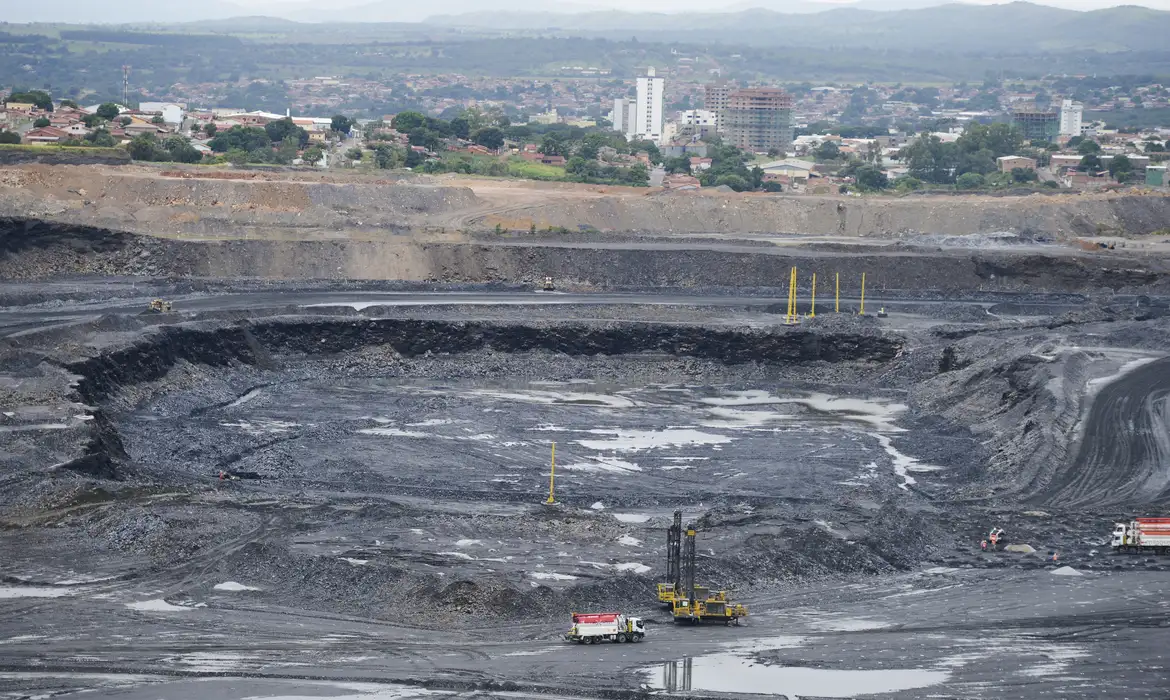
By Brazil Stock Guide – Brazil’s mining industry recorded strong growth in the third quarter of 2025, generating $13.5 billion in total revenue — a 34% increase from the same period last year, according to data released Tuesday by the Brazilian Mining Institute (Ibram).
The expansion was driven by a sharp rise in iron ore output, which accounted for 52% of the total, and a 6.2% increase in mineral exports, reaching about 121 million tons. Minas Gerais and Pará remained the country’s top mining hubs, contributing 39% and 35% of total revenue, respectively, followed by Bahia with 4%.
Export performance and trade dynamics
China continued to dominate as the main destination for Brazilian minerals, absorbing 69.3% of exports. Import spending rose 3.3%, reaching $2.5 billion, with the United States (20.8%), Russia (19.3%), Canada (14.3%), and Australia (11.4%) among the main suppliers. Demand was strongest for potash (57%), coal (24%), and sulfur (6%).
Investment outlook through 2029
Ibram projects $68.4 billion in mining investments between 2025 and 2029, largely concentrated in iron ore projects. However, the steepest growth is expected in rare earth elements, where investment is set to climb 49% compared with the 2024–2028 period.
“The rise is driven by the global demand for rare earths. Studies from the European Union and the United States point to sharply increasing projections,” said Julio Cesar Nery Ferreira, Ibram’s director of mining affairs. He noted that deposits have already been identified in Minas Gerais, Goiás, Bahia, and other states.
Fernando Azevedo, Ibram’s vice president, highlighted the strategic potential: “According to global geological surveys, Brazil holds the world’s second-largest reserve of rare earths. The recent creation of a congressional commission on the topic underscores its geopolitical value for Brazil.”
Critical minerals in focus
Beyond rare earths, Brazil’s mining expansion is tied to critical minerals essential to the clean energy and defense sectors — including copper, lithium, nickel, cobalt, niobium, zinc, and graphite.
“I have no doubt that investments in critical and strategic minerals will accelerate,” said Raul Jungmann, Ibram’s CEO. “These materials are linked to food security, technology, and sovereignty — from fertilizers and semiconductors to special steels and aircraft manufacturing.”
Major producers such as Vale S.A. (VALE3.SA) and CSN Mineração (CMIN3.SA) are expected to benefit from the sector’s expansion and rising global demand for materials critical to the energy transition. for energy transition materials.


Leave a Reply