
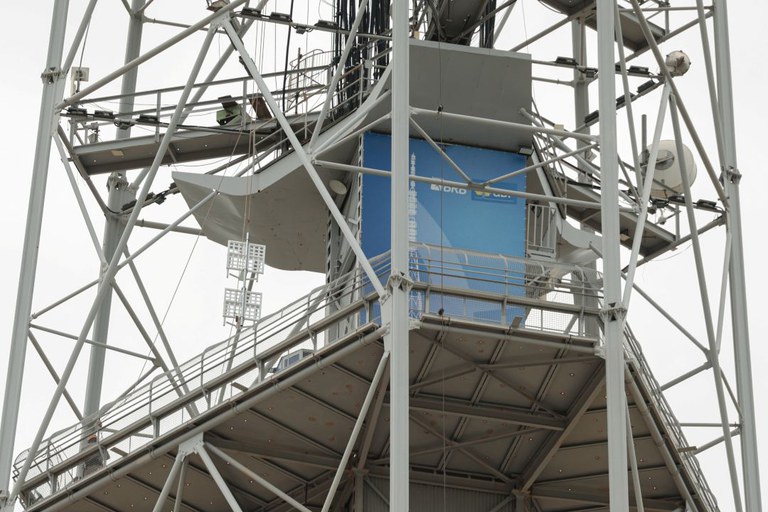
By Brazil Stock Guide – Brazil has begun assembling its first TV 3.0 test station in Brasília, marking what authorities describe as the biggest leap in free-to-air television since the country completed the transition from analog to digital broadcasting. The experimental antenna is being installed at the capital’s TV Tower and is expected to start transmitting test signals in early March.
The project is being led by Agência Nacional de Telecomunicações, which authorized Empresa Brasil de Comunicação and the Chamber of Deputies to carry out the initial transmissions. The station will broadcast experimental programming and serve as a bridge between laboratory trials and future commercial operation of TV 3.0 across the country.
TV 3.0 is designed to merge traditional broadcast signals with internet-based services in an app-centered environment, replacing the current model based on numbered channels. The rollout will be gradual, starting in major cities, while the existing digital TV system continues to operate during a multi-year transition period.
Government officials frame the initiative as a structural shift in how television is consumed in Brazil. The new standard supports ultra-high-definition video, including 4K and eventually 8K, high dynamic range (HDR), more vivid colors and immersive audio. For viewers, navigation will increasingly resemble that of streaming platforms, combining live TV, on-demand content and interactive features within a single interface.
Beyond entertainment, TV 3.0 is positioned as a tool for public policy and social inclusion. The system includes native accessibility features such as customizable subtitles, audio description and digital sign-language generation, aimed at improving access for people with disabilities. It also enables regional emergency alerts and interactive civic services delivered directly through the television screen.
The Brasília launch coincides with discussions on how to finance the nationwide rollout. Representatives from the Ministry of Communications met this week with multilateral institutions, including the World Bank and the Inter-American Development Bank, to debate credit lines and funding structures to accelerate deployment. Officials argue that television can help bridge Brazil’s digital divide, particularly given that roughly one in ten Brazilians over the age of ten still does not use the internet.
If the current timetable holds, larger-scale TV 3.0 transmissions could begin from 2026, signaling a transformation not only in Brazil’s broadcasting technology, but also in how public services, information and commerce reach millions of households nationwide.


Leave a Reply