
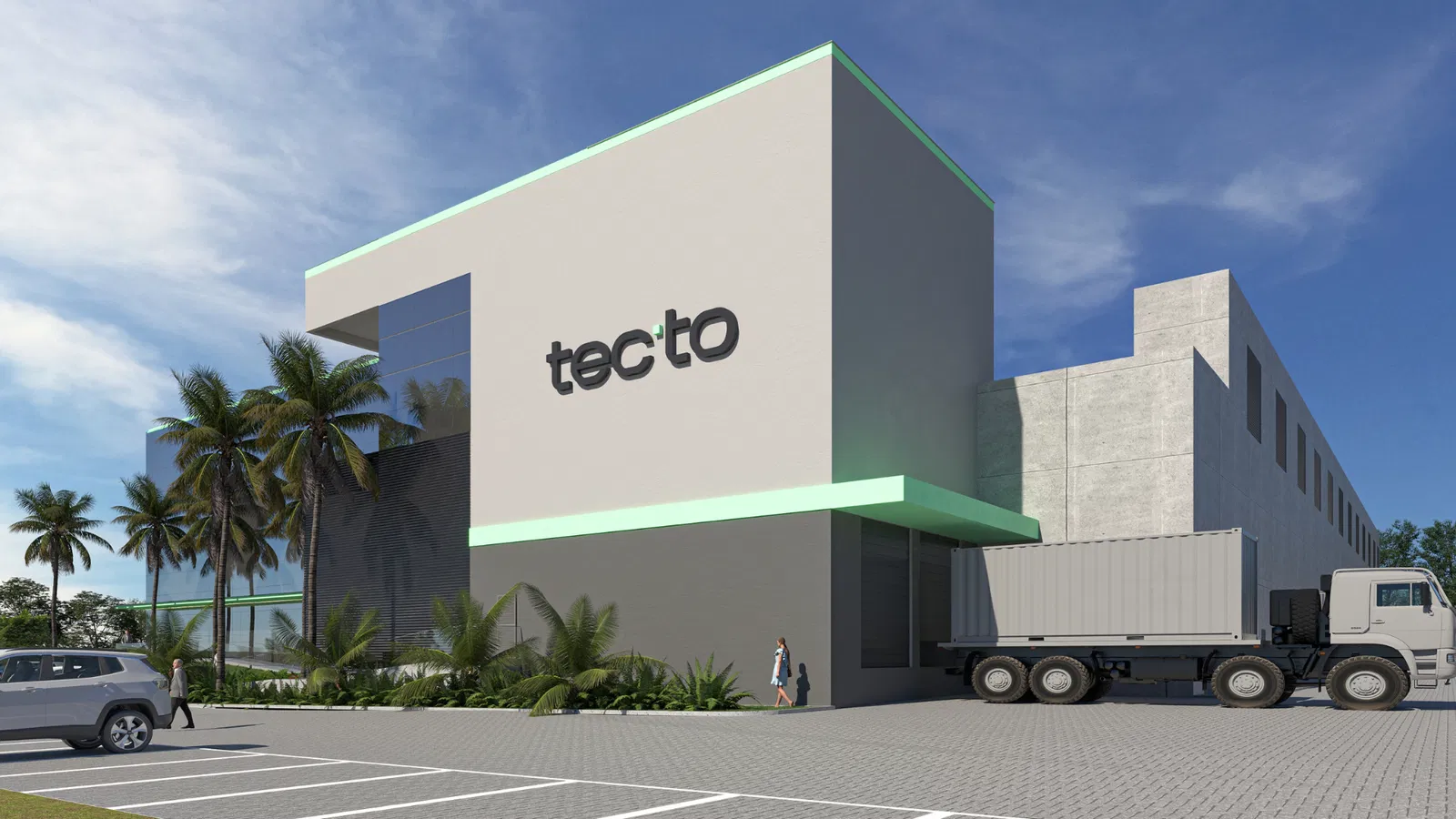
By Brazil Stock Guide – Tecto Data Centers, controlled by BTG Pactual (BPAC11.SA), has inaugurated its sixth facility in Fortaleza, Brazil, as part of an aggressive growth plan targeting at least $1 billion in new investments across several Brazilian cities. The company announced the opening of its latest site — named Mega Lobster — located in the Praia do Futuro district.
According to Broadcast, the investment marks a significant step in Tecto’s regional strategy to strengthen Brazil’s digital backbone amid soaring global demand for data processing, artificial intelligence (AI), and cloud computing. “We have an ambitious plan and are very well prepared,” said José Miguel, Tecto’s CEO. “The data center industry is experiencing a global boom, driven mainly by the exponential demand for computing power and AI.”
The Mega Lobster center, built in just 12 months with a R$550 million investment, integrates with Fortaleza’s submarine cable landing stations — one of Brazil’s key internet gateways. The site offers an initial 4 megawatts (MW) capacity, fully leased to a digital content provider, and is designed to scale up to 20 MW. With this launch, Tecto now operates six data centers — three in Fortaleza, one in Rio de Janeiro, and two in Barranquilla, Colombia — totaling 32 MW of capacity.
Miguel highlighted Brazil’s competitive edge in renewable energy and recent government incentives under the Redata program, which removes federal taxes on imported equipment. “We are seeing increasing demand for projects in Brazil following the Redata initiative,” he noted.
Tecto’s $1 billion expansion plan includes new facilities in Belém, Recife, Brasília, Rio de Janeiro, Porto Alegre, and Santana de Parnaíba, where its largest complex is being developed. The São Paulo-area project could reach 200 MW, positioning it as Brazil’s biggest data center once completed between 2026 and 2027.
“By bringing data centers closer to consumers, we aim to help businesses improve their service performance,” said Tito Costa, Tecto’s Chief Revenue Officer, citing financial transactions, gaming, and remote surgeries as sectors demanding low-latency infrastructure.





Leave a Reply