
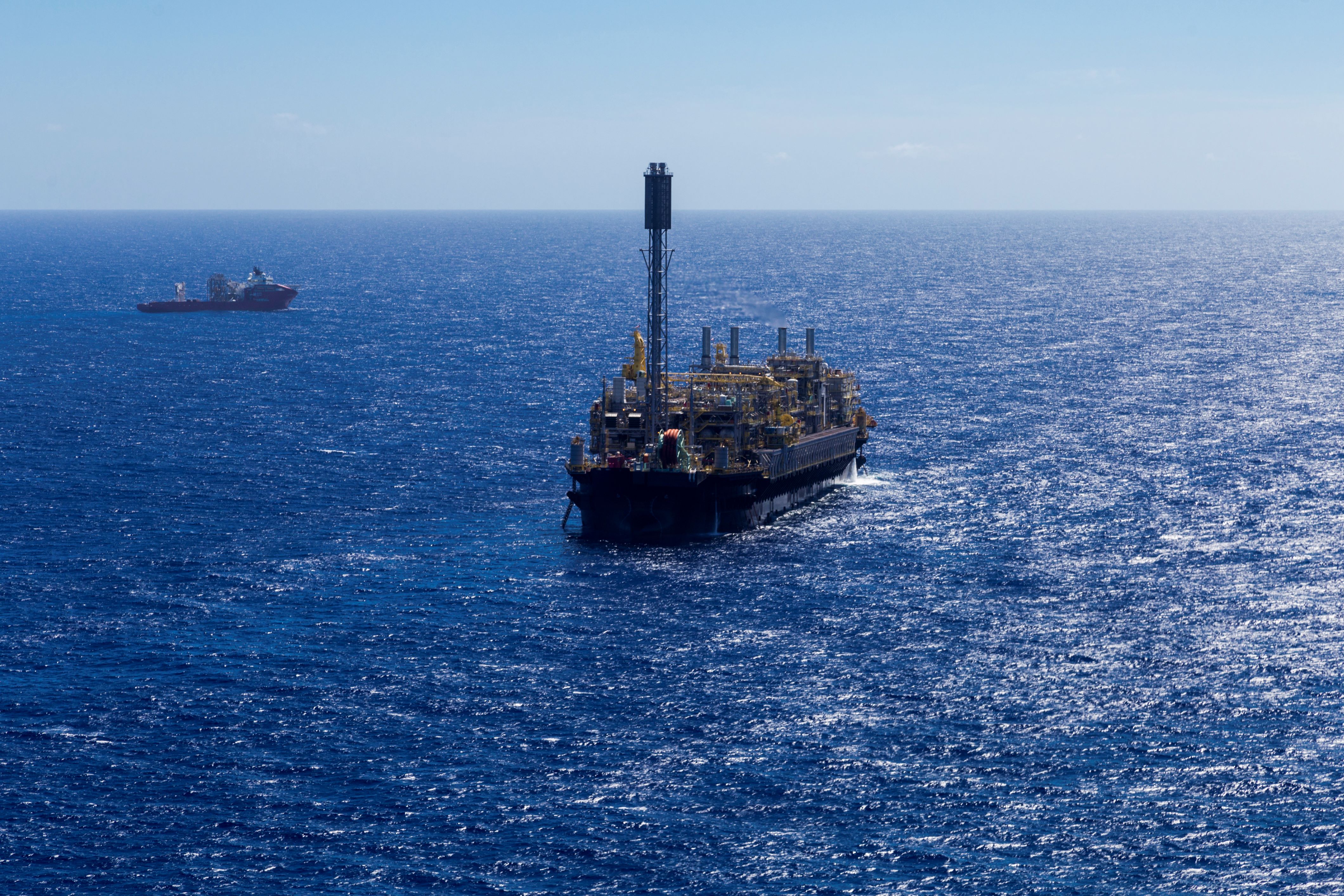
By Brazil Stock Guide — Brazil’s decision to impose a 12% tax on crude oil exports to help finance diesel subsidies initially rattled shares of the country’s independent oil producers. But the recent surge in global oil prices is leading analysts and investors to reconsider how severe the measure may ultimately be for companies such as PRIO (PRIO3) and Brava Energia (BRAV3).
The government’s package includes three main pillars: a temporary PIS/Cofins tax exemption on diesel, a direct subsidy for diesel producers and importers, and the new export tax on crude oil designed to offset the fiscal cost of the program. Finance Minister Fernando Haddad framed the measure as a way to capture part of what he described as “extraordinary profits” from oil producers while protecting consumers from higher fuel prices.
The immediate market reaction reflected concerns about profitability for Brazil’s so-called junior oil companies, which are more exposed to international markets than Petrobras. Companies that export a large share of their production were seen as particularly vulnerable to the new levy.
Price Math
Yet the sharp rise in global oil prices has introduced an important counterbalance. With Brent climbing amid geopolitical tensions and supply disruptions, analysts argue that higher oil prices could offset much of the economic impact of the export tax.
The logic is relatively simple: the tax applies to export revenues, but higher oil prices increase those revenues even faster.
Consider a simplified scenario. If a producer exports crude at $60 per barrel, a 12% export tax would amount to $7.20 per barrel. If Brent rises to $80 per barrel, however, the company earns $20 more per barrel in revenue, easily absorbing the tax burden while still improving overall margins.
BTG’s Scenario
This dynamic has been highlighted by analysts at BTG Pactual, who modeled a scenario with Brent at $83 per barrel versus $62 in their base case and concluded that stronger oil prices could still support higher free cash flow even after accounting for the export tax.
In practical terms, the math is straightforward: if Brent rises to $100 per barrel, the 12% export levy would remove about $12 per barrel, leaving producers with roughly $88 in net revenue. That would still be about $26 per barrel above a $62 base-case scenario, suggesting that higher oil prices could more than offset the new tax burden.
The impact nevertheless varies significantly between companies.
PRIO is considered the most exposed because it exports nearly all of its production, meaning the tax applies to most of its revenue stream. Even so, BTG noted that in higher-Brent scenarios the company could still increase free cash flow despite the new levy, as stronger oil prices more than offset the additional cost.
Different Exposure
Brava’s exposure is somewhat more limited. About 35% of its revenues are linked to crude exports, while the rest comes from domestic oil and gas sales. The company has also hedged a significant portion of its production, improving cash-flow visibility even if it caps some upside from rising oil prices.
Another key variable is the political future of the measure itself. Because the tax was introduced through a provisional measure, it still requires congressional approval and could face legal and political challenges. A similar export tax introduced in 2023 ultimately expired after four months when lawmakers failed to ratify it.
For investors, the debate has therefore moved beyond the immediate tax shock. The broader question is whether a structurally higher oil price environment could continue to support strong cash generation for Brazil’s independent producers, even under a heavier tax regime.


Leave a Reply