
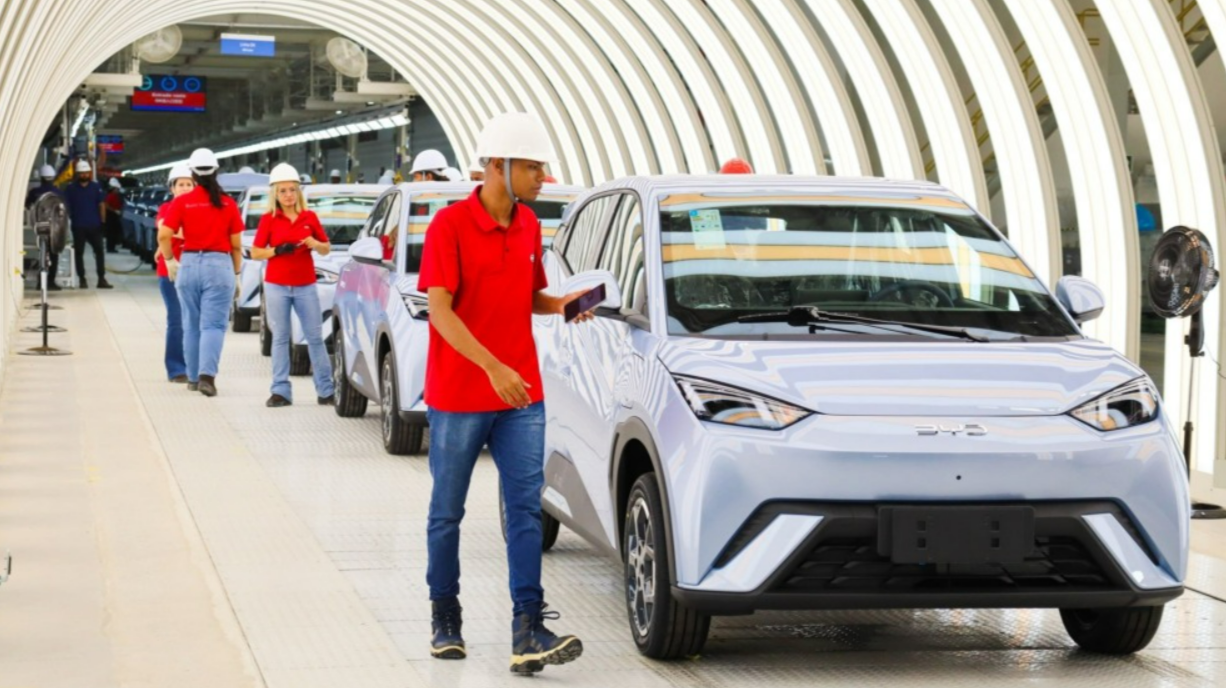
By Brazil Stock Guide – Brazil’s foreign trade chamber renewed tariff-free import quotas for electrified vehicles shipped in semi-knocked-down and knocked-down formats, extending a benefit that mainly affects BYD Co. (1211.HK, 002594.SZ) and intensifying a dispute with automakers that already manufacture in the country.
The quotas were renewed for six months at a total value of $463 million, Valor Econômico reported, citing information it obtained. The amount is the same as the previous authorization, which had expired in January.
The decision by Camex, taken Tuesday, June 23, keeps in place the current schedule for higher import duties on electrified vehicles. The government made no changes to previously established tariff rules.
The measure primarily benefits BYD, which opened a plant in Bahia last year using the SKD system, under which vehicles are imported semi-assembled. The renewal has drawn criticism from manufacturers with existing production operations in Brazil, which argue that the quota mechanism may have been used to build inventories of imported vehicles rather than accelerate local manufacturing.
Under the decision, import duties on electrified vehicles brought into Brazil as SKD units or as fully built CBU vehicles will still rise to 35% next month. Current tariffs are 25% for battery-electric vehicles, 28% for plug-in hybrids and 30% for conventional hybrids, with no quota mechanism for those categories.
For electrified vehicles imported under the CKD system, in which units arrive disassembled, the import tax will reach 35% in January 2027. The current rate is 14%.
The dispute comes as imported electrified-vehicle registrations continue to grow. According to sector data cited in the original report, registrations of imported electrified vehicles rose 214% between 2023 and 2025, even as Brazil gradually restored import tariffs.
Automakers represented by Anfavea, Brazil’s national association of vehicle manufacturers, may challenge the measure in court. “If possible, we will take it to court,” Anfavea President Igor Calvet told Valor.
The issue has also divided members of the government. One group argues that extending the quotas could help consolidate BYD’s announced investments, support local production plans and stimulate economic activity in Bahia.
Another group says the decision could increase foregone tax revenue and prolong incentives for operations with high imported content, without sufficient guarantees that Brazil’s domestic supply chain will deepen. Officials making that argument also point to existing support tools for the auto industry, including the regional automotive regime for production in the Northeast and Midwest, and the Mover program, which grants tax incentives tied to decarbonization investments.
The Camex decision leaves unchanged the government’s tariff path while preserving a temporary import benefit at the center of a broader fight over Brazil’s electric-vehicle industrial policy.


Leave a Reply