
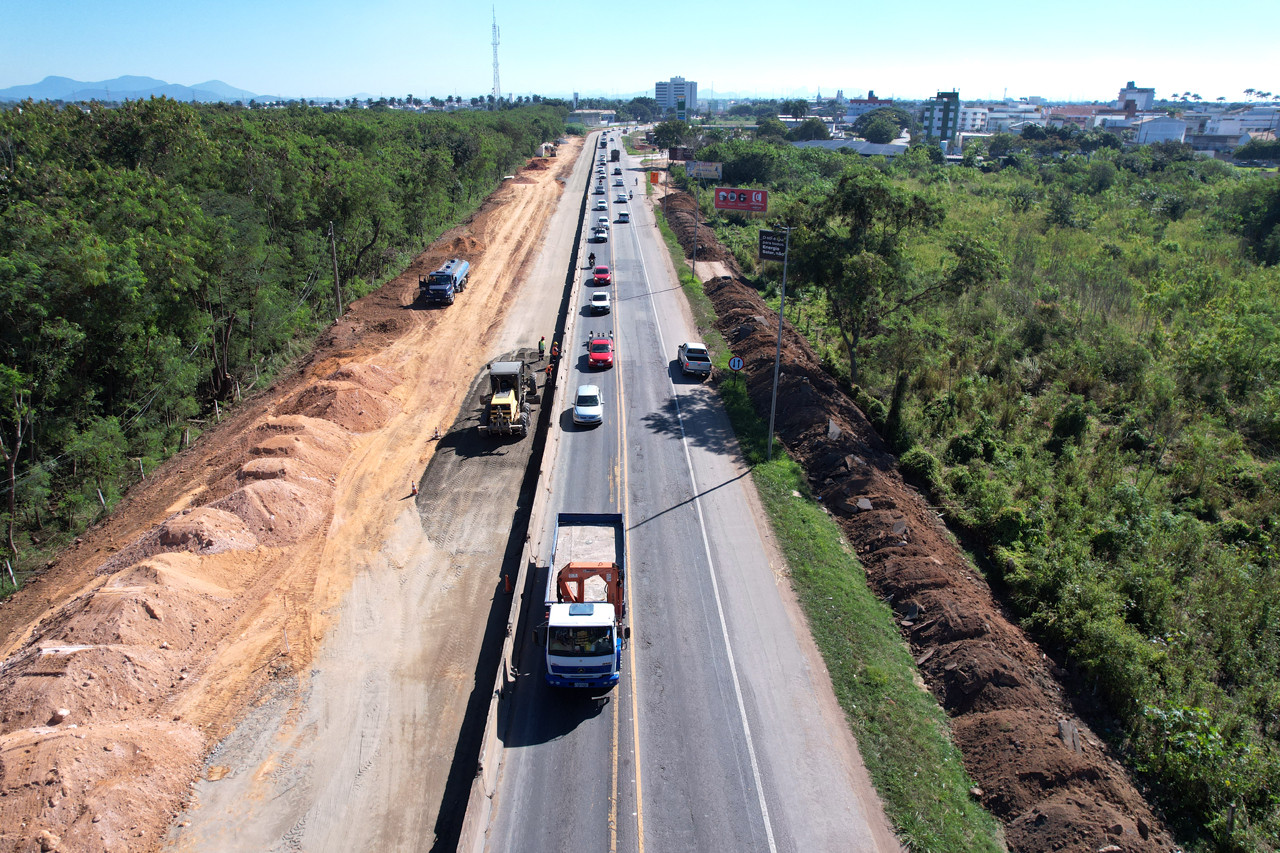

By Brazil Stock Guide – Brazil is taking another step in its experimental wave of road concession overhauls. The BR-101/RJ, known as Autopista Fluminense, will go to auction on Tuesday (Nov. 11) under a simplified, TCU-approved framework that rewrites the rules of federal highway contracts. With Arteris as the sole bidder, the company is set to remain in charge of the 322-kilometer stretch linking Niterói to the Espírito Santo border, one of the key corridors connecting Rio’s oil basins to ports and industrial hubs.
A new way to fix old contracts
The Fluminense deal is part of a broader initiative led by the National Land Transport Agency (ANTT) and the Ministry of Transport, designed to rescue or “reoptimize” concessions that had become financially strained. Rather than re-bidding assets from scratch, the government has been using a TCU-endorsed “consensual renegotiation” model, known internally as the SecexConsenso process.
The BR-101/RJ marks the third simplified tender of this kind, following MSVia (BR-163/MS) and Eco101 (ES-BA) — both of which also drew no competing offers. This time, however, the government introduced new transparency and data-access rules meant to lower entry barriers.
Regulatory sandbox and data access
Under the revamped terms, ANTT — not the concessionaire — now manages the project’s data room, hosting all engineering and financial information free of charge to potential bidders. The change replaced the previous model, where companies had to pay high fees to access documentation, a move officials believe deterred newcomers in earlier rounds.
The agency also adopted the “sandbox” regulatory environment, allowing it to test contractual innovations such as digital tolling (free-flow) and new governance clauses. The updated reference term approved in August sets stricter control over information flow, encrypts sensitive project data, and mandates independent technical audits before final approval.
The economics behind it
The revised contract projects R$6.0 billion in capital expenditures (CAPEX) and R$4.1 billion in operating costs (OPEX), yielding a regulated internal rate of return (IRR) of 10.42%. Over the 22-year concession, Arteris is expected to deliver 49.5 kilometers of new duplications, additional lanes, and safety upgrades such as pedestrian bridges, access interchanges, and bus stops.
Those metrics are embedded in a new economic-financial model (MEF) created with the TCU to stabilize returns, prevent litigation, and align incentives between the government and private operators.
Why there was only one bidder
While the model is meant to encourage competition, the BR-101/RJ remains a complex asset. Traffic volumes are lower than on highways closer to São Paulo, and several segments cut through areas affected by organized crime, adding operational risk and higher insurance and security costs. For many players, those factors outweigh the upside of the new rules.
Arteris, which originally requested to return the concession in 2020, reversed its decision after the introduction of the renegotiation framework and is now expected to remain as operator. The company’s experience in the region — and its sunk investments — make it the natural candidate for continuity under the new structure.
A broader experiment in motion
The Fluminense auction will be the ninth federal road tender of 2025, reflecting Brasília’s effort to re-energize infrastructure investment without restarting projects from zero. More contracts from Arteris, including Fernão Dias (BR-381/SP-MG) and Régis Bittencourt (BR-116/SP-PR), are next in line for similar treatment.
If the approach succeeds, it could become the blueprint for a new phase of Brazilian concessions — one that blends renegotiation, regulation and competitive testing instead of the traditional cancel-and-rebid cycle that often paralyzes projects for years.


Leave a Reply