
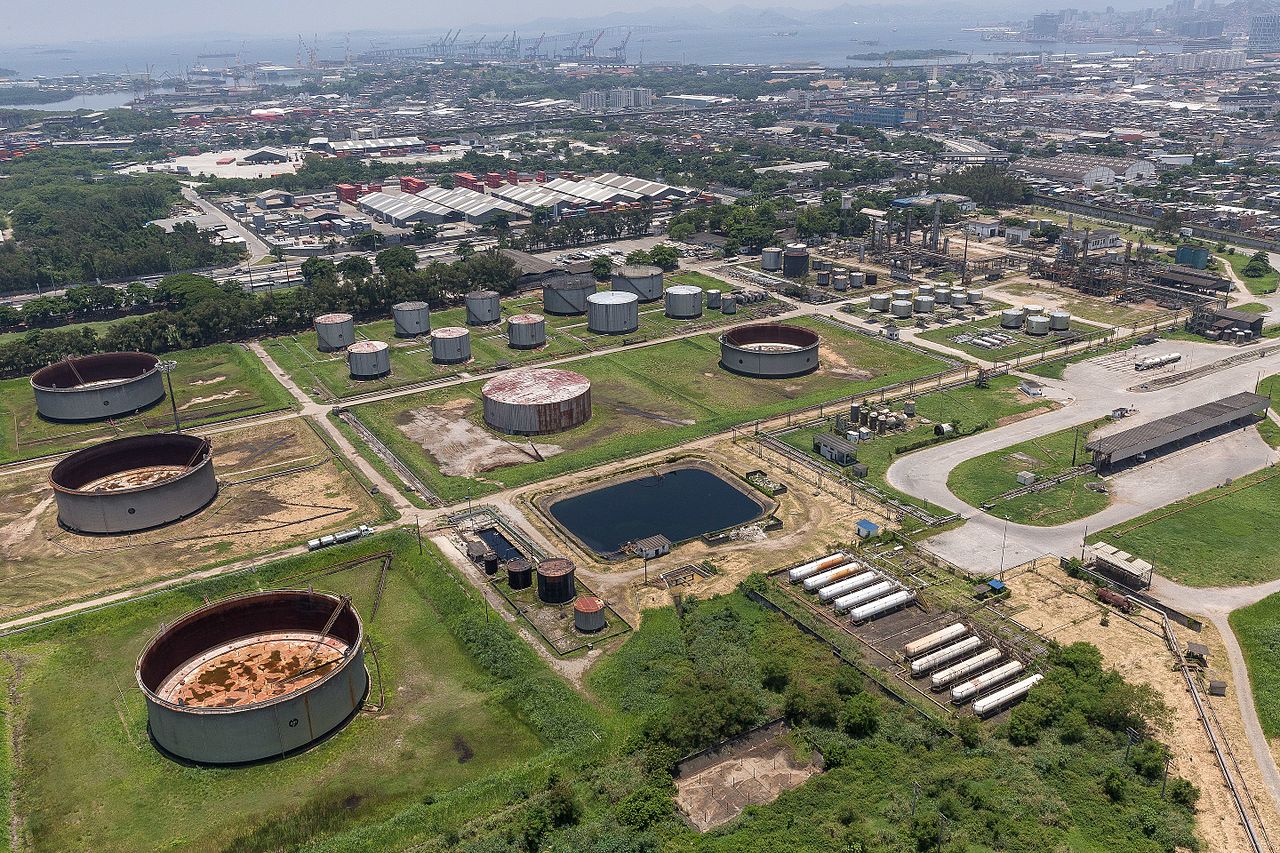
By Brazil Stock Guide – Brazil’s oil regulator, Agência Nacional do Petróleo, Gás Natural e Biocombustíveis (ANP), ordered the full shutdown of Refit, the former Manguinhos refinery in Rio de Janeiro, after a safety inspection identified what it classified as a grave and imminent risk of accidents and fire. The decision expands a partial interdiction imposed last year and effectively halts all industrial activity at the site.
According to regulatory documents, inspectors identified multiple critical failures in preventive and mitigation barriers — systems considered essential in high-risk industrial facilities. The regulator noted that the failure of even a single barrier is sufficient to characterize an imminent-risk scenario, given the potential for fatalities in the event of an incident. As a result, ANP determined the complete shutdown of all units involved in processing, storage, blending, and shipment of petroleum products.
From partial to total shutdown
Until this latest decision, Refit had been operating under a partial ban. The main refining tower was prohibited from running, but storage tanks used for fuel formulation and handling remained active. The new order removes that exception, allowing only operations strictly necessary to drain and remove flammable materials from the facility — a step required to eliminate the immediate risk identified by inspectors.
The escalation underscores the regulator’s assessment that the safety issues are structural rather than isolated operational failures, reinforcing concerns about the refinery’s ability to meet minimum operational and integrity standards.
Regulatory signal
ANP’s move reinforces a broader tightening of regulatory scrutiny over refining and fuel-processing assets, particularly those outside Petrobras’ integrated system. In recent years, the agency has raised enforcement standards around maintenance, operational integrity, and risk governance, aligning oversight with international safety benchmarks following high-profile industrial accidents in the oil and gas sector.
For the market, the full interdiction intensifies uncertainty around Refit’s future. The unit had already faced operational restrictions, financial strain, and repeated questions over investments in safety upgrades and modernization.
Legal and operational backdrop
The refinery is also under investigation by authorities in connection with alleged tax evasion and money-laundering schemes uncovered in an operation known as Poço de Lobato, according to investigators. While the regulatory shutdown is formally grounded in safety concerns, the broader legal context adds another layer of risk for any potential restart or restructuring of the asset.
Although Refit plays a limited role in Brazil’s overall fuel supply, its closure adds friction to the debate over the sustainability of independent refining, especially in densely populated urban areas subject to heightened regulatory and environmental scrutiny. Any return to operation will depend not only on the removal of flammable inventory but on costly structural fixes capable of convincing regulators that critical safety barriers have been fully restored — a threshold that may be higher, and more expensive, than previously assumed by the market.





Leave a Reply