

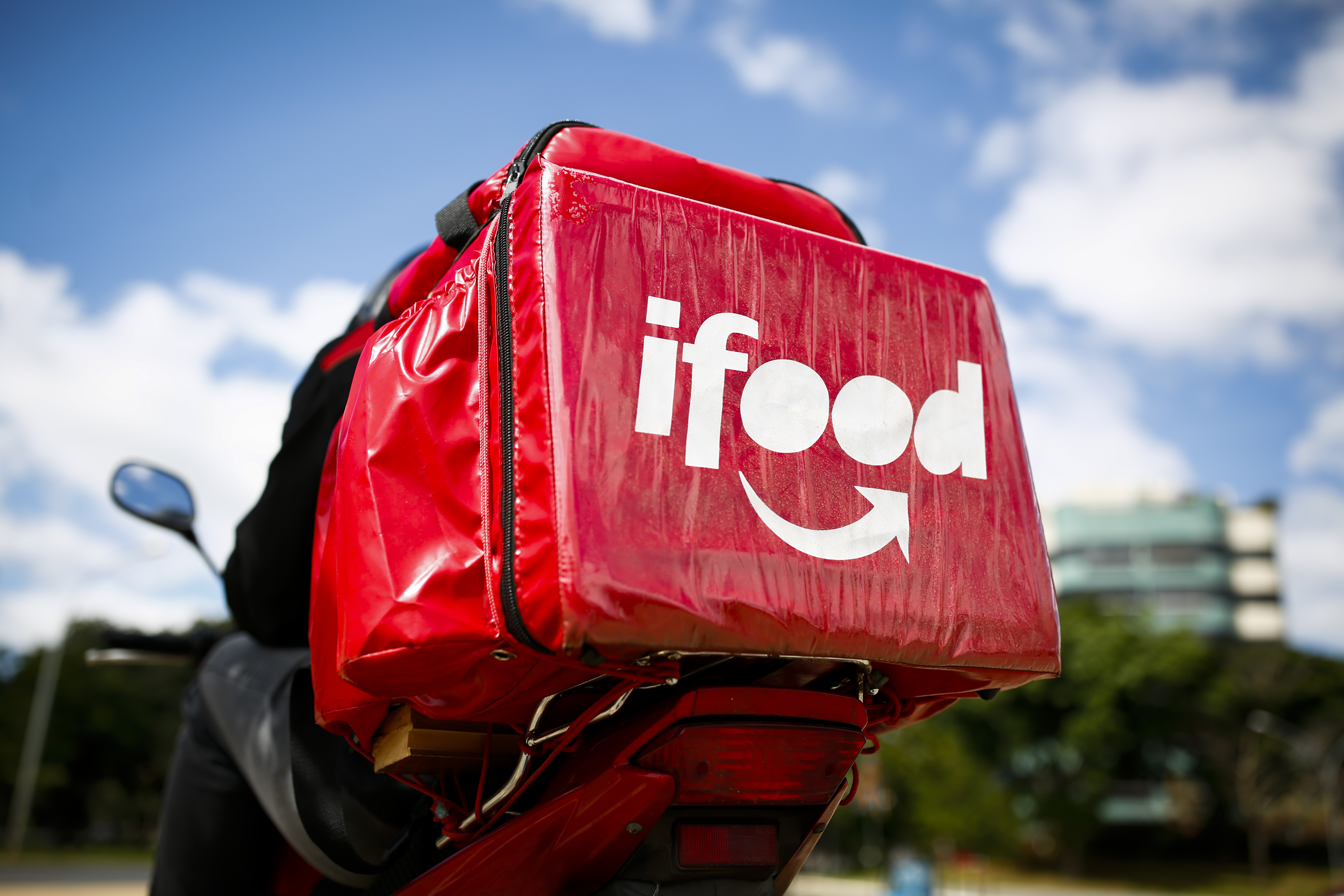
Growing competition in Brazil’s delivery market has eroded iFood’s profitability. The company reported adjusted EBITDA of US$28 million in the six months ended September, down 85% from US$184 million in the same period of 2025, according to earnings released Wednesday (25) by parent company Prosus. Revenue rose 20% to US$1.1 billion, or 8% in local currency, excluding acquisitions.
The results would have been even weaker without a one-off tax benefit of US$79 million related to Brazil’s Emergency Program for the Recovery of the Events Sector (Perse). Excluding that effect, iFood would have posted an adjusted EBITDA loss of US$51 million for the six-month period, underscoring the cost of defending its leadership in the Brazilian market.
The company made additional investments of US$278 million to counter the expansion of 99Food and the entry of China’s Keeta into Brazil. The funds were allocated to customer acquisition, marketing and product development. Excluding the impact of food delivery subsidies, iFood’s revenue would have grown by more than 32%, according to Prosus management.
“You know that our competitors invested around US$1.5 billion to gain market share at our expense. They managed to gain only a little,” Prosus CEO Fabricio Bloisi said during an earnings presentation to investors. The executive did not specify how much market share each competitor had gained.
The impact of the competition also extended to the parent company’s cash flow. According to Prosus Chief Financial Officer Nico Marais, an incremental investment of US$342 million in iFood was one of the main factors behind the decline in the group’s free cash flow, which fell to US$1.1 billion from US$1.3 billion over the six-month period.
“We made a deliberate decision to invest more in delivery now to ensure that this business is even better one, two or three years from now,” Bloisi said, signaling that the parent company is willing to accept lower short-term profitability to preserve its competitive position.
The battle for cheaper meals
Despite intensifying competition, iFood ended September with 92 million monthly meal orders, up 11% year over year, and 28 million monthly active buyers. Clube iFood, the company’s loyalty program, reached 18 million subscribers, an increase of 29%. Its proprietary logistics network accounted for 45% of orders, compared with 42% a year earlier.
One of the company’s key strategic initiatives is Hits, a service focused on offering lower-priced meals. The service grew 70% compared with the previous six-month period, reaching 16.6 million monthly orders and 8.3 million users, accounting for approximately 18% of all meal orders on the platform.
“Our competitors are often investing US$10 per order to offer cheap food,” Bloisi said. “I can continue competing, offering cheap food, without losing money in that competition.” According to the executive, economies of scale and operational efficiencies allow iFood to reduce its reliance on subsidies in this segment.
Fintech as a line of defense
Business diversification has become one of iFood’s main defensive strategies. Activities beyond food delivery now account for approximately 40% of the company’s revenue, up from 28% a year earlier. The expansion includes financial services, advertising, corporate benefits, groceries, pharmacies and pet supplies. Advertising revenue grew 67%.
The standout performer was iFood Pago, which reported revenue of US$313 million, up 65% in dollar terms and 52% in local currency, excluding acquisitions. The financial services operation posted positive adjusted EBITDA of US$52 million, reversing a US$4 million loss a year earlier. The fintech’s adjusted EBITDA alone now exceeds that of iFood as a whole.
“Our fintech business is an extraordinary competitive barrier. It is now profitable, it is growing significantly, and it is very good to have this second business at a time of increasing competition in our core delivery business,” Bloisi said. The business loan portfolio under management reached US$405 million, up 63%, while payment volumes processed by Zoop grew 83% in local currency, excluding acquisitions.
Artificial intelligence and new revenue streams
Artificial intelligence has also begun to play a significant role in the company’s cost structure. According to Bloisi, AI agents deployed by iFood over the past six months generated US$67 million in cost savings. Prosus has also begun offering its artificial intelligence technology to merchants, with the ambition of becoming a technology platform for small and medium-sized businesses.
Integration with other Prosus companies is creating additional opportunities to monetize iFood’s customer base. In September, 27% of net revenue from the Brazilian consumer-facing operations of Despegar, the owner of Decolar, came directly from iFood. The strategy allows the company to leverage the high frequency of meal orders to sell higher-value products and services, expanding its revenue streams amid mounting pressure on delivery margins.
Você gosta dessa personalidade?


Leave a Reply