

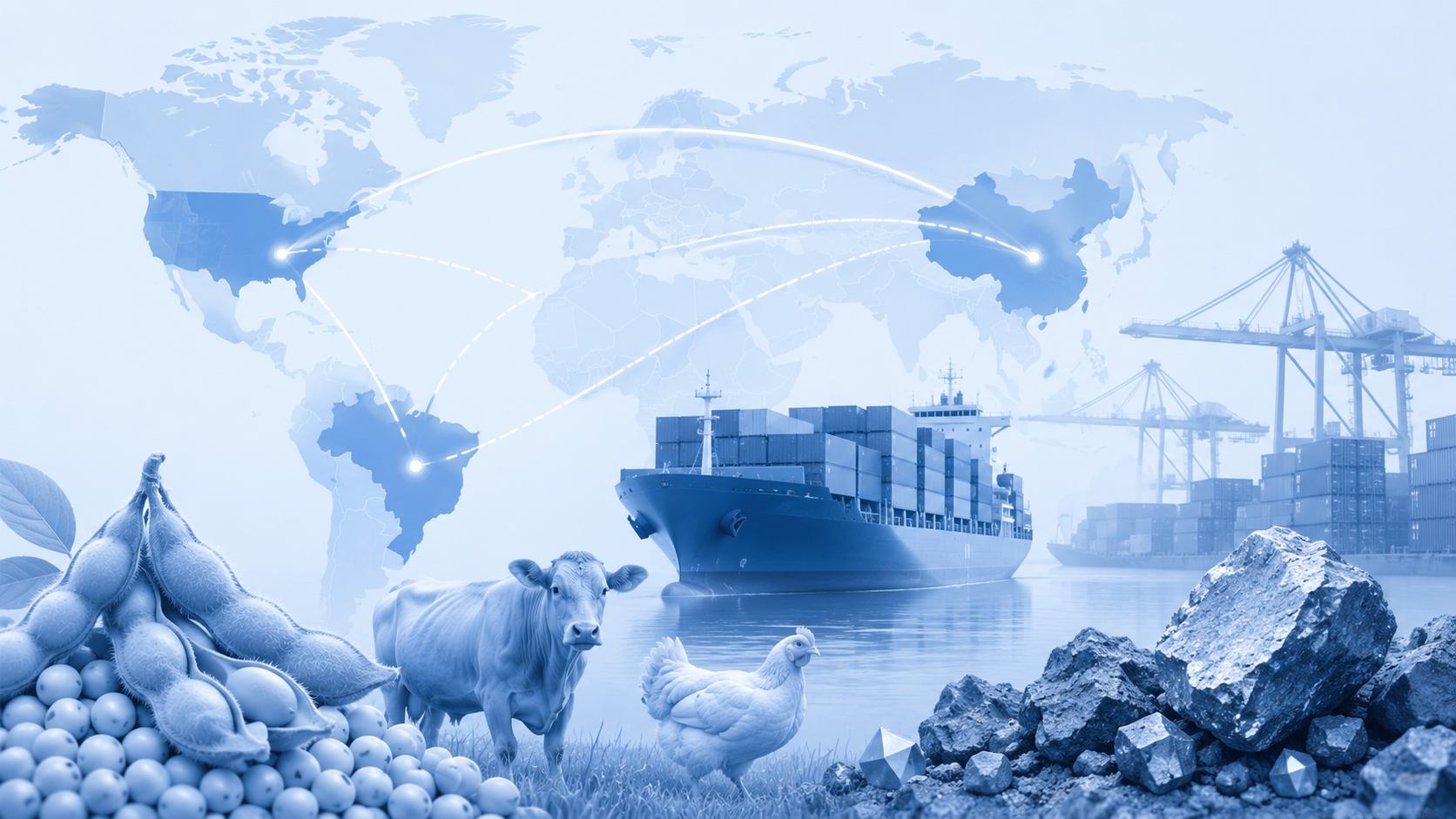
The immediate effects of Donald Trump’s meeting with Xi Jinping look modest — and the game is far from lost for Brazil. The understanding announced by the White House is still preliminary, and its real impact will depend on execution. Washington presented the package as a concrete victory, including Chinese purchases of at least $17 billion per year in U.S. agricultural products through 2028, renewed access for U.S. beef, a partial resumption of poultry imports, 200 Boeing aircraft and talks on rare earths. Beijing, however, was more cautious: it said the details are still being negotiated.
For Brazil, the risk is not an abrupt loss of market share. China will continue to need Brazilian soybeans, beef, poultry, oil and iron ore. The issue is price, margin and bargaining power. If the agreement is implemented broadly, Washington could recover part of the space it lost to Brazil since the trade war. In recent years, Brazil gained market share because the U.S. became more expensive, politically difficult or subject to barriers. Now, a managed rapprochement between Washington and Beijing could reduce that advantage.
Brazilian soybeans would be the first point to watch. If China has to meet minimum purchase commitments from the U.S., Brazil would still sell large volumes, especially during its own harvest window, but potentially with less pricing power. In beef, the potential impact is more sensitive: the renewal of more than 400 U.S. plants would give Beijing an additional alternative just as Brazil already faces Chinese quotas and tariffs. For meatpackers operating in Brazil, the first risk would not necessarily be volume, but margin compression, lower premiums and tougher negotiations with Chinese buyers.
In poultry, the pressure would likely be smaller, but the logic is similar: more approved suppliers reduce Brazil’s competitive comfort. In critical minerals, the risk is strategic. If the U.S. and China ease tensions over rare earths, Brazil could lose part of its geopolitical urgency as an alternative supplier. That does not eliminate the Brazilian opportunity, but it reinforces the need to move beyond geological promise and build industrial processing, value-added capacity and long-term supply contracts.
The market will watch the real pace of Chinese purchases from the U.S., soybean export premiums, Chinese quotas and tariffs on beef, the effective approval of U.S. plants and signs of pressure on margins at meatpackers and trading companies. The agreement may have little effect if it remains confined to diplomatic statements. But if it becomes operational trade policy, Brazil will be selling to China in a less favorable environment.
Brazil benefited from the U.S.-China dispute, but it cannot depend on it forever. The preliminary truce shows that natural advantage is not a substitute for commercial strategy. The country will remain relevant — perhaps indispensable in several products. But those who are not at the table can still sell; they just should not expect to sell forever with the same price, the same leverage and the same comfort while others negotiate on their behalf.
Leave a Reply