

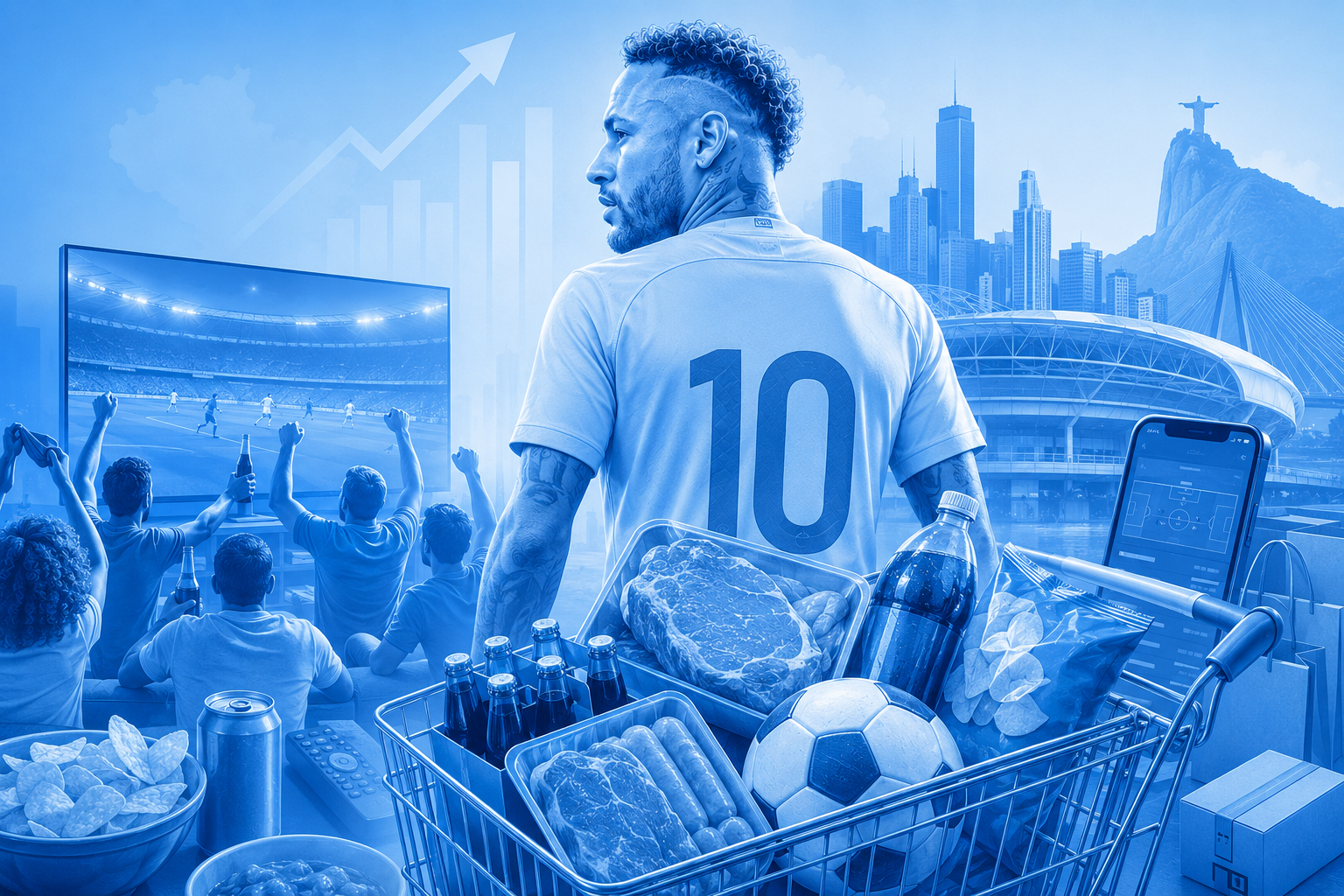
Neymar has been officially called up for his fourth World Cup. At 34, the millionaire forward — surrounded by sponsorship deals and still capable of stopping Brazil in front of a television screen — is more than just another name on Carlo Ancelotti’s squad list. He is a mobile consumption platform. Brazil’s 2026 World Cup will not sell only soccer. It will sell beer, meat, snacks, televisions, betting apps, jerseys, delivery platforms, streaming subscriptions and advertising slots — with Neymar again at the symbolic center of that commercial machine.
The tournament’s new format — 48 teams, 104 matches and 39 days — creates more consumption occasions and turns match days into temporary shopping holidays. According to BTG Pactual and Scanntech, soccer events can generate a roughly 4.7% uplift in retail consumption, with store traffic rising 6.7% on the day before matches and transaction volumes jumping 19.1% in the two hours before kickoff.
The boost, however, is tactical rather than structural. The World Cup changes the timing of consumption, not necessarily the size of consumers’ wallets. The same study shows transactions falling 15.4% during matches — and as much as 61.3% during major tournaments. Brazilians shop before games so they do not need to shop during them. For supermarkets, cash-and-carry chains, beverage companies, meat producers and convenience retailers, that improves inventory turnover and product mix. For malls, services, non-food retail and parts of e-commerce, it can create traffic black holes during prime hours.
The basket changes too. Everyday staples lose space to social consumption: barbecue meat, snacks, beer, popcorn and convenience foods. Yet there is a new variable absent from previous World Cups: weight-loss drugs. The rise of GLP-1 treatments may not kill the party, but it could reduce alcohol intake, snack consumption and portion sizes among higher-income consumers. The 2026 World Cup may involve less caloric excess and more selective premiumization: better meat, zero-sugar drinks and smaller portions.
The danger for investors is mistaking excitement for trend. The World Cup may inflate sales for a few weeks, but it does not solve high interest rates, household debt, weak credit, digital competition or margin pressure. For Brazilian retail, the tournament should be a good game. The question is how much of that goal actually reaches the bottom line — and how much merely shifts spending from one minute of the match to another.




Leave a Reply