

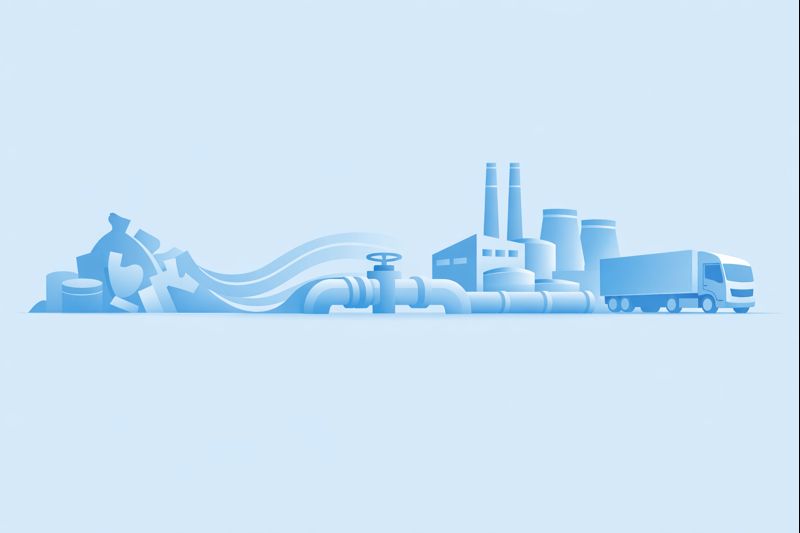
Biomethane has become the right fuel in the right place — and now at the right scale. In a country with a clean power matrix but still heavily reliant on diesel and fossil gas for heavy transport and industry, renewable gas produced from waste has moved from environmental promise to infrastructure thesis. It is no coincidence that the sector is already projecting R$ 8.5 billion in investments over the next five years tied solely to urban waste projects, and between R$ 20 billion and R$ 25 billion by 2030, according to market estimates.
The first major advantage is structural. Brazil generates municipal waste, agricultural residues and livestock effluents at industrial scale — and always has. Biomethane turns this environmental liability into a local, firm and dispatchable energy asset. Unlike solar or wind, it does not depend on weather conditions or require new transmission lines. It can be injected into existing gas networks, fuel vehicle fleets or replace diesel in boilers and industrial processes. It is a green solution born at scale: studies suggest Brazil’s potential could support a market valued at up to $15 billion (around R$ 75 billion) over the long term.
The second advantage is economic. Feedstock costs are low — often negative, since waste must be treated regardless. In industrial and logistics hubs, biomethane already competes with imported natural gas and diesel, particularly when carbon credits and long-term contracts are factored in. For waste management companies, the upside is immediate: alongside disposal fees, a new, recurring and scalable energy revenue stream emerges. The interest is not merely rhetorical. BNDES has already approved more than R$ 800 million in financing and direct investments in biomethane projects in recent years, signalling that renewable gas has moved beyond experimental status and into strategic infrastructure.
There is also a rare political and regulatory advantage. Biomethane appeals to everyone. Municipalities reduce the environmental cost of waste; governments advance climate targets without explicit subsidies; industries decarbonise without replacing assets; public banks finance projects with predictable returns. Programmes such as RenovaBio and the Fuel of the Future framework have provided enough regulatory clarity to unlock private capital — which helps explain why states like São Paulo are already talking about tens of billions of reais in potential investments over the next decade.
Ultimately, biomethane wins because it does not demand a technological revolution or a change in behaviour. It uses waste that already exists, networks that are already in place and engines that do not need to be retired. In a country where the energy transition must be affordable, pragmatic and scalable, that makes all the difference. It is financial engineering — and the market has clearly understood it.




Leave a Reply