
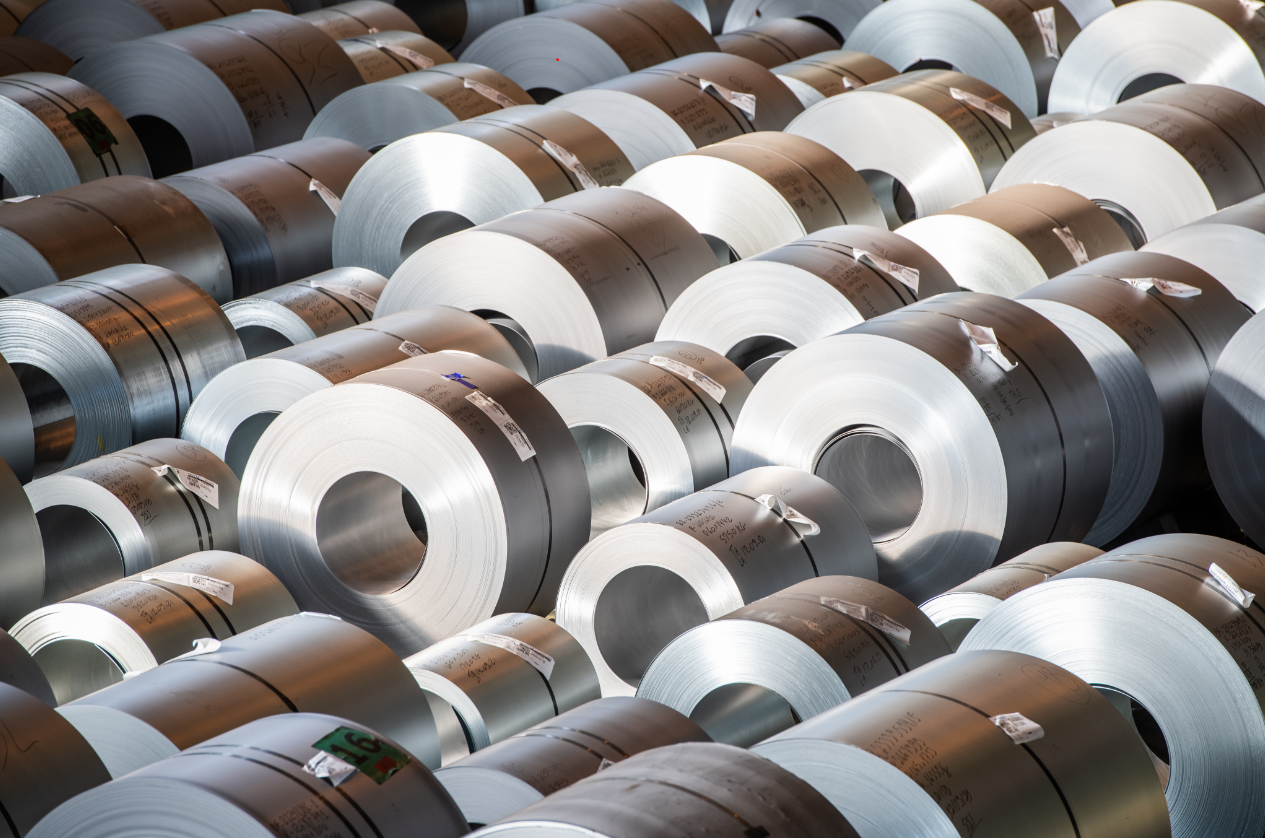
By Brazil Stock Guide – Usiminas (B3: USIM3, USIM5, USIM6; NYSE: USDMY) reported a R$3.5 billion net loss in 3Q25, reversing a R$128 million profit in the previous quarter, after booking a R$2.2 billion impairment on non-financial assets. The accounting hit, tied to a reassessment of long-lived steel assets under higher discount rates and a weaker domestic price outlook, masked a steady operational recovery: adjusted EBITDA rose 6% to R$434 million, and net debt fell 69% to R$327 million.
Despite flat revenue at R$6.6 billion, Usiminas expanded its free cash flow to R$613 million, supported by a R$1.1 billion inventory release and disciplined capex of R$266 million. The group’s EBITDA margin stayed at 6.6%, while its net leverage ratio dropped to 0.16×, the lowest in years. Management highlighted “financial discipline and positive cash generation” as key to maintaining resilience amid a sluggish steel market.
Before the impairment charges, Genial Investimentos had projected a steady quarter for Usiminas, with EBITDA of R$411 million, net profit of R$104 million, and revenue around R$6.5 billion. The brokerage expected weaker steel margins but stronger results from the mining unit, supported by iron-ore prices and exchange rates.
Sectors diverge: strong mining, cautious steel
The steel unit sold 1.1 million tonnes, up 2% from 2Q25, with exports doubling year-on-year to 112,000 tonnes, partly offsetting weaker domestic volumes (down 7%). The mining unit sold 2.5 million tonnes of iron ore, up 9% from a year earlier, benefiting from stable international prices and favorable exchange rates. Steel EBITDA reached R$308 million, while mining EBITDA came to R$130 million, showing improvement across both divisions.
Debt profile and liquidity
Gross debt fell to R$6.36 billion, with cash holdings of R$6.0 billion, leaving the company nearly net-cash positive. About 58% of liabilities are in local currency and 42% in U.S. dollars, led by the US$500 million bond due 2032 (7.5%) and a mix of domestic debentures indexed to CDI. Average maturity is 41 months in BRL and 62 months in USD, a structure that limits refinancing risk in 2026–27.
Strategic outlook
Even as sales volumes rose quarter-on-quarter, Usiminas warned of rising pressure from surging steel imports — mainly from China — which jumped 33% year-on-year in the first nine months of 2025. The company said the influx has created “unfair competition conditions,” echoing concerns shared across Brazil’s industrial base. Vehicle imports rose 10.8% in the period versus just 1.6% growth in domestic registrations, according to Anfavea, while machinery imports increased 9.1%, pushing the sector’s trade deficit to US$12.9 billion, data from Abimaq show.
Usiminas said it supports the anti-dumping investigations launched by Brazilian authorities and expects “effective measures” to restore fair competition, noting that the U.S., Europe and Mexico have already moved to curb similar distortions. Controlled by Ternium and Nippon Steel, Usiminas has focused on modernization of its Cubatão and Ipatinga mills and on its ESG roadmap, including energy efficiency and carbon reduction. The board reiterated that 2026 will prioritize cash generation and productivity gains over new expansion cycles.
Key metrics (3Q25 vs 2Q25)
| Indicator | 3Q25 | 2Q25 | Δ QoQ |
|---|---|---|---|
| Net revenue | R$6.6 bn | R$6.6 bn | 0% |
| Adjusted EBITDA | R$434 m | R$408 m | +6% |
| EBITDA margin | 6.6% | 6.4% | +0.2 p.p. |
| Net loss | (R$3.5 bn) | R$128 m | n/a |
| Free cash flow | R$613 m | R$281 m | +118% |
| Net debt | R$327 m | R$1.05 bn | -69% |
| Leverage | 0.16× | 0.50× | -0.34× |





Leave a Reply