
By Brazil Stock Guide – Ten years after the collapse of the Fundão dam in Mariana, Minas Gerais — Brazil’s worst-ever environmental disaster — Samarco Mineração S.A. is showing signs of recovery. In the third quarter of 2025, the company reported a net loss of US$1.05 billion, an 84% reduction from a year earlier, and completed the court-supervised restructuring process initiated after the 2015 collapse. Jointly controlled by Vale and BHP, the miner is entering a new phase of operational.
Iron ore and pellets output reached 4.1 million tons, the highest level since operations resumed. Net revenue rose 52% year-on-year, to US$440 million, driven by higher sales volumes despite an 18% drop in average prices. Adjusted EBITDA totaled US$230 million, up 47% year-on-year, with a 52% margin. Samarco also generated US$503 million in free cash flow, reversing last year’s negative result, and cut net debt by 9%, to US$3.8 billion.
Reparation and governance
Since the Fundão collapse — which released 40 million cubic meters of tailings and caused 19 deaths — Samarco and its shareholders have disbursed over R$38 billion in compensation and reparation programs. In 2025, the company signed the Rio Doce Basin Reparation Agreement, estimated at R$170 billion over 20 years. During the quarter, US$1.57 billion were disbursed, including US$1.56 billion in shareholder contributions, and the Renova Foundation was officially dissolved, transferring all reparation responsibilities directly to Samarco.
Samarco stated that all geotechnical structures remain within safety parameters, monitored with advanced technology and in full compliance with the Global Industry Standard on Tailings Management (GISTM). The miner no longer operates conventional tailings dams: since restarting operations, it has adopted a “dam-free” model, using dry stacking and tailings filtration. In this process, water is almost entirely recirculated, with over 90% reuse, significantly reducing external water intake and environmental impact.
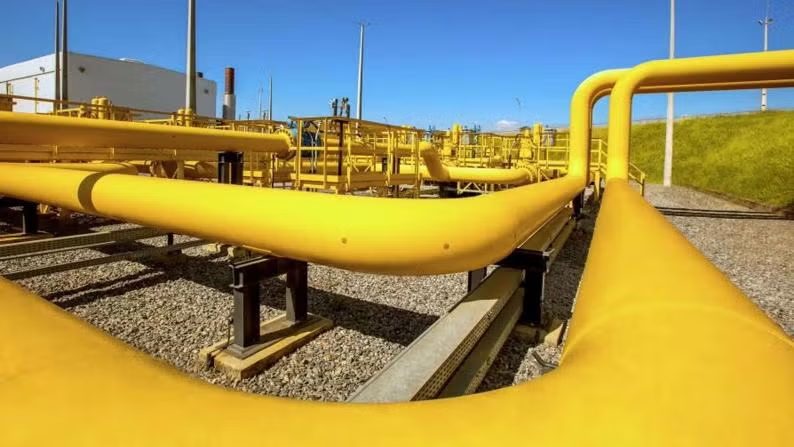
According to the quarterly report, 100% of the company’s energy comes from renewable sources, and ore slurry is transported via closed pipelines, ensuring a carbon-neutral logistics route in line with its environmental commitments.
Phase 3 and operational outlook
With Phase 2 of its ramp-up completed and Phase 3 approved in November, Samarco is preparing to return to full production capacity, reinforcing its position in the global high-grade iron ore market. The operational progress led Fitch Ratings to upgrade the company’s credit rating to “B” (from “B-”), with a Positive Outlook, citing improved cash flow predictability and the completion of its judicial restructuring.




Leave a Reply