
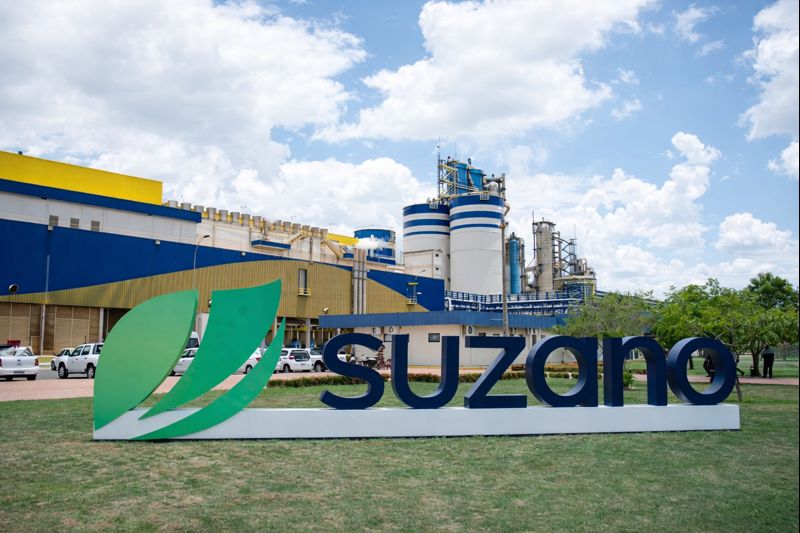
By Brazil Stock Guide – Suzano S.A. (SUZB3/SUZ) is putting its balance sheet back at the center of the investment story. The Brazilian pulp producer said it aims to reduce net debt to $11 billion and bring leverage below 2.5 times between 2027 and 2028. The target comes after the company had already signaled a lower investment cycle, with 2026 CAPEX estimated at R$10.9 billion, down from R$13.3 billion planned for 2025.
The message is straightforward: after years of heavy spending, including the Cerrado project, Suzano wants investors to focus less on expansion and more on cash generation, debt reduction and balance-sheet discipline.
Lower CAPEX
The lower CAPEX is the key bridge between the two announcements. For 2026, Suzano expects to spend R$7.3 billion on maintenance, R$2.6 billion on land and forests, R$800 million on expansion, modernization and other projects, and only R$200 million on the Cerrado project.
That mix shows a company moving into a different phase. The biggest construction cycle is fading, and the market will now judge whether the added capacity can generate enough cash to reduce debt.
For global investors, this is the important point. Suzano is not just a pulp price story. It is also a capital allocation story. In a capital-intensive sector, lower investment can quickly become more valuable if it translates into lower leverage and stronger free cash flow.
Costs Still Matter
The update was not all about balance-sheet relief. Suzano also said it expects pulp cash production cost, excluding scheduled maintenance downtime, to reach R$830 to R$840 per tonne in the second quarter of 2026. That would be 3% to 5% higher than in the first quarter.
For the full year, the company expects cash cost to be around R$800 per tonne, assuming an average exchange rate of R$5.07 per dollar and Brent crude at $84 per barrel.
That means the story is not one of immediate cost relief. Wood, energy, chemicals, logistics, oil and currency movements still matter. The improvement is more about the capital cycle than the cost line.
Balance Sheet Test
Suzano’s financial targets assume average exchange rates of R$5.17 per dollar in 2026, R$5.25 in 2027 and R$5.28 in 2028. Leverage will be measured as net debt divided by adjusted EBITDA over the previous 12 months.
The plan is clear, but the path is not fully under Suzano’s control. Pulp prices, Chinese demand, exchange rates, oil prices and forestry costs will continue to define the pace of cash generation.
The read-through for investors is direct: Suzano is trying to turn the end of its heavy investment cycle into a deleveraging story. If it delivers net debt of $11 billion and leverage below 2.5 times by 2028, the market discussion could shift from expansion risk to free cash flow, capital returns and balance-sheet quality.





Leave a Reply