
By Brazil Stock Guide – Mercado Livre (MELI) plans to invest 57 billion reais ($11.5 billion) in Brazil in 2026, marking a 50% increase from the previous year as the Latin American e-commerce leader doubles down on logistics and financial services in its largest market.
The investment plan, reported by Valor Econômico, includes both capital expenditures and operating costs and underscores the company’s long-term growth strategy despite rising pressure on profitability.
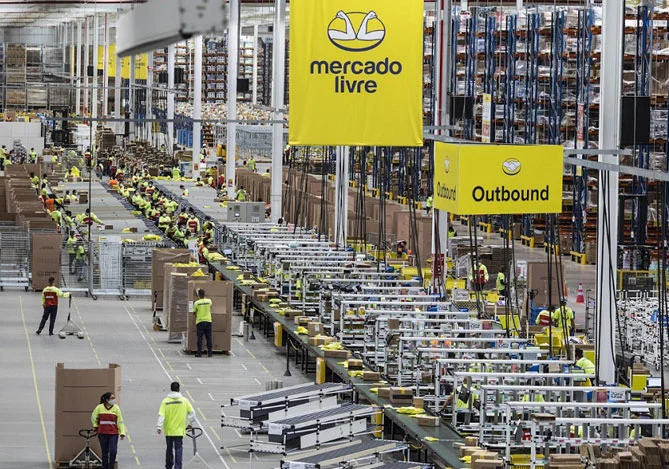
A central pillar of the expansion is logistics. Mercado Livre expects to open 14 new fulfillment centers in 2026, bringing its total to 42 facilities in Brazil. The network already represents the largest warehousing footprint among major online platforms in the country, ahead of Amazon.com Inc. (AMZN), Sea Ltd. (SE) and Magazine Luiza SA (MGLU3).
“These investments are driven by a long-term vision, not short-term profitability,” Fernando Yunes, executive vice president of e-commerce for Mercado Livre in Latin America, said. “We continue investing with a focus on the future.”
The company sees significant room for growth in Brazil’s e-commerce penetration, which remains below more mature markets. “Even though purchase frequency per user has increased in Brazil, it is still low compared to other regions and there is enormous potential. Online penetration is 16% in Brazil, versus 25% in the U.S. and 32% in China. This initiative strengthens our position, generates scale and efficiency,” Yunes said.
Despite investor concerns over margins, Mercado Livre maintains that its decisions are data-driven. “It may not seem like it, but all decisions are rational. We have highly analytical and technical teams working on this,” he said.
The company has also adjusted its pricing model for sellers. It recently shifted to a variable pricing structure in its “full” logistics service, factoring in weight, dimensions and product value for deliveries below 79 reais.
In parallel, Mercado Livre is expanding Mercado Pago, its fintech arm, with a focus on increasing credit offerings to consumers and small businesses, reinforcing its role beyond e-commerce.
The aggressive investment cycle has weighed on investor sentiment. Mercado Livre shares have declined about 18% on the Nasdaq this year and are down 16% since the company reported fourth-quarter results. Increased spending on free shipping, first-party sales and credit operations has contributed to margin pressure.
Financial data reflects the trend. The company reported $15.2 billion in net revenue and financial income, while operating expenses reached $13.1 billion, growing faster than revenue.
The expansion plan also includes the creation of 10,000 new jobs across logistics, technology and financial services, bringing Mercado Livre’s workforce in Brazil to approximately 70,000 employees by the end of 2026.


Leave a Reply