
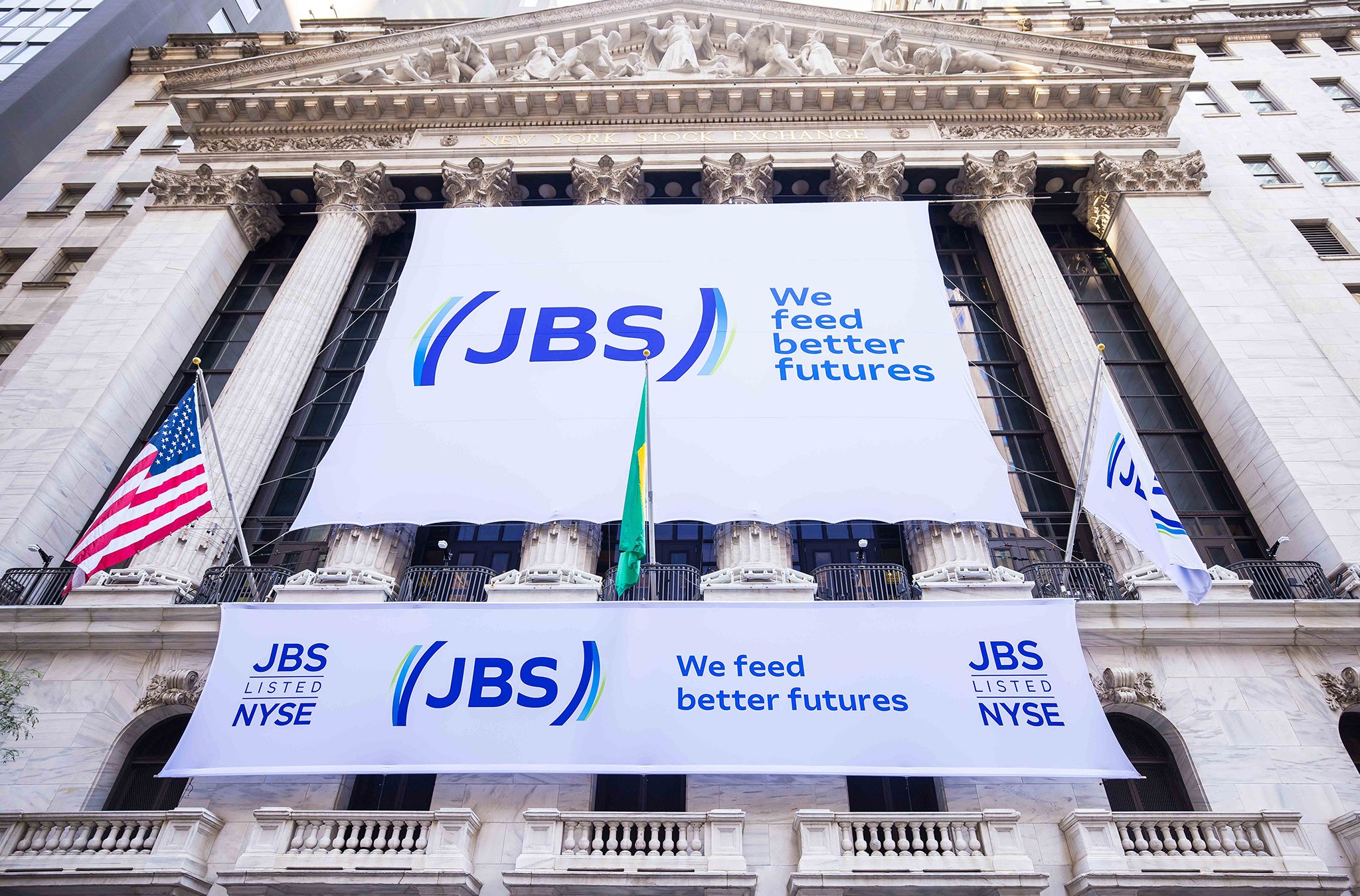
By Brazil Stock Guide – JBS N.V. (NYSE: JBS; B3: JBSS32) is moving deeper into Wall Street’s rulebook. The global meat producer said it plans to voluntarily report to the Securities and Exchange Commission as a U.S. domestic issuer, starting with its first quarterly Form 10-Q for the period ending June 30, 2026. The move does not change its status as a foreign private issuer, but it does change the market message: JBS wants to be read, modeled and compared more like a U.S.-listed global food company.
The practical effect will come quickly. JBS expects to release second-quarter 2026 results on August 10, with a conference call on August 11. As a large accelerated filer, the company will report annual results on Form 10-K within 60 days after the end of each fiscal year and quarterly results on Form 10-Q within 40 days after the end of each of the first three fiscal quarters. Previously, as a Form 20-F filer, JBS had up to 120 days after year-end to publish annual results.
Faster discipline
JBS will continue preparing its financial statements under IFRS, but it also plans to disclose selected US GAAP metrics in its earnings releases. That matters because investors compare global protein companies through reporting calendars, accounting bridges, margins, leverage and cash-flow metrics. Shorter deadlines and more familiar forms can reduce friction for analysts, portfolio managers and passive funds.
The company is also trying to change its market identity. JBS wants to be perceived more as a global protein platform with a major U.S. center of gravity. The company said more than 50% of its consolidated revenue comes from the United States, while the NYSE concentrates most of its free float and trading volume.
The Russell door
The index angle is central. JBS believes the reporting shift could broaden its eligibility for U.S. equity indexes, with the Russell family seen as the more immediate door and the S&P 500 as a longer-term ambition. Inclusion is not automatic and depends on index-provider criteria, liquidity, free float, domicile treatment and committee decisions. But the logic is clear: the more JBS looks, reports and trades like a U.S.-listed company, the stronger its case becomes for index consideration.
The sequence matters. Russell index inclusion could broaden passive ownership and increase trading liquidity sooner. A future S&P 500 discussion would be more complex and would likely require a deeper test of U.S. market classification, governance perception and sustained trading relevance. Still, for a company whose NYSE listing now concentrates most of its free float and volume, domestic-style SEC reporting is a deliberate step toward that larger Wall Street universe.
A U.S. investor base
JBS says its investor profile already supports that direction. About 74% of investors in its free float are American, while more than 80% of investors in its dollar-denominated international debt securities are also based in the U.S. The company also points to a global management structure with key centers in Greeley, Amstelveen, São Paulo, London and Brisbane.
That footprint gives JBS a stronger argument with global investors: the company’s operations, capital markets base and debt ownership are already heavily exposed to the U.S. What the new reporting framework does is make the financial presentation more aligned with that reality.
A Wall Street signal
The voluntary transition does not change JBS’s operating risks. The company remains exposed to beef, poultry and pork cycles, feed costs, cattle availability, currency swings, U.S. margins, environmental scrutiny and regulatory pressure. But it changes how the market follows the company.


Leave a Reply