
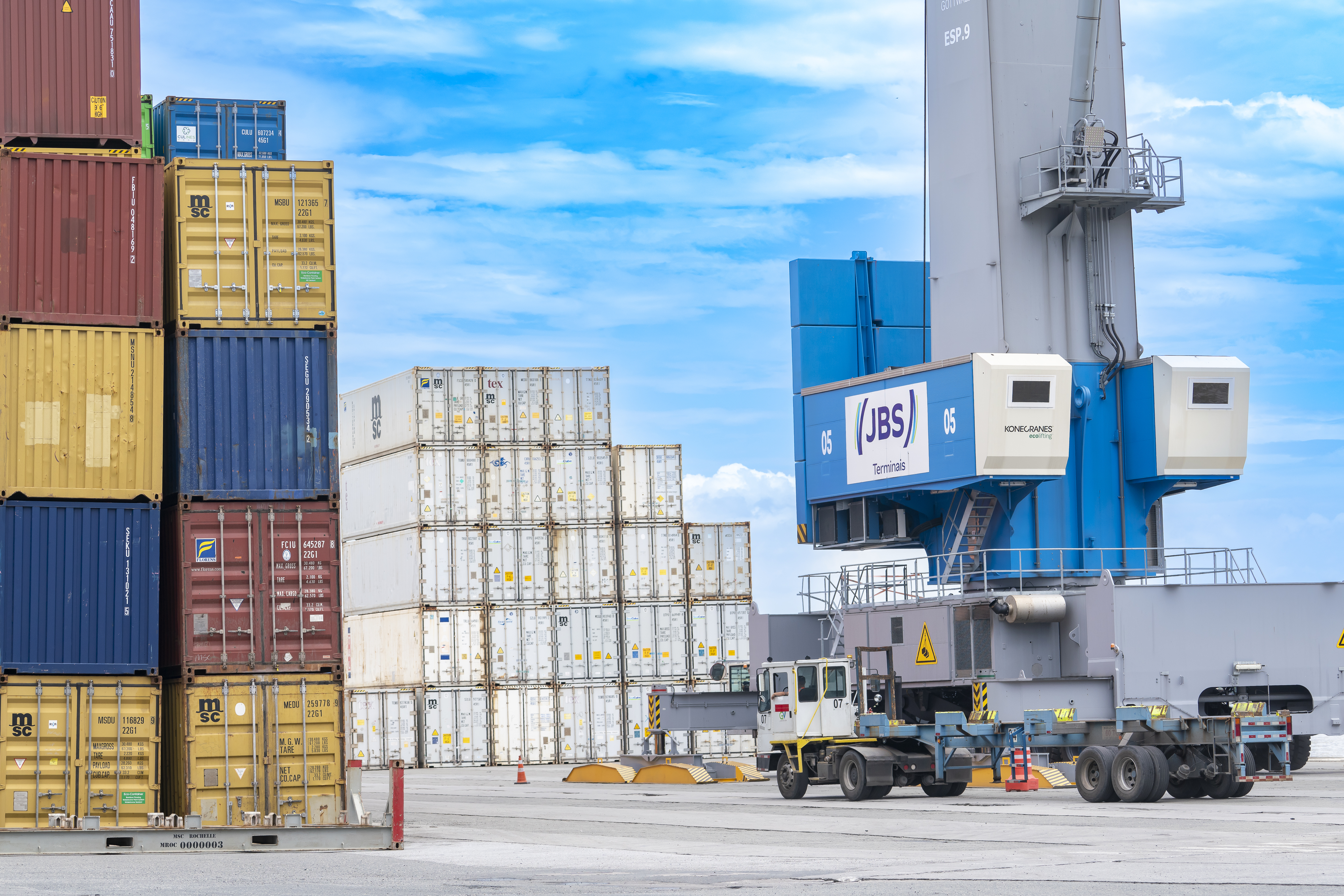
By Brazil Stock Guide – JBS (JBSS3; JBSAY) is quietly building a new growth engine beyond protein exports. Its logistics arm, JBS Terminais, has increased cargo throughput at the Port of Itajaí by 330% in the 18 months since taking over operations in October 2024, underscoring a rapid turnaround of a previously idle terminal and a broader push into infrastructure.
The unit handled more than 560,000 TEUs—standard 20-foot container units—over the period, with average monthly growth of 12%. Momentum accelerated in early 2026, with volumes rising more than 60% year-on-year in the first quarter, reinforcing the recovery of the Santa Catarina terminal after a prolonged shutdown.
Capex and scale
The recovery has been driven by roughly R$220 million in investments in infrastructure and technology. JBS Terminais installed two mobile cranes capable of handling 125 tons and reaching up to 20 container rows, alongside 1,708 power points for refrigerated containers—positioning Itajaí as a key hub for perishable cargo in southern Brazil.
Operational upgrades extended to land logistics, with the addition of eight reversible access gates to improve truck flow and reduce congestion. The terminal now spans 180,000 square meters, with 1,030 meters of quay and four berths, enabling operations across ten regular shipping lines and seven weekly calls connecting Brazil to Asia, Europe, the Americas, the Middle East and Africa.
Cargo mix shift
Growth has been anchored in JBS’s core strength—protein exports—but has expanded into timber, machinery and automotive cargo. More than 3,000 clients now use the terminal, reflecting a commercial strategy focused on niche segments and high-value logistics.
The emphasis on refrigerated capacity highlights a structural bet: logistics integration as a competitive advantage for Brazil’s largest exporter of animal protein. By controlling part of the export chain, JBS reduces dependency on third-party operators while improving efficiency and margins.
From idle asset to strategic node
The port’s revival follows a turbulent concession process. After the previous operator exited, the terminal remained idle for an extended period until JBS Terminais assumed control with regulatory approval, transforming a stranded asset into a functioning logistics hub.
Ship traffic reflects the turnaround. Vessel calls in 2025 were 50% higher than in 2022, before the shutdown, with early 2026 already running 26% above pre-interruption levels. The terminal has handled around 400 ship calls since operations began.
The speed of the ramp-up suggests that JBS’s logistics ambitions are not ancillary. Instead, they point to a deeper vertical integration strategy—one that ties infrastructure, exports and global trade flows into a single operating system.



Leave a Reply