
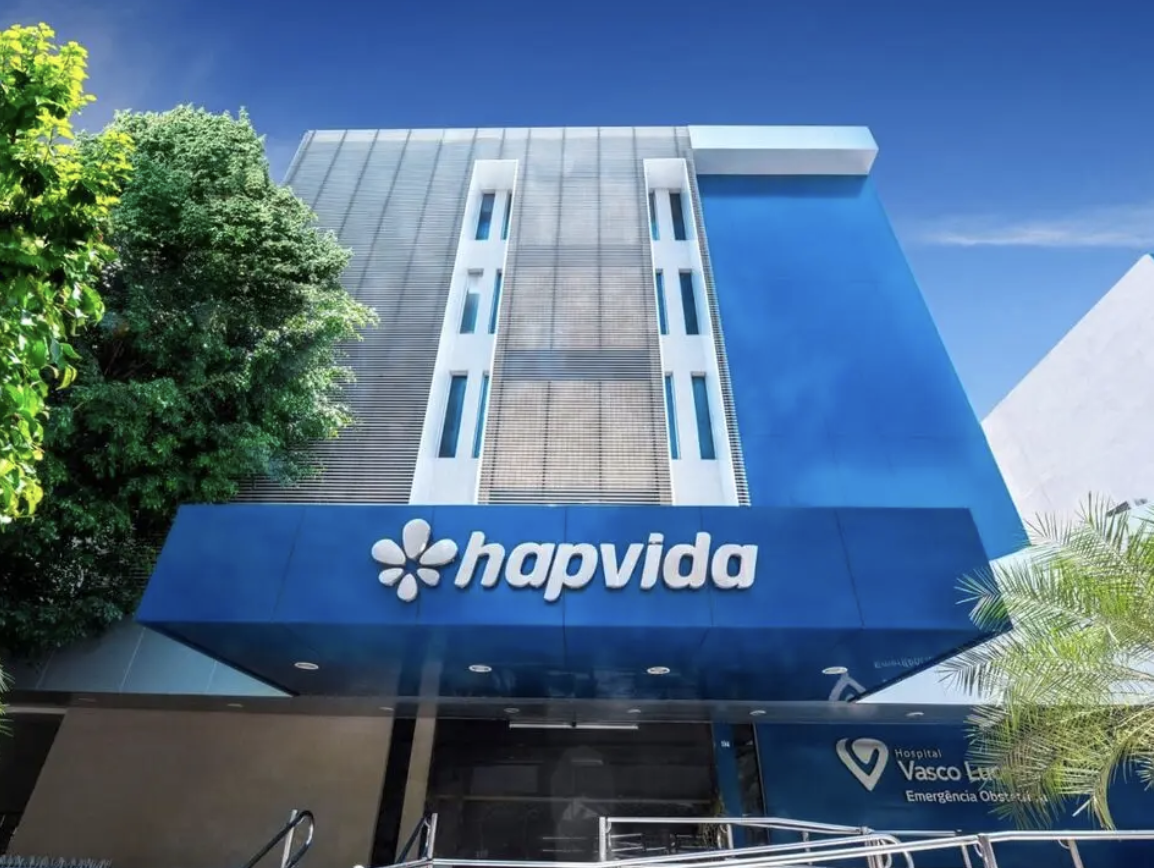
By Brazil Stock Guide – Debt has become the most important thermometer for Hapvida Participações e Investimentos S.A. (HAPV3). After spreads on the health plan operator’s most liquid debentures widened to around CDI +10% following fourth-quarter 2025 results, the securities tightened back to about CDI +4.8% after the first-quarter 2026 report, according to BTG Pactual. The drop in the risk premium does not end the crisis, but it shows that the market has stopped treating the company as an immediate deterioration story.
The relief has a financial basis. BTG said it never saw a major near-term default risk, given Hapvida’s cash position of about R$5.2 billion against short-term debt of roughly R$1.3 billion. The problem was the direction of the indicators: cash burn, EBITDA decline, membership losses, higher plan utilization, elevated judicialization, court-related cash blockages and rising corporate expenses.
Credit gets breathing room
Q1 2026 brought a pause in that negative sequence. Hapvida reported a slowdown in net membership losses, a sequential improvement of 330 basis points in its medical loss ratio and a much better free cash flow performance after the heavy cash burn seen in the second half of 2025, according to BTG. That was enough to reduce stress in the credit curve and restore some confidence among debt holders.
The improvement had already started in early April, when the company began evaluating potential divestments of its southern operations. For creditors, the combination of relevant cash, asset-sale optionality and lower operating pressure during the quarter helped change the discussion. Hapvida is once again being analyzed as a company in reorganization.
Management shift
That reorganization goes beyond the numbers. On April 30, shareholders approved a new Board of Directors, now with ten members, up from nine previously, and a mandate running until the 2028 annual meeting. The election gave three minority-backed nominees seats on the board after weeks of pressure from Squadra Investimentos, an asset manager that holds about 7% of the company and had been criticizing Hapvida’s governance, capital allocation and execution.
The executive succession was also formalized. Jorge Pinheiro stepped down as CEO and became chairman of the Board. Luccas Augusto Adib took over as chief executive, becoming responsible for the next phase of the company’s transformation plan. In practice, the move separates day-to-day management from board leadership at a sensitive moment for Brazil’s largest health plan operator.
Minorities at the table
The three minority-backed names elected to the board were Tania Sztamfater Chocolat, a former Canada Pension Plan Investment Board executive; Bruno Magalhães e Silva, who previously worked at JGP and Squadra; and Eduardo Parente Menezes, a former Yduqs executive. Squadra had also requested cumulative voting, a mechanism that allows minority shareholders to concentrate votes and increase their influence in board elections.
The result did not hand control of the board to dissident investors. Seven of the ten elected board members were part of the slate originally proposed by management. Even so, the presence of minority-backed nominees forces Hapvida to accommodate a more active shareholder bloc inside its governance structure, increasing pressure for capital discipline, operational execution and accountability.
Value destruction
Squadra’s criticism was forceful because it came against a backdrop of value destruction. The asset manager pointed to a steep decline in Hapvida’s share price since the IPO, in contrast with gains in the Ibovespa over the same period, and also questioned the company’s ability to capture the synergies promised in the combination with Notre Dame Intermédica. For minority shareholders, the problem is no longer just cyclical. It has become a debate about governance, incentives and execution capacity.
Conditional calm
For BTG, the governance overhaul, with a new management team and a renewed board, makes the starting point for the recovery look less severe than previously feared. Still, the bank remains Neutral on the stock, arguing that execution risks are still materially high and that the market should not price in a rapid operational inflection at this stage.
The storm has lost strength. The credit market has already recognized that. Now Hapvida needs to turn calmer debt pricing into cash generation — and its leadership transition into value recovery. This Friday, the stock was falling sharply on the B3, down about 4% around noon and trading at R$11.80. Year to date, the shares are down 18%.




Leave a Reply