
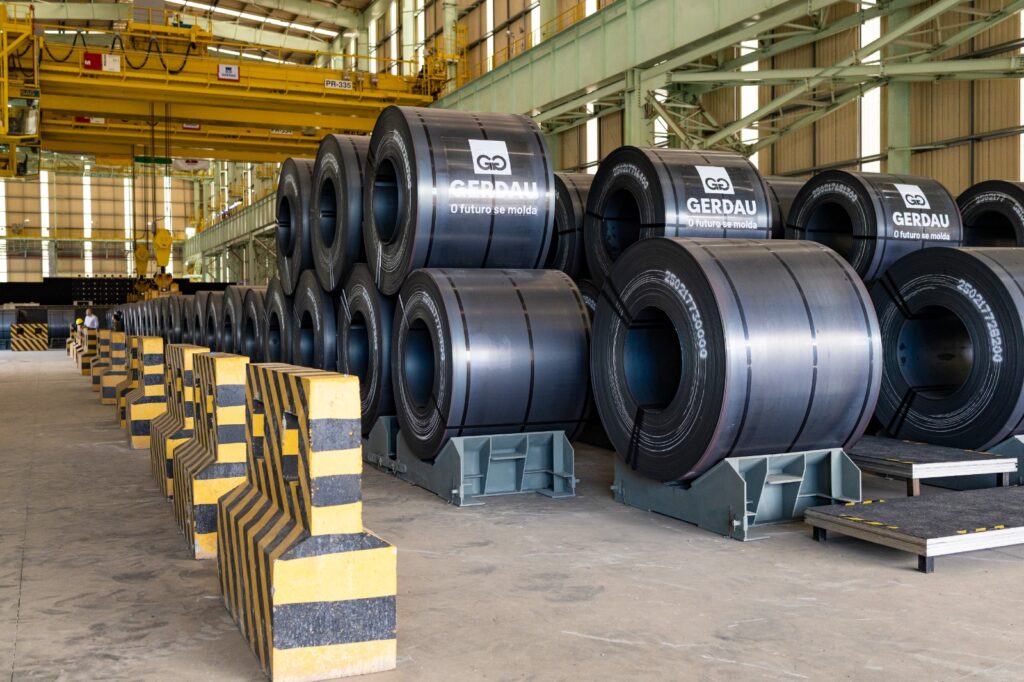
By Brazil Stock Guide – Gerdau SA (GGBR4) may face a smaller-than-expected earnings hit from a potential trade agreement covering the US, Mexico and Canada, according to analysts at Banco Safra.
Safra estimates that a regional deal would reduce normalized EBITDA at Gerdau’s North American operation by 7% to 9%. That compares with a roughly 19% decline embedded in long-term consensus estimates, suggesting room for upward revisions to the Brazilian steelmaker’s earnings outlook in coming years.
The gap between Safra’s forecast and market expectations remains one of the reasons behind the bank’s buy recommendation on Gerdau shares. Analysts see part of the perceived risk already priced into the stock as excessive.
A more flexible trade framework, however, would not necessarily be positive for Gerdau. Safra said lower steel prices in the US would likely more than offset any benefits captured in Canada and Mexico.
The bank sees the greatest upside versus consensus in a scenario with no formal agreement, under which normalized EBITDA in North America would remain stable over time.
Safra’s base case assumes the trade pact remains formally in place but loses practical relevance. In that scenario, bilateral negotiations would become the main tool for regulating steel trade across North America.
Mexico is expected to move faster in talks with the US, according to Safra. Canada is likely to face a longer process, keeping elevated tariffs in place while avoiding a sharper disruption in regional trade flows.
Safra also said US steel protectionism has shifted from a temporary set of trade measures into a structural industrial-policy tool. That dynamic supports domestic prices and margins.
Previous tariff cycles reduced import penetration and strengthened domestic shipments, reinforcing the view that protectionism has become a lasting feature of the US steel market.
The main structural challenge for the industry is not US demand, which has been relatively stable since the late 1990s, Safra said. The bigger issue is global oversupply, driven by China’s expansion of steelmaking capacity over recent decades.
While US steel consumption has changed little, the country’s share of global demand has declined as Chinese production and exports expanded. That imbalance remains a pressure point for the global steel industry.
Mexico appears better positioned than Canada in the current negotiations. A normalization of bilateral trade with the US could support Mexican steel prices.
Canada remains more exposed in the short and medium term. Its reliance on exports and the need to absorb tariffs on shipments to the US increase the country’s risks, according to Safra.





Leave a Reply