
By Brazil Stock Guide – Equatorial S.A. (B3: EQTL3; USOTC: EQUEY) reported a net profit of R$610 million in the third quarter of 2025, a 38.4% decline from the same period a year earlier, as higher interest expenses and non-recurring effects offset operational advances. The company’s adjusted net profit, however, rose 4.9% to R$830 million, supported by solid performance in its distribution segment, cost discipline, and a significant contribution from its equity stake in Sabesp, which added R$315 million to results.
Net revenue grew 14.4% year-on-year, totaling R$14.15 billion, while adjusted EBITDA increased 18.6% to R$3.48 billion, underscoring operational efficiency and the group’s ability to extract value from its diversified portfolio. Gross debt rose 20.5% between quarters, driven by new funding operations, while net debt closed the period at R$46.1 billion, implying a 3.3x net debt-to-EBITDA ratio under covenant metrics. The company said its balance sheet remains strong and compatible with its dividend and investment policies.
Operational performance and quality gains
The distribution segment continued to be the backbone of Equatorial’s results. Adjusted gross margin rose 6%, to R$3.9 billion, fueled by market growth, tariff adjustments, and loss reduction across all concessions. CEEE-D, the Rio Grande do Sul distributor acquired from the state government, reached its contractual DEC limit for the first time, despite extreme weather events earlier in the year.
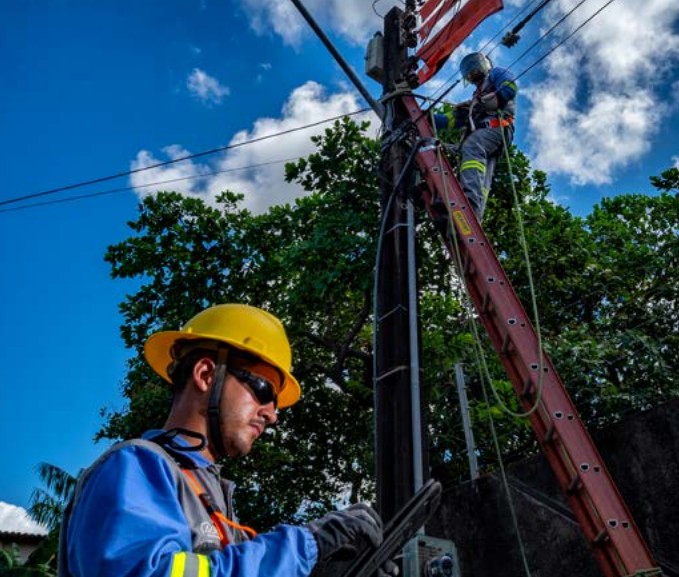
All seven distribution concessions — including Maranhão, Pará, Goiás, Piauí, Alagoas, Amapá, and CEEE-D — operated within regulatory limits for both DEC (duration of outages) and FEC (frequency of outages). The company credited this to modernization efforts, grid automation, and the gradual maturing of primary workforce integration projects (“primarização”).
In generation and renewables, performance was stable, though slightly affected by lower wind generation volumes at Echoenergia’s wind farms. Meanwhile, the company’s sanitation operations, still in the scaling phase, reported steady progress in operational indicators and efficiency metrics.
Financial pressure and strategic deleveraging
The financial result deteriorated to R$1.57 billion in net expenses, up 32% year-on-year, as the average CDI rate increased to 3.7% in 3Q25 and total gross debt expanded to R$62.7 billion. Even so, the group improved its debt profile, lengthening average maturity from 5.5 to 5.8 years and maintaining a 2.1x cash coverage ratio for short-term obligations.
During the quarter, Equatorial completed the sale of its transmission unit for an equity value of R$5.4 billion, unlocking capital for future growth and reducing leverage. The company also approved a R$1.8 billion interest-on-capital payment (R$1.45 per share), reinforcing its commitment to shareholder returns.
New share buyback program
On November 12, the board of directors approved the termination of the 2024 buyback program — which had repurchased 2.75 million shares, equivalent to 0.2% of capital stock — and launched a new 18-month buyback plan running from November 2025 to May 2027. The initiative authorizes the purchase of up to 5% of outstanding shares, or about 62.3 million shares, to be used for cancellation, treasury stock, or allocation to long-term incentive plans such as the Matching Shares Program.
The company emphasized that its financial position allows for the execution of the program without compromising mandatory dividend distribution or existing obligations. Intermediaries will include XP, BTG Pactual, Safra, Itaú, BB Investimentos, and Scotiabank Brasil.


Leave a Reply