
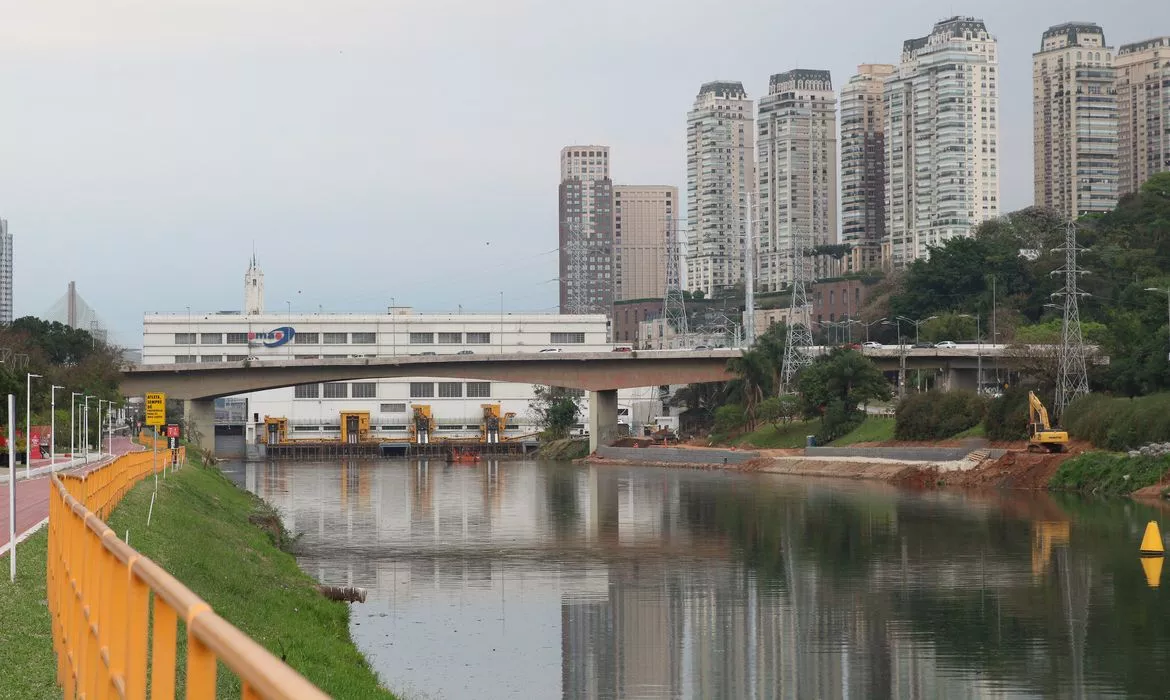
By Brazil Stock Guide – Fitch Ratings downgraded EMAE to AA(bra) from AAA(bra) and placed the São Paulo-based generator on Evolving Watch, citing a sharp deterioration in corporate governance after nearly R$395 million in cash was allocated to high-risk instruments tied to two distressed entities. The agency said EMAE’s decision to commit R$251 million to potential convertible debentures of Light, a company under judicial recovery and linked to shareholders in EMAE’s control block, and to maintain R$144 million in CDBs issued by Banco Master—placed into extrajudicial liquidation on November 18—materially weakened liquidity and raised red flags about capital-allocation discipline. Once Fitch excluded these balances, EMAE’s adjusted cash position fell from R$495 million at the end of September to R$100 million, a level inconsistent with the company’s previous top-tier rating.
The downgrade also reflects uncertainty surrounding EMAE’s future ownership. Fitch noted that the potential acquisition of the company by Sabesp, itself rated AAA(bra) with a Stable Outlook, could ultimately improve governance, but the absence of clarity on how the new controller would reshape strategy, capital allocation and operational practices prevents the agency from stabilizing the outlook. The Evolving Watch, which may last more than six months, underscores how the transaction process could either strengthen EMAE’s risk profile or expose it to new vulnerabilities during the transition.
Despite the governance breach, Fitch highlighted EMAE’s longstanding structural strengths: the company has carried no financial debt since 2021, maintains high revenue visibility under quota-regime contracts covering 89% of its assured energy, and benefits from annual inflation-indexed adjustments to its RAG through 2042. The remaining 11% of energy sold through regulated auctions carries insurance that eliminates hydrological risk. Even so, because these contracts remunerate legacy hydro assets, EMAE structurally operates with lower EBITDA margins—around 30% to 35%—than most Brazilian generation peers, which typically exceed 50%.
Fitch projects that free cash flow will turn negative across 2026 and 2027, with a combined shortfall of R$320 million, driven by approximately R$430 million in investments, including the construction of an 18-MW small hydro plant, and the resumption of dividend payouts equivalent to 25% of net income beginning in 2026. Still, the agency argues that EMAE retains ample leverage capacity to absorb the investment cycle without pressuring its rating.
Compared to peers, EMAE now sits alongside Serena Geração at AA(bra), although with weaker governance and a smaller, more concentrated asset base. The company ranks below Engie Brasil, Auren, Eneva and Aliança, all of which benefit from larger, more diversified portfolios even as some carry leverage approaching 3.5x net debt/EBITDA. Fitch emphasized that EMAE, even after its liquidity adjustment, remains in a net cash position.
Future rating movements will depend on whether the control-transfer process is completed, whether legal uncertainties affecting the current controller are resolved, whether EMAE maintains leverage below 3.5x, and whether operational performance at the century-old Henry Borden hydro complex remains stable. Positive rating action would require the successful completion of the sale to Sabesp combined with demonstrable improvements in governance and financial discipline.
EMAE currently operates 961 MW of installed hydropower capacity, dominated by the Henry Borden complex, and is controlled by Fundo Phoenix, which holds 75.73% of voting shares. The company was privatized on the B3 during the administration of São Paulo Governor Tarcísio de Freitas, as part of the state’s broader divestment and infrastructure-restructuring program.
Read more: Hidden Threads of EMAE


Leave a Reply