
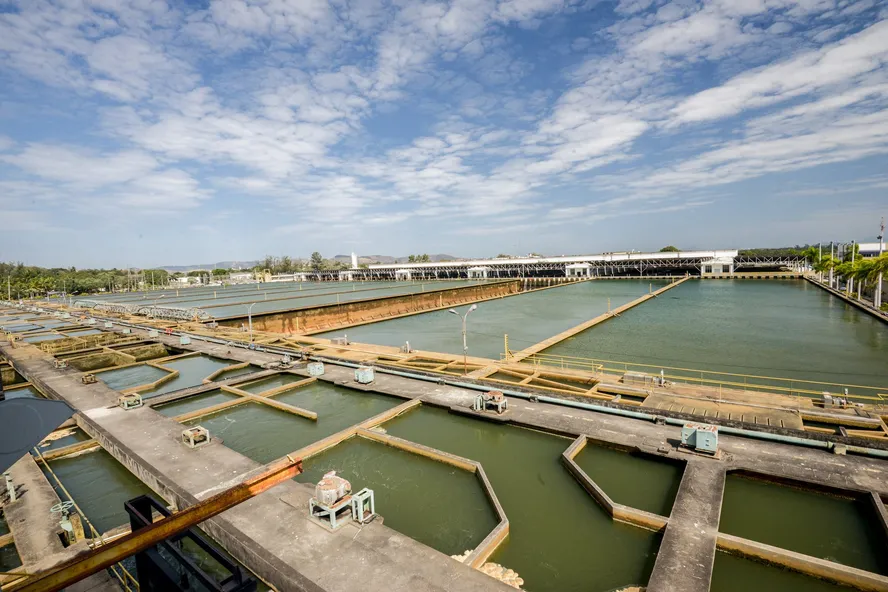
By Brazil Stock Guide – Brazil’s Rio de Janeiro state water utility Cedae plans to invest 5 billion reais ($1 billion) through 2029 to modernize and expand water supply and sanitation systems, as part of a new concessions cycle in the state.
Chief Executive Officer Aguinaldo Ballon said the funds will be directed to treatment plants, water security projects and network expansion. Private concessionaires operating under the model are expected to add about 30 billion reais, lifting total planned investment to roughly 35 billion reais.
Ballon said Brazil’s sanitation legal framework was key to unlocking capital and enabling private participation. “It is inconceivable that in 2025 we still do not have sanitation available for the entire Brazilian population. The sanitation framework is fundamental so that we can universalize sanitation,” he said.
Despite the concessions, Cedae retains a central role in the system. “Cedae produces the water consumed by 12 million people. We are talking about the most valuable asset there is, which is water,” Ballon said. The state-owned company also remains responsible for supply and sanitation services in cities across Rio’s interior.
Drawing on his experience structuring the concessions while working at the state government, Ballon said greater contractual flexibility is essential. “No matter how well designed a model is, there will always be situations that are not fully regulated. It is important that contracts and models take into account real conditions, with the greatest possible accuracy of information,” he said.
At the national level, Ballon pointed to financial constraints as a major hurdle. Universal sanitation coverage in Brazil would require about 800 billion reais in investment, he said, while high borrowing costs complicate project execution. “We are facing a very high interest rate of 15% a year. That makes capital much more expensive. It is a challenge to have the prospect of lower rates over the next two years so that these investments can move forward,” he said.
In Rio, one of the biggest bottlenecks lies in vulnerable areas of the metropolitan region, where access and security issues hinder network expansion. “There are territories where the public authorities cannot operate normally. Overcoming this is essential for sanitation to advance,” Ballon said.
He also argued that sanitation policy should be integrated with environmental and technological agendas. According to Ballon, Cedae has been investing in monitoring water sources using drones, satellites and sensors, as well as lower-impact construction methods. “Sanitation is an extremely powerful environmental tool. Collecting and treating sewage means stopping the pollution of rivers and seas,” he said.




Leave a Reply